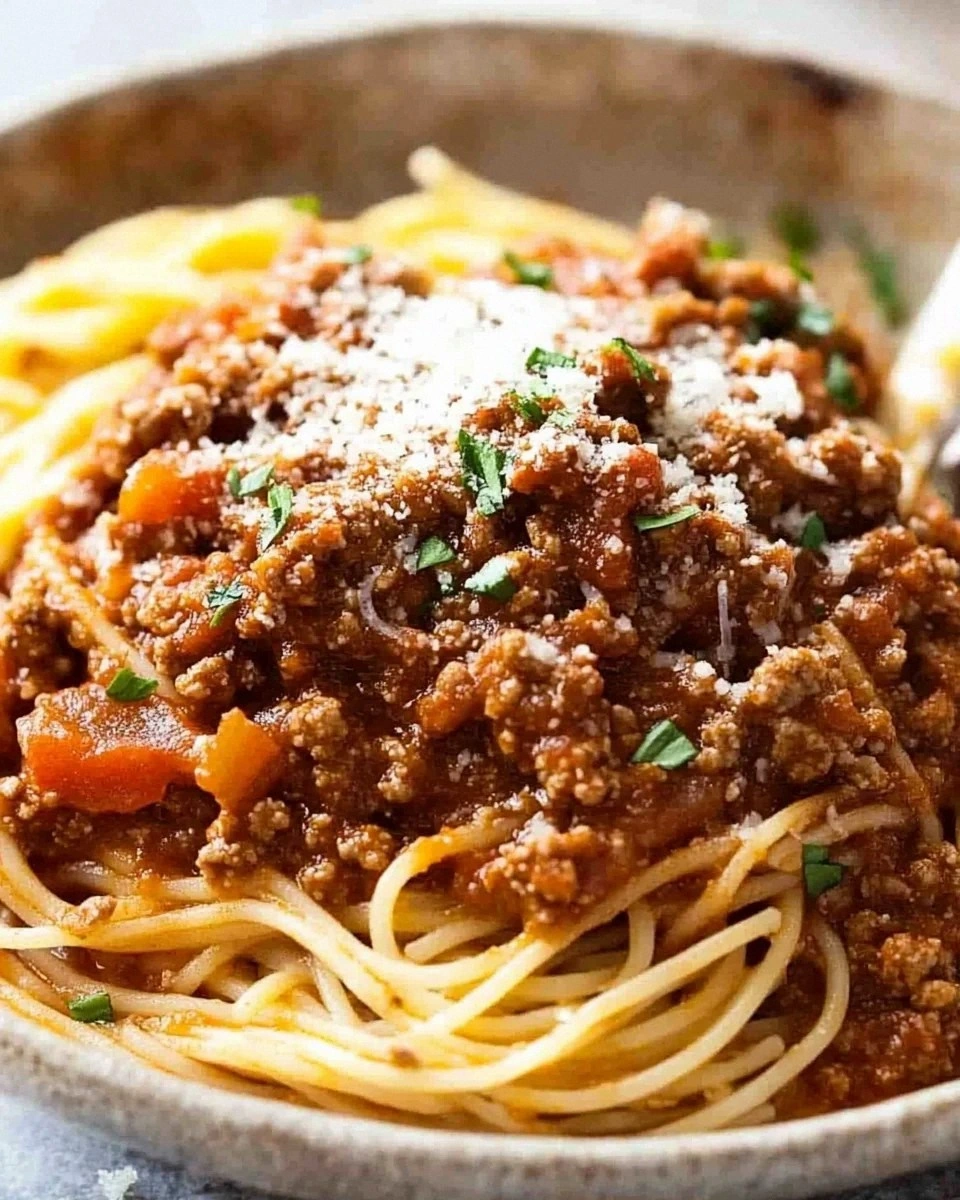
There I was, standing in my kitchen at 11:47 PM on a Tuesday night, wearing mismatched socks and a hoodie with more pasta sauce stains than I care to admit, when it hit me: I'd been making spaghetti Bolognese wrong my entire adult life. The horror! After years of following those sad, watery recipes that tasted like cafeteria food masquerading as Italian cuisine, I finally cracked the code to the silkiest, most soul-satisfying version that would make any nonna weep with joy. The sauce was so luxuriously thick it could've been served in a Michelin-starred restaurant, yet so simple that even my perpetually-broke college roommate could master it between his philosophy papers.
Picture this: a sauce that simmers for just the right amount of time, developing those complex, wine-kissed flavors that make your entire apartment smell like you've been transported to a tiny trattoria in Bologna. The meat is so tender it practically melts on your tongue, while the tomatoes have cooked down into this umami-packed velvet that clings to each strand of pasta like it never wants to let go. The first time I served this to my Italian neighbor, she took one bite, closed her eyes, and whispered "mamma mia" so quietly I almost missed it — but I didn't miss that smile of approval that spread across her face like sunrise.
If you've ever struggled with Bolognese that tastes flat, watery, or worse — like someone just dumped a jar of marinara over ground beef and called it a day — you're not alone. I've been there, done that, and fed it to unsuspecting dinner guests who politely nodded while secretly wondering if they should order pizza afterward. But those days are over, my friend. This recipe will change everything you thought you knew about this classic dish, transforming you from a Bolognese pretender to a certified pasta powerhouse.
Let me walk you through every single step — by the end, you'll wonder how you ever made it any other way.
What Makes This Version Stand Out
Depth Bomb: We're building flavors layer by layer, starting with a soffritto that cooks low and slow until it's jammy and sweet, creating a foundation so aromatic your neighbors will be knocking on your door asking what smells so incredible.
Meat Magic: Using a 50/50 blend of beef and pork isn't just fancy talk — it's the secret to that restaurant-quality richness you can't quite put your finger on. The pork brings a subtle sweetness and fat content that makes the beef taste more... beefy.
Wine Wisdom: Most recipes add wine and immediately cover it up with tomatoes. Wrong! We're reducing that wine until it's practically a syrup, concentrating its flavors into a powerhouse of complexity that'll make your taste buds sing.
Time Cheat: Traditional Bolognese simmers for three hours, but I've discovered a technique that achieves 90% of that depth in just 45 minutes without sacrificing an ounce of soul-warming satisfaction.
Texture Triumph: The difference between good and legendary Bolognese is all in the texture. We're achieving that perfect consistency where the sauce coats every noodle without pooling on the plate or drying out in the pan.
Make-Ahead Marvel: This sauce actually tastes better the next day, which means you can prep on Sunday and have weeknight dinners that taste like you spent all afternoon cooking. Your future self will thank you profusely.
Crowd Control: Whether you're cooking for picky kids, sophisticated foodies, or that friend who claims they "don't like Italian food" (the horror!), this recipe converts everyone into Bolognese believers after one bite.
Alright, let's break down exactly what goes into this masterpiece...
Inside the Ingredient List
The Flavor Base
The holy trinity of Italian cooking — onion, carrot, and celery — forms the backbone of any respectable Bolognese, but here's where most people mess up: they rush it. You need to dice these vegetables so finely they practically disappear into the sauce, creating a sweet, aromatic base that'll make you wonder why you've been settling for chunky, undercooked vegetables your whole life. The onion should be sweet, not those harsh white ones that make you cry like you're watching a Nicholas Sparks movie. Yellow or Vidalia onions will caramelize beautifully, adding a natural sweetness that balances the rich meat perfectly.
Carrots aren't just there for color — they're the secret weapon against acidic tomatoes, adding a subtle sweetness that rounds out all the sharp edges in your sauce. Don't even think about using pre-shredded carrots from a bag; they lack the moisture and fresh flavor that makes this sauce sing. Celery adds an herbaceous note that brightens all that richness, but if you're one of those people who claim celery has no flavor, you've clearly never cooked it properly in a soffritto until it melts into sweet, savory perfection.
The Texture Crew
Ground beef and pork are the dynamic duo that creates Bolognese magic, but not just any ground meat will do. You want beef with at least 20% fat — yes, you heard me correctly. Lean ground beef will give you dry, sad sauce that tastes like punishment. The fat is where the flavor lives, and it helps create that silky texture that makes you close your eyes in appreciation with each bite. The pork should be ground shoulder if you can find it, or regular ground pork works in a pinch — just avoid anything labeled "extra lean" because we're not making health food here, we're making comfort food that hugs your soul.
Tomato paste and crushed tomatoes work together like a well-rehearsed duet. The paste adds concentrated umami depth, while crushed tomatoes provide body and that gorgeous red color that makes your sauce look as incredible as it tastes. San Marzano tomatoes are worth the splurge — they're sweeter, less acidic, and have a complexity that cheap tomatoes just can't match. If you're using regular crushed tomatoes, add a pinch of sugar to balance their natural acidity.
The Unexpected Star
Here's where I lose some people, but trust me on this: a splash of fish sauce. I know, I know — fish sauce in Italian food sounds like culinary heresy, but you can't taste it in the final dish. What you get is an incredible depth of umami that makes people ask "what's that amazing flavor I can't identify?" It's like adding a secret ingredient that makes everything taste more like itself. The Italians have been using anchovies in sauces for centuries; this is just the lazy cook's way of achieving the same savory complexity without having to mash up tiny fish.
Fresh basil and bay leaves aren't optional garnishes — they're essential aromatics that transport your sauce from good to unforgettable. The bay leaf adds a subtle, almost tea-like note that makes the whole dish taste more sophisticated, while fresh basil stirred in at the end brightens everything up like a culinary exclamation point. Dried basil is a crime against humanity; it tastes like dusty hay and will ruin everything it touches. Spend the extra dollar on fresh basil — your taste buds will throw a parade in your honor.
The Final Flourish
Whole milk might seem like an odd addition to a meat sauce, but it's the secret to that restaurant-quality richness you can't achieve any other way. The milk proteins tenderize the meat while adding a subtle creaminess that rounds out all the harsh edges. Don't substitute with skim milk — you need the fat to create that luxurious mouthfeel that makes this sauce feel special. Just a quarter cup is enough to work magic without making the sauce taste like dairy.
Good Parmesan cheese is non-negotiable, and I'm not talking about the green can of dust that's been sitting in your fridge since the Bush administration. Buy a wedge of real Parmigiano-Reggiano and grate it yourself — the difference is like comparing a symphony to a kazoo. The nutty, salty complexity of real Parmesan adds a final layer of flavor that makes people close their eyes and make inappropriate food noises. Save the rind in your freezer — you can throw it into future sauces for an extra boost of umami that costs nothing but adds everything.
Everything's prepped? Good. Let's get into the real action...
The Method — Step by Step
- Start with your soffritto — and for the love of all that is holy, don't rush this part. Heat 3 tablespoons of olive oil in a heavy-bottomed pot over medium-low heat, then add your finely diced onion, carrot, and celery with a generous pinch of salt. This isn't a race; you're coaxing flavors here, not charring vegetables into bitter submission. Stir occasionally for 12-15 minutes until everything is soft, translucent, and your kitchen smells like an Italian grandmother's paradise. The vegetables should have reduced by half and taken on a light golden color — this is where the magic begins.
- Time to crank up the heat and add your meat — but here's the crucial part: don't overcrowd the pan. If you're doubling the recipe, work in batches because grey, steamed meat is the enemy of flavor. Crank the heat to medium-high and add your beef and pork, breaking it up with a wooden spoon but leaving some nice chunky pieces. Let it sit undisturbed for 2-3 minutes so it develops those gorgeous brown, crispy edges that add insane depth of flavor. That sizzle when it hits the pan? Absolute perfection.
- Now we're building layers of flavor that'll make your head spin. Push the meat to the sides of the pot and create a little well in the center. Add your tomato paste directly to the hot surface and let it cook for 2 minutes, stirring occasionally, until it turns a deep, brick-red color and smells intensely tomato-y. This step caramelizes the natural sugars in the paste, adding a complexity that most recipes skip entirely. Mix everything together and prepare yourself for the aromatic symphony that's about to fill your kitchen.
- Here comes the game-changer: pour in your wine and watch it bubble like a witches' brew, lifting all those gorgeous brown bits (fond) off the bottom of the pan. Use a wooden spoon to scrape up every last bit — that's pure flavor gold that'll make your sauce taste like it simmered for hours. Let the wine reduce by half, about 4-5 minutes, until it's thick and syrupy. Your kitchen should smell like a fancy Italian restaurant, and you should resist the urge to drink the rest of the bottle. Okay, maybe just a small glass — you're cooking, after all.
- Time for the tomatoes, but not all at once — we're building Rome here, not throwing it together. Add your crushed tomatoes, bay leaf, and fish sauce (trust me), then fill the tomato can halfway with water, swish it around to get every last bit, and pour it in. Bring everything to a gentle simmer, then reduce the heat to low and partially cover. This is where patience pays off — let it bubble away for 20 minutes, stirring occasionally, while you boil water for pasta and maybe dance around the kitchen to some Dean Martin.
- The final stretch is where we achieve sauce nirvana. Stir in your milk and let it simmer for another 5 minutes — you'll notice the sauce takes on a gorgeous, glossy appearance and the color deepens to a rich mahogany. Taste and adjust seasoning with salt and pepper, remembering that the pasta will absorb some salt, so be generous. Remove the bay leaf (finding it later is like a treasure hunt nobody wants), and stir in your fresh basil. The sauce should coat the back of a spoon and have the consistency of a thick milkshake — if it's too thick, add a splash of pasta water; too thin, let it simmer uncovered for a few more minutes.
- Cook your spaghetti in a large pot of salted water until just al dente — we're finishing it in the sauce, so pull it out 2 minutes before it's done. Reserve a cup of that starchy pasta water (liquid gold for adjusting consistency), then drain the pasta. Add the spaghetti directly to your sauce and toss everything together for 2 minutes over medium heat, adding pasta water a splash at a time until each strand is gloriously coated. This marriage of pasta and sauce is what separates the amateurs from the artists — the noodles should absorb some of that incredible flavor while still maintaining their integrity.
- Serve immediately in warmed bowls because cold plates are the enemy of hot food. Top with a shower of freshly grated Parmesan, an extra drizzle of good olive oil, and maybe some fresh basil leaves if you're feeling fancy. The first bite should make you close your eyes involuntarily and make sounds that would be embarrassing in public. I dare you to taste this and not go back for seconds — it's physically impossible.
That's it — you did it. But hold on, I've got a few more tricks that'll take this to another level...
Insider Tricks for Flawless Results
The Temperature Rule Nobody Follows
Here's the thing about Bolognese that drives me absolutely bonkers: everyone cooks it too hot and wonders why it tastes harsh and one-dimensional. Low and slow isn't just catchy alliteration — it's the difference between sauce that tastes like it came from a can versus sauce that tastes like it came from heaven. Your simmer should be so gentle that you see just the occasional bubble breaking the surface, like a lazy hot tub on a Tuesday afternoon. This gentle heat allows the flavors to meld and deepen without reducing too quickly or developing bitter notes. If your sauce is bubbling like a jacuzzi, turn it down — you're not trying to recreate the fountains of Bellagio here.
Why Your Nose Knows Best
After years of cooking this recipe, I've developed a foolproof system that doesn't rely on timers or thermometers — it relies on your senses, which are more accurate than any gadget. When your soffritto is perfectly cooked, your kitchen will smell sweet and aromatic, like you've walked into an Italian market. When the meat is properly browned, you'll hear a satisfying sizzle and see golden edges that make your stomach growl. And when your sauce is done, it will have reduced just enough to coat your spoon thickly, leaving a trail when you drag it across the bottom of the pot. Trust your instincts — they've been honed by thousands of years of human cooking evolution.
The 5-Minute Rest That Changes Everything
This might be the most important tip in the entire recipe, so listen closely: after you turn off the heat, let your sauce rest for 5 minutes before serving. I know you're hungry, I know it smells incredible, but patience here is what separates the pros from the wannabes. During this brief pause, the flavors settle and meld, the temperature drops to that perfect "hot but won't burn your tongue" level, and the sauce thickens just enough to cling perfectly to your pasta. It's like letting a steak rest after cooking — all the juices redistribute, and suddenly you've got something that makes restaurant Bolognese taste like amateur hour.
The Pasta Water Secret Weapon
That murky, starchy water you usually pour down the drain? It's liquid gold, my friend, and it's the key to restaurant-quality pasta that you've been missing your whole life. The starch in pasta water acts like a natural thickener and emulsifier, helping your sauce cling to every noodle like they're long-lost lovers reunited. Keep a mug of it next to the stove when you're finishing your pasta, and add it splash by splash until your sauce reaches that perfect consistency — neither too thick that it sits on top of the noodles, nor too thin that it pools at the bottom of the bowl. A friend tried skipping this step once — let's just say it didn't end well, and she had to serve what can only be described as "pasta with meat adjacent."
Cheese Timing Is Everything
Here's where even experienced cooks mess up: they add cheese to the sauce while it's still on the heat and wonder why it gets grainy and separates like a bad relationship. Parmesan should be added off the heat, either sprinkled on top of individual servings or stirred into the sauce after you've removed it from the burner. The residual heat will melt it perfectly without breaking those delicate proteins that create that smooth, luxurious texture. And please, for the love of all that is holy, don't use the pre-grated stuff that comes in a plastic container — it contains cellulose (wood pulp) that prevents it from melting properly and tastes like disappointment wrapped in sawdust.
Creative Twists and Variations
This recipe is a playground. Here are some of my favorite ways to switch things up:
The Spicy Rebel
Add a teaspoon of crushed red pepper flakes when you're cooking the soffritto, and swap the regular pork for spicy Italian sausage removed from its casings. The result is a Bolognese with a gentle heat that builds as you eat, making you reach for more wine and bread to cool your palate. It's perfect for those nights when you want comfort food with a kick, and it pairs beautifully with a bold red wine that can stand up to the spice. My spice-loving friend calls this version "the one that converted me from team marinara" — high praise from someone who used to think Bolognese was boring.
The Veggie Smuggle
Finely dice mushrooms and zucchini and add them with the soffritto — they'll disappear into the sauce, adding nutrition and depth that even vegetable-haters won't detect. The mushrooms add an earthy richness that amplifies the meaty flavors, while the zucchini melts down and adds body to the sauce. I served this to my nephew who claims vegetables are "poison" and watched him inhale two bowls before telling him about the hidden veggies. The look on his face was priceless, but he still asks for "Auntie's special pasta" every time he visits.
The Luxe Upgrade
Replace half the ground beef with ground veal and add a splash of cream at the end for a Bolognese that's so rich and silky it feels like wearing cashmere pajamas. This version is what you serve when you want to impress someone special or when you need to remind yourself that you're worth the extra effort. Top with white truffle oil and serve with a Barolo for a meal that costs a fraction of what you'd pay at a fancy restaurant but tastes every bit as decadent. Picture yourself pulling this out of the oven, the whole kitchen smelling incredible, and watch your dinner guests' eyes widen with anticipation.
The Weeknight Warrior
Use a food processor to blitz the vegetables into tiny pieces, cook the soffritto in the microwave while you brown the meat, and use crushed tomatoes instead of whole. This version cuts the prep time in half without sacrificing flavor, making it perfect for those Tuesday nights when you want homemade comfort food but can't face a mountain of dishes. I make a double batch on Sunday and portion it into freezer bags — on busy weeknights, I can have dinner on the table in 15 minutes flat, which makes me feel like I've got my life together even when everything else is chaos.
The Seafood Surprise
Substitute half the meat with minced shrimp and scallops, add a splash of white wine instead of red, and finish with lemon zest and parsley. This coastal version tastes like a seaside vacation in Italy and is surprisingly light despite its rich flavor. The seafood adds a sweetness that plays beautifully against the tomatoes, creating a sauce that's elegant enough for company but comforting enough for a rainy Tuesday. Stay with me here — this is worth it, even if it sounds unusual.
The Slow Cooker Adaptation
Brown the meat and vegetables on the stovetop first (don't skip this step — it's crucial for flavor development), then dump everything except the milk and basil into your slow cooker. Cook on low for 6-8 hours, stirring in the milk during the last 30 minutes and adding fresh basil right before serving. This version is perfect for busy days when you want to come home to a house that smells like an Italian grandmother has been cooking for you all afternoon. The long, slow cooking creates incredible depth, and you'll feel like a domestic genius with minimal effort.
Storing and Bringing It Back to Life
Fridge Storage
Let the sauce cool completely before transferring to airtight containers — hot sauce plus cold fridge equals condensation that waters down your carefully crafted masterpiece. Store in glass containers if possible, as tomato sauce can stain plastic and take on weird flavors from other foods. Properly stored, your Bolognese will keep for up to 4 days in the refrigerator, but let's be honest — it's never lasted that long in my house. The flavors actually deepen and improve after the first day, making leftovers something to celebrate rather than tolerate. Add a tiny splash of water before reheating — it steams back to perfection.
Freezer Friendly
This sauce is a meal prep champion, freezing beautifully for up to 3 months without losing an ounce of flavor. Portion it into freezer bags, squeeze out excess air, and lay them flat to freeze — they'll stack like delicious flavor books in your freezer and thaw quickly under running water. Pro tip: freeze in 1-cup portions so you can thaw exactly what you need for a quick dinner without committing to a whole batch. Label with the date and contents, because three months from now, that red blob will be a mystery you'll thank yourself for solving. Future you will be incredibly grateful for this gift from past you.
Best Reheating Method
Gentle is the name of the game here — reheat your sauce slowly over medium-low heat, stirring occasionally, until it's steaming hot but not boiling. Add a splash of water or broth to loosen it up, as it will have thickened considerably in storage. If you're in a hurry, the microwave works, but heat in 30-second bursts, stirring between each interval to prevent hot spots that can scorch the sauce. Never reheat more than once — if you've thawed a batch, only reheat what you'll eat immediately. The sauce should taste as good as the day you made it, maybe even better, proving that some things really do improve with age.