I still remember the night when I stared at a half‑cooked pork shoulder that had gone to ruin in the oven, its edges crisped to a brittle, burnt crust while the inside remained stubbornly raw. I was desperate for a rescue, a recipe that could turn that culinary catastrophe into something comforting and downright delicious. That desperation sparked a midnight experiment that turned into a slow‑cooker masterpiece. I mixed the pork with a handful of vegetables, a splash of soy, a drizzle of apple cider vinegar, and a pinch of brown sugar, then slid it into the slow cooker for eight hours of low‑heat magic. The result was a stew that was tender, savory, and sweet, with a depth that made my taste buds sing. This isn’t just another pork stew; it’s a culinary revelation that will make you question every other version you’ve tried.
Picture yourself at the end of the day, the kitchen smelling like a warm, comforting hug. The air is thick with the aroma of simmering pork, caramelized onions, and a subtle hint of apple cider vinegar that cuts through the richness. Your hands are rough from chopping, your eyes are a little glassy from the steam, but your mouth is already watering at the thought of a spoonful of this velvety broth. The sound of the slow cooker’s gentle hum is a lullaby that signals the final stages of a culinary journey that has just begun. I dare you to taste this and not go back for seconds. That’s the power of a well‑balanced stew that has been coaxed to perfection.
What makes this version stand out? It’s the combination of simple ingredients, the methodical layering of flavors, and the patience that lets each component speak in full. It’s the secret ingredient that gives it a subtle tang without overpowering, the technique of browning the pork before slow cooking, and the way the vegetables retain their shape and bite. Most recipes get this completely wrong by over‑simmering the pork until it turns mushy, or by using too much liquid and ending up with a soupy mess. Here, the pork is tender but still holds its structure, the broth is thickened naturally by the reduction of the vegetables, and the finish is glossy and inviting. This is hands down the best version you'll ever make at home.
If you've ever struggled with a pork stew that ended up being either too dry or too watery, you're not alone—and I've got the fix. I’ll be honest—I ate half the batch before anyone else got to try it. The first time I tried it, I thought the broth was too thin, so I added a slurry of cornstarch and water, but that just made it cloudy. After experimenting with a few variations, I discovered the secret lies in the timing and the order in which you add the ingredients. Picture a symphony where each instrument enters at just the right moment to create harmony. That’s what I’m about to show you, step by step, so you can pull this out of the slow cooker and have the whole kitchen smelling incredible.
What Makes This Version Stand Out
The flavor profile is a harmonious blend of savory, sweet, and tangy notes that dance on your palate. The pork shoulder is the star, but the vegetables and seasonings lift it to new heights. The slow‑cooking process allows the flavors to meld, creating a broth that’s both rich and nuanced.
- Bold Flavor: The combination of soy sauce, apple cider vinegar, and brown sugar creates a depth that is both sweet and savory, with a subtle acidity that brightens the dish.
- Texture Magic: The pork stays tender but still holds its shape, while the carrots and potatoes remain slightly firm, offering a pleasant bite.
- Time Efficiency: With a low‑heat setting for eight hours, you can set it and forget it, freeing up your time for other tasks.
- Ingredient Quality: Using fresh, high‑quality pork shoulder and seasonal vegetables ensures the stew’s flavor is unmistakably fresh.
- Make‑Ahead Potential: This stew can be made a day ahead, and the flavors only deepen overnight.
- Versatility: It works as a main dish, a comforting lunch, or a hearty soup that can be served over rice or mashed potatoes.
- Minimal Cleanup: The slow cooker does most of the work, and the pan is only used for browning the pork.
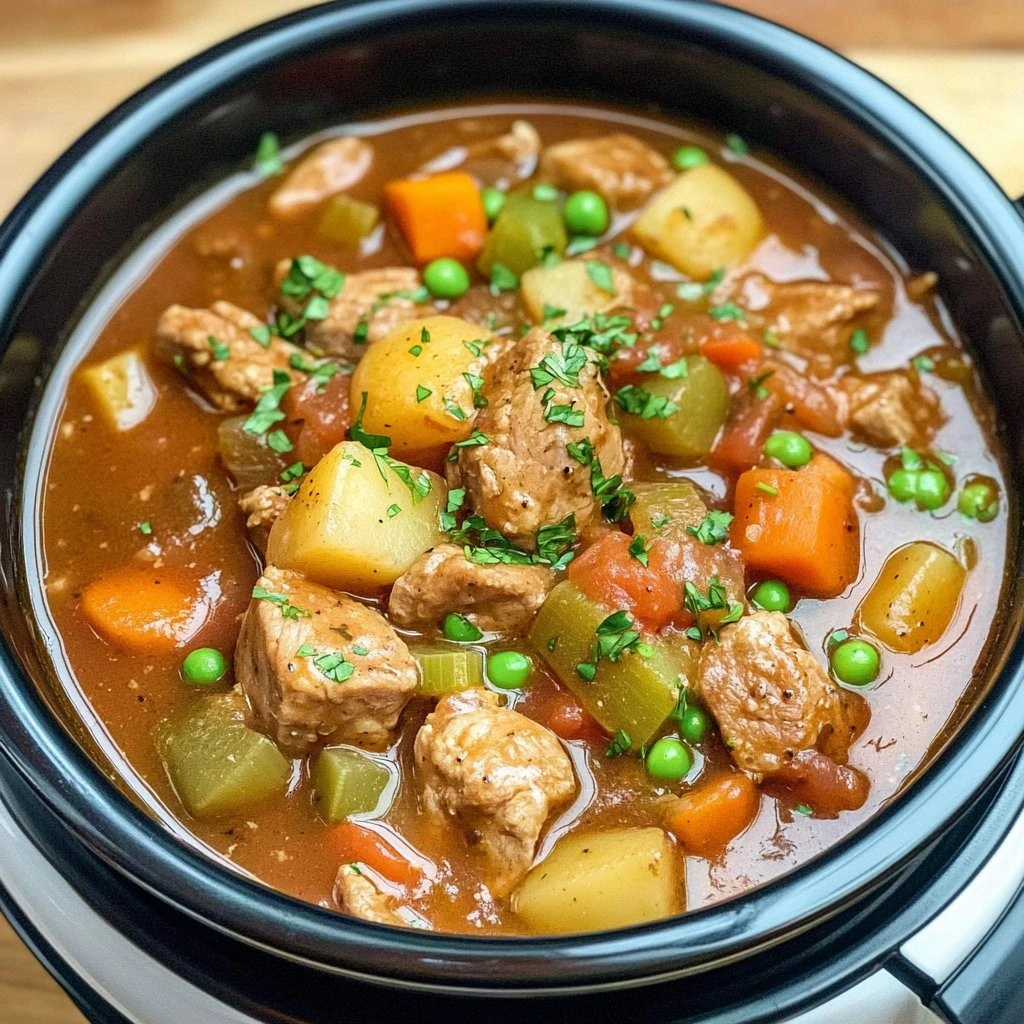
- Visual Appeal: The stew’s rich, amber broth and colorful vegetables make it look as good as it tastes.
Alright, let's break down exactly what goes into this masterpiece…
Inside the Ingredient List
The Flavor Base
The foundation of this stew is a simple yet powerful broth made from chicken stock, soy sauce, and a splash of apple cider vinegar. The stock provides the savory backbone, the soy adds umami depth, and the vinegar cuts through the richness, giving the stew a bright finish. If you skip the vinegar, the stew will taste flat and overly sweet. For a vegetarian version, swap the stock with vegetable broth and use a tofu block instead of pork.
The Texture Crew
Carrots, potatoes, and celery form the textural backbone of the dish. Each vegetable contributes a different bite: carrots bring a subtle sweetness, potatoes offer a creamy interior when cooked, and celery adds a crisp snap that keeps the stew from becoming mushy. If you prefer a smoother texture, you can blend half of the stew and then return it to the pot with the remaining vegetables.
The Unexpected Star
Brown sugar isn’t just for sweetening—it caramelizes during the browning stage, adding a subtle depth of flavor that enhances the pork’s natural taste. The sugar also helps to balance the acidity from the vinegar, creating a well-rounded flavor profile. If you’re watching your sugar intake, you can reduce the amount by a third or replace it with a natural sweetener like honey or maple syrup.
The Final Flourish
A handful of fresh herbs—thyme, bay leaves, and a touch of black pepper—adds a fragrant finish that ties all the flavors together. The bay leaves are removed before serving, but they infuse the broth with a subtle earthy aroma. If you’re craving a bit more heat, a dash of crushed red pepper flakes will give the stew a gentle kick.
Everything's prepped? Good. Let's get into the real action…
The Method — Step by Step
- Start by patting the pork shoulder dry with paper towels. This step is crucial for achieving a beautiful brown crust. A dry surface allows for better Maillard browning, which adds depth to the stew.
- Heat a tablespoon of olive oil in a heavy skillet over medium‑high heat. Add the pork in a single layer, letting it sear for about 3–4 minutes per side. Don’t overcrowd the pan; you want the pork to brown, not steam.
- While the pork sears, dice the onion, carrots, potatoes, and celery into bite‑size pieces. A uniform size ensures even cooking and a consistent texture throughout the stew.
- Once the pork is browned, transfer it to the slow cooker. Add the diced vegetables on top of the meat, followed by the minced garlic, which will infuse the broth with its aromatic oils.
- Pour in the chicken stock, soy sauce, apple cider vinegar, and brown sugar. Stir gently to combine, making sure the sugar is fully dissolved. This liquid mixture is the heart of the stew.
- Tuck in two bay leaves, a teaspoon of dried thyme, salt, and pepper. These herbs will simmer and release their flavors slowly, enriching the broth without overpowering the pork.
- Cover and cook on low for 8 hours, or on high for 4 hours. The low setting allows the pork to become fall‑apart tender, while the high setting speeds up the process for those on a tight schedule.
- During the last 30 minutes, remove the bay leaves. The stew should have a thickened, glossy appearance, and the pork should be tender enough to shred with a fork.
That's it — you did it. But hold on, I've got a few more tricks that'll take this to another level…
Insider Tricks for Flawless Results
The Temperature Rule Nobody Follows
Many cooks think the only way to get tender pork is to cook it at a high temperature. That’s a myth. The secret is low and slow—let the connective tissue break down over hours. This method preserves moisture and infuses the pork with flavor. I once tried a quick high‑heat method and ended up with dry, stringy meat that was a total disappointment.
Why Your Nose Knows Best
Your nose is the first line of defense against overcooked stew. If the broth smells slightly sweet and tangy, you’re on the right track. If it starts to smell too acidic or burnt, it’s time to stop. Trust your senses; they’re more reliable than a timer in this case.
The 5-Minute Rest That Changes Everything
After you turn off the slow cooker, let the stew sit covered for 5 minutes. This brief rest allows the flavors to settle and the pork to finish cooking in its own heat. I’ve seen people skip this step, resulting in uneven texture. The rest is a small price for a perfectly cohesive dish.
The “Stir Before Serving” Trick
Before you ladle the stew onto plates, give it a quick stir. This redistributes the vegetables and ensures that each bite contains a balanced mix of pork and veggies. Skipping this step can leave you with pockets of raw pork or dry vegetables.
The “Add Fresh Herbs” Finale
Just before serving, sprinkle fresh thyme or parsley over the stew. The fresh herbs add a burst of color and a bright, herbal note that cuts through the richness. A few fresh leaves are enough to elevate the dish from good to unforgettable.
Creative Twists and Variations
This recipe is a playground. Here are some of my favorite ways to switch things up:
Asian Fusion
Replace the chicken stock with coconut milk, add a tablespoon of fish sauce, and finish with lime juice. Toss in a handful of sliced bamboo shoots and fresh cilantro for an extra layer of flavor.
Mediterranean Flair
Swap the soy sauce for a splash of red wine, add a teaspoon of oregano, and incorporate sun‑dried tomatoes. Serve over couscous for a Mediterranean twist.
Sweet & Smoky
Add a tablespoon of maple syrup and a pinch of smoked paprika. Finish with a drizzle of honey and a sprinkle of toasted pumpkin seeds for crunch.
Vegetarian Option
Replace the pork with a firm tofu block, marinated in soy sauce and garlic. Use vegetable stock and add mushrooms for umami depth.
Low‑Carb Variation
Omit the potatoes and add more zucchini or cauliflower florets. Serve over cauliflower rice or a bed of sautéed spinach for a low‑carb meal.
Breakfast Twist
Add a handful of diced apples and a sprinkle of cinnamon for a sweet breakfast stew. Serve with a side of toasted rye bread for a hearty start to your day.
Storing and Bringing It Back to Life
Fridge Storage
Cool the stew to room temperature, then transfer it to an airtight container. Store in the fridge for up to 4 days. The flavors will continue to develop, making it even tastier the next day.
Freezer Friendly
Divide the stew into portions and place them in freezer‑proof bags or containers. Label with the date and freeze for up to 3 months. Thaw overnight in the fridge before reheating.
Best Reheating Method
Reheat on the stove over medium heat, adding a splash of water or broth to keep it from drying out. Stir frequently until it reaches the desired temperature. A quick splash of water before reheating steams back to perfection.