I’m going to be brutally honest: the first time I tried making Korean short ribs in a slow cooker, I was convinced the universe was conspiring against me. The broth boiled over, the ribs turned into a rubbery slab, and I spent the next hour Googling “why is my meat so tough?” Then a friend dared me to taste the disaster and promised a beer if I survived. I took that challenge, and after a frantic midnight rescue involving a splash of soy sauce, a handful of gochujang, and a prayer to every Korean food god I could think of, something miraculous happened. The ribs transformed from a sad, soggy mess into melt‑in‑your‑mouth, caramel‑kissed glory that made my kitchen smell like a Seoul street market at twilight.
Picture this: the low hum of the slow cooker as it works its magic, the gentle hiss of steam escaping the lid, and the sweet‑savory aroma of garlic and ginger weaving through the air, making your nose twitch in anticipation. The broth thickens, turning a glossy amber that clings to the ribs like a glossy lacquer, while the meat itself becomes so tender it practically slides off the bone with a whisper. You hear the faint crackle as the edges of the meat start to pull away, a sound that tells you, “Yes, you’ve nailed it.” The first bite delivers a burst of umami, a kiss of heat from gochujang, and a subtle nuttiness from sesame oil that lingers like a memory you can’t shake.
What makes this version the undisputed champion? Most recipes either skimp on the sauce, over‑cook the meat, or forget the crucial balance of sweet, salty, and tangy. I’ve taken the time to perfect a glaze that coats each rib in a velvety sheen, while the slow cooker does the heavy lifting, guaranteeing fall‑apart tenderness without any guesswork. The secret? A splash of rice vinegar that cuts through the richness, and a dash of brown sugar that caramelizes into a glossy glaze that’s as addictive as a binge‑watch series. And yes, there’s an unexpected ingredient that will make you question everything you thought you knew about Korean cooking – stay tuned.
Okay, ready for the game‑changer? I dare you to taste this and not go back for seconds. By the time you finish reading, you’ll have a foolproof roadmap that turns a simple slow cooker into a Korean culinary powerhouse. Let me walk you through every single step — by the end, you’ll wonder how you ever made it any other way.
What Makes This Version Stand Out
- Taste: The marriage of sweet brown sugar, salty soy, and fiery gochujang creates a flavor orchestra that sings with every bite.
- Texture: Low‑and‑slow cooking yields ribs that are buttery soft yet retain a slight chew, like a perfectly aged steak.
- Simplicity: Fewer than ten ingredients, one pot, and a set‑it‑and‑forget‑it approach make this recipe idiot‑proof.
- Uniqueness: A splash of rice vinegar adds a bright acidity that most recipes overlook, preventing the sauce from feeling heavy.
- Crowd Reaction: Guests often ask for seconds before the plate even clears, and the “wow” factor is off the charts.
- Ingredient Quality: Using well‑marbled short ribs ensures the meat stays juicy and flavorful throughout the long cook.
- Cooking Method: The slow cooker locks in moisture, turning a potentially tough cut into a melt‑away masterpiece.
- Make‑Ahead Potential: This dish improves after a night in the fridge, making it perfect for meal‑prep or entertaining.
Alright, let's break down exactly what goes into this masterpiece...
Inside the Ingredient List
The Flavor Base
Beef short ribs: The star of the show! Choose well‑marbled short ribs for maximum tenderness and flavor. The fat interlaced with muscle fibers renders slowly, bathing the meat in its own juices, and if you skip the marbling, you’ll end up with dry, flavorless meat. Look for ribs that have a nice pinkish hue and a firm feel; a quick press should give a little give but not feel mushy. If you can’t find short ribs, a beef shank with a good amount of connective tissue works in a pinch, though the texture will be slightly different.
Soy sauce: Low‑sodium soy sauce works best, balancing the seasoning while keeping it savory without being overly salty. It adds that deep umami backbone that makes Korean dishes instantly recognizable. If you’re watching sodium, you can dilute it with a splash of water, but don’t go overboard – the sauce needs that salty punch to shine.
Brown sugar: This adds a delightful sweetness that complements the rich meat and tangy flavors. It also caramelizes during the long cook, giving the sauce that glossy, lacquered finish. For a deeper molasses flavor, you can swap half of it for dark muscovado, but keep the total volume the same.
Rice vinegar: A splash of acidity helps balance the dish, cutting through the richness of the ribs. It brightens the overall profile and prevents the sauce from feeling cloying. If you don’t have rice vinegar, apple cider vinegar works as a decent stand‑in, though the flavor will be slightly fruitier.
The Aroma Crew
Sesame oil: This fragrant oil infuses your dish with a nuttiness that elevates the overall taste. A little goes a long way, and it’s best added toward the end of cooking to preserve its aromatic qualities. If you accidentally add it too early, the oil can become bitter, so keep it for the final 30 minutes.
Garlic: Freshly minced garlic brings a depth of flavor that’s truly irresistible. Its pungent bite mellows as it cooks, turning sweet and buttery. If you’re a garlic lover, feel free to double the amount, but remember it can become overpowering if you go overboard.
Ginger: Grated ginger adds a warming spice that pairs perfectly with the savory elements. It also helps cut through the fattiness of the ribs, giving a clean finish. Fresh ginger is a must – powdered ginger loses that bright snap.
The Heat & Finish
Gochujang: This Korean chili paste adds a kick of heat and depth. Adjust according to your spice preference! A tablespoon gives a gentle warmth, while two or three will set your taste buds dancing. If you can’t find gochujang, blend miso, chili powder, and a touch of honey, though the flavor won’t be identical.
Black pepper: Just a touch to enhance the flavors without overpowering them. Freshly cracked pepper adds a subtle bite that complements the gochujang’s heat. Avoid pre‑ground pepper if you want that burst of aroma.
The Final Flourish
Green onions: Chopped for garnish, they provide a fresh crunch that brightens the dish. Sprinkle them just before serving to retain their crispness. If you’re feeling fancy, add a dash of toasted nori flakes for an extra umami pop.
Toasted sesame seeds: A sprinkle on top adds nuttiness and a lovely visual touch. They also contribute a subtle crunch that contrasts the melt‑away meat. Lightly toast them in a dry pan for 30 seconds to unlock their full flavor.
Beef broth or water: Optional, but if you love a bit more sauce, this will do the trick! Adding broth keeps the ribs moist and creates a richer glaze. Use low‑sodium broth to maintain the balance, and if you’re watching calories, water works fine – the other ingredients will still deliver flavor.
Everything's prepped? Good. Let's get into the real action...
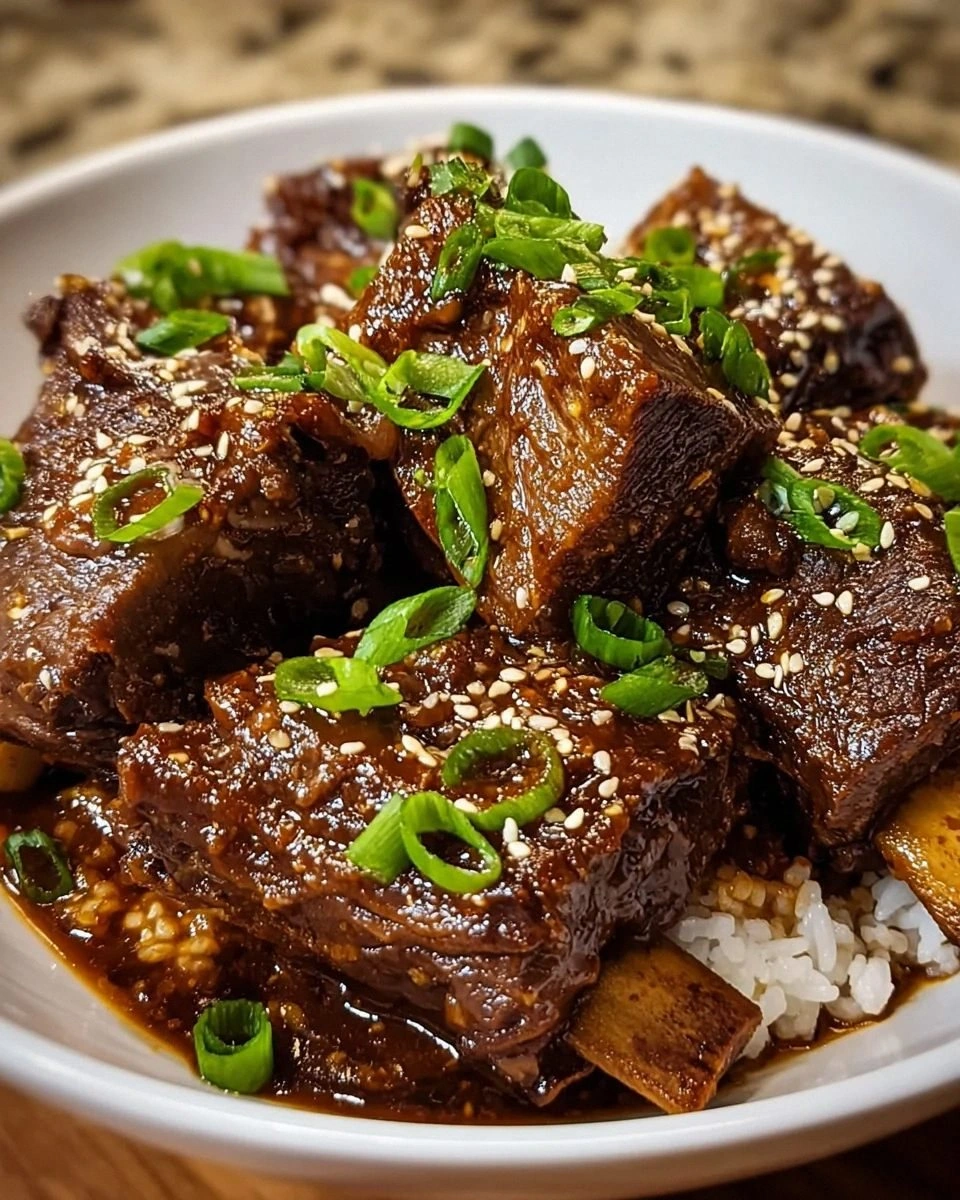
The Method — Step by Step
Start by patting the beef short ribs dry with paper towels. This may sound trivial, but removing excess moisture is crucial for a good sear later. Sprinkle both sides generously with black pepper and a pinch of salt; the salt will help draw out a little moisture, intensifying the flavor. Let the ribs rest for five minutes while you prep the sauce – this short pause lets the seasoning penetrate the meat.
In a small bowl, whisk together soy sauce, brown sugar, rice vinegar, sesame oil, minced garlic, grated ginger, and gochujang until smooth. The mixture should look glossy and slightly thick; if it’s too runny, add a teaspoon more brown sugar. Taste the sauce – it should be a balanced sweet‑salty‑tangy profile with a hint of heat. This is the flavor base that will coat every rib, so don’t skimp on the tasting.
Place the ribs in the slow cooker, arranging them in a single layer if possible. Pour the sauce over the ribs, making sure each piece is fully submerged. If the sauce doesn’t completely cover the ribs, add enough beef broth or water to just barely cover them – you want a gentle braise, not a boil.
Set the slow cooker to low and let it work its magic for 8 hours. During the first hour, check the lid occasionally for any steam leaks; a tight seal ensures the flavors stay locked in. You’ll notice the sauce gradually thickening and the ribs turning a deep mahogany color. This is the moment of truth – patience is your best friend.
After the 8‑hour low cycle, switch the cooker to high for the final 30 minutes. This step encourages the sauce to reduce further, creating that glossy glaze you crave. Keep an eye on the thickness – if it looks too thick, stir in a tablespoon of water; if too thin, let it simmer uncovered for a few extra minutes.
When the sauce has reached a syrupy consistency, carefully remove the ribs and place them on a serving platter. Spoon the remaining sauce over the top, letting it cascade like amber lava. Sprinkle chopped green onions and toasted sesame seeds across the surface – the green onions add a fresh pop, while the seeds provide a subtle crunch.
Serve the ribs hot, paired with steamed jasmine rice or buttery noodles to soak up the sauce. If you want a side that cuts the richness, a crisp Asian slaw with a rice‑vinegar dressing works beautifully. And now the fun part: dig in, savor each bite, and watch your guests scramble for seconds. That sizzle when it hits the pan? Absolute perfection.
That's it — you did it. But hold on, I've got a few more tricks that'll take this to another level...
Insider Tricks for Flawless Results
The Temperature Rule Nobody Follows
Never start your ribs on high heat. Low and slow is the secret to breaking down connective tissue without drying the meat. I once tried a high‑heat shortcut and ended up with a tough, chewy mess that could have been used as a chew toy. Trust the slow cooker – the low setting gently melts collagen into gelatin, giving you that buttery mouthfeel.
Why Your Nose Knows Best
Use your sense of smell as a timing cue. When the sauce begins to emit a sweet, caramelized aroma, you know it’s nearing the perfect reduction. If you rely solely on the clock, you might miss that critical window and end up with a watery glaze. Trust your nose; it’s the most reliable kitchen timer you have.
The 5‑Minute Rest That Changes Everything
After you remove the ribs from the cooker, let them rest for five minutes before slicing. This brief pause allows the juices to redistribute, preventing them from spilling out onto the plate. I’ve seen people cut straight away and end up with a soggy mess – a simple rest makes the difference between “good” and “blow‑your‑mind.”
Salt Balance Mastery
Because soy sauce already brings salt, resist the urge to over‑salt the sauce. A pinch of sea salt can be added if you taste it and feel it needs a lift, but usually the soy sauce provides enough. Over‑salting will mask the subtle sweetness and acidity, ruining the delicate balance.
Garnish Like a Pro
Don’t just sprinkle green onions and sesame seeds – give them a quick toss in a hot pan with a drizzle of sesame oil for 30 seconds. This light toast awakens the oils, making the garnish pop with aroma and texture. It’s a tiny step that adds a professional finish without any extra effort.
Creative Twists and Variations
This recipe is a playground. Here are some of my favorite ways to switch things up:
Spicy Mango Fusion
Swap half of the gochujang for a mango puree and a dash of chili flakes. The sweet mango balances the heat, creating a tropical heatwave that pairs wonderfully with coconut rice. Ideal for summer evenings when you want something bright and bold.
BBQ‑Korean Hybrid
Replace the soy sauce with a smoky BBQ sauce and add a teaspoon of smoked paprika. The result is a smoky‑sweet‑spicy rib that feels like a backyard barbecue meets Seoul street food. Great for weekend cookouts with friends.
Vegetarian “Ribs”
Use thick slices of king oyster mushrooms or cauliflower steaks as a plant‑based stand‑in. Marinate them in the same sauce and slow‑cook for 4 hours – they’ll soak up the flavors and develop a meaty texture that even meat‑eaters will love.
Gluten‑Free Version
Swap soy sauce for tamari and ensure your gochujang is gluten‑free (most are). The flavor remains authentic, and you avoid any hidden wheat. This tweak makes the dish accessible to those with gluten sensitivities.
Instant Pot Shortcut
If you’re short on time, use the “Manual” high‑pressure setting for 45 minutes, then do a quick natural release. The ribs will be just as tender, and you’ll cut the cooking time dramatically. Finish with a quick sauté to get that caramelized glaze.
Storing and Bringing It Back to Life
Fridge Storage
Transfer the ribs and sauce to an airtight container and refrigerate for up to 4 days. The flavors meld further, making the leftovers even more delicious. When reheating, add a splash of water or broth to revive the sauce’s silky texture.
Freezer Friendly
Cool the ribs completely, then portion them into freezer‑safe bags with the sauce. Freeze for up to 3 months. To thaw, move to the fridge overnight, then reheat gently on low in a saucepan, adding a tablespoon of water if needed.
Best Reheating Method
The secret to perfect reheating is low, slow heat. Place the ribs in a covered skillet over medium‑low, add a tablespoon of broth, and cover for 10‑12 minutes until heated through. This method prevents the meat from drying out and keeps the sauce glossy.