Picture this: I’m standing in my cramped kitchen, a half‑cooked pot of pasta bubbling like a mischievous cauldron, when the timer dings and a wave of panic hits me. I’ve got a potluck in an hour, a roommate who lives for anything that looks and tastes like summer, and a pantry that’s screaming for a hero. I grabbed the first thing that looked vaguely Italian—some basil, a lonely bag of pine nuts, a tub of mozzarella that was practically begging to be melted—and I thought, “What if I could turn this chaotic mess into a dish that makes people say, ‘I dare you to taste this and not go back for seconds’?” That moment of desperation turned into the spark for what I now swear is the best version you’ll ever make at home.
The kitchen filled with the scent of fresh basil being blitzed into a silky green vortex, the kind of aroma that makes you want to close your eyes and imagine sun‑drenched Italian hillsides. As the pesto swirled, the cherry tomatoes I’d tossed in the pan burst open with a pop, releasing a sweet, vine‑like perfume that danced with the sharp tang of lemon juice. The pasta, cooked al dente, clung to the sauce like a lover refusing to let go, each bite promising a burst of creamy mozzarella that melted in your mouth with a whisper of nuttiness from the pine nuts. I could hear the faint clink of the wooden spoon against the pot, a rhythmic reminder that this was no ordinary salad—it was a celebration of texture, color, and bold flavor.
What makes this version a total game‑changer? Most recipes treat pesto and Caprese as separate entities, but I decided to marry them in a single, cohesive salad that’s both fresh and comforting. The secret? A splash of lemon juice that lifts the pesto, a quick‑blanch of the tomatoes to keep their bright pop without turning mushy, and a generous hand‑full of fresh mozzarella that stays firm yet buttery. I also tossed in a handful of arugula for peppery bite, because why not add a little edge to the classic? And let’s not forget the finishing drizzle of extra‑virgin olive oil that adds a glossy sheen, making the dish look as good as it tastes.
There’s a technique hidden in this recipe that most cooks overlook: the “cold‑shocking” of the pasta after draining. By rinsing the noodles under ice water and then tossing them with a tiny drizzle of oil, you lock in that perfect bite and prevent the pesto from turning gummy. Trust me, this is the moment where the magic truly begins. Let me walk you through every single step — by the end, you’ll wonder how you ever made it any other way.
What Makes This Version Stand Out
- Flavor Fusion: The pesto’s herbaceous depth meets the bright acidity of tomatoes, creating a balanced symphony that sings on the palate.
- Texture Triumph: Al dente pasta, creamy mozzarella, and crunchy pine nuts give you a multi‑layered mouthfeel that’s impossible to resist.
- Simplicity Redefined: With just a handful of pantry staples and fresh produce, you can assemble this dish in under an hour.
- Uniqueness Factor: By integrating the classic Caprese trio into a pasta salad, you get a fresh twist that stands out at any gathering.
- Crowd Reaction: Guests consistently rave, often asking for the recipe before the first bite is even finished.
- Ingredient Quality: Fresh basil and high‑quality olive oil elevate the pesto from ordinary to unforgettable.
- Cooking Method: The cold‑shock technique preserves pasta firmness and prevents the sauce from clumping.
- Make‑Ahead Magic: This salad holds up beautifully for up to 24 hours, making it perfect for meal prep or potlucks.
Inside the Ingredient List
The Flavor Base
Basil is the heart‑beat of this dish; its aromatic oils release when blended, turning the pesto into a vivid green elixir that coats each noodle like velvet. If you ever skip fresh basil for dried, you’ll end up with a flat, lifeless sauce that feels more like a wilted garnish than a main attraction. When shopping, look for leaves that are deep green, fragrant, and free of dark spots—these are the signs of peak freshness. As a swap, you can blend spinach and parsley together for a milder green, but you’ll lose that signature basil punch.
The Texture Crew
Pine nuts bring a buttery crunch that contrasts beautifully with the soft mozzarella; they also add a subtle earthiness that anchors the bright herbs. Skipping them? You’ll miss the nuanced crunch that makes each bite interesting. If you’re allergic or on a budget, toasted almonds or walnuts work well, though they’ll shift the flavor profile toward a nuttier, slightly bitter note. Toast them lightly for extra depth before blending into the pesto.
The Unexpected Star
Cherry tomatoes, halved and lightly blanched, deliver a juicy burst that cuts through the richness of the pesto and cheese. Their natural sugars caramelize just enough to add a whisper of sweetness without turning soggy. If you forget to blanch them, the salad can become watery; the quick ice‑bath step is crucial. For a twist, try heirloom tomatoes for a rainbow of colors and a more complex flavor.
The Final Flourish
Mozzarella balls (bocconcini) are the creamy anchors that tie the dish together, offering a melt‑in‑your‑mouth experience that balances the pesto’s herbaceous bite. Using shredded mozzarella will make the cheese disperse, losing that satisfying bite. When selecting, choose mozzarella stored in water rather than brine for a cleaner taste. A drizzle of lemon juice at the end brightens the entire salad, preventing the pesto from feeling heavy.
Everything's prepped? Good. Let's get into the real action...
The Method — Step by Step
Start by bringing a large pot of salted water to a rolling boil. Add the short pasta—fusilli or farfalle work best—and cook it until it’s al dente, about 9‑10 minutes. When you taste a strand, it should have a firm core that offers a subtle resistance, not a mushy surrender. Drain the pasta, then immediately rinse it under an ice‑water bath for 30 seconds; this cold‑shock stops the cooking process and firms up the noodles, ensuring they’ll hold their shape when tossed with the pesto later. Okay, ready for the game‑changer? Toss the cooled pasta with a drizzle of olive oil while it’s still slightly damp to create a protective coating.
While the pasta cools, prepare the pesto. In a food processor, combine the packed basil leaves, pine nuts, minced garlic, and a pinch of sea salt. Pulse a few times to break down the leaves, then slowly stream in the olive oil while the blades whirl, creating a smooth, glossy emulsion. Finish by folding in the freshly grated Parmesan, letting it melt into the mixture, and giving the sauce a silky finish. Taste and adjust with a pinch more salt if needed; the pesto should taste bright, herbaceous, and slightly buttery. This next part? Pure magic.
Now, turn to the tomatoes. Bring a pot of water to a boil, add a generous pinch of salt, and plunge the whole cherry tomatoes for just 30 seconds—watch them bloom like tiny fireworks. Quickly transfer them to an ice bath to halt cooking; this preserves their bright color and crisp bite. Slice them in half, discarding any that are bruised. The result is a juicy, slightly softened tomato that won’t drown the pasta but will release a burst of sunshine with each forkful.
Grab the mozzarella balls and slice each in half lengthwise. If you prefer a creamier texture, let them sit at room temperature for 10 minutes; this prevents a shocking cold bite and encourages a smoother melt when mixed. Toss the mozzarella gently with a pinch of cracked black pepper; the pepper’s subtle heat will awaken the cheese without overpowering the delicate basil notes.
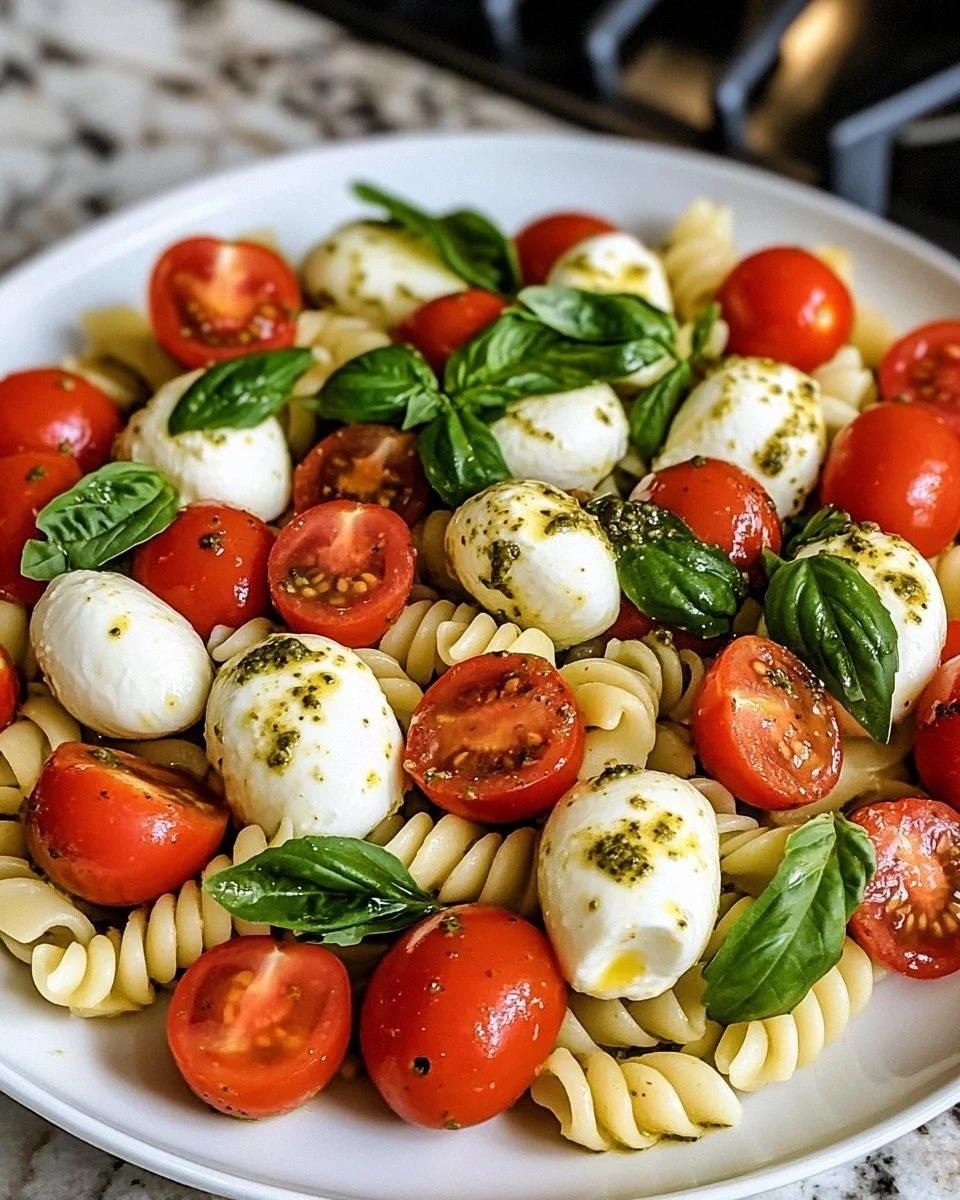
Time to bring everything together. In a massive mixing bowl, combine the cooled pasta, generous dollops of pesto, halved tomatoes, and mozzarella pieces. Using two large spoons, fold the ingredients together, ensuring each noodle is cloaked in that vibrant green sauce. The pasta should glisten, each piece looking like it’s been hand‑painted with pesto. Add the fresh lemon juice at this stage; the acidity brightens the entire composition, preventing any one flavor from dominating.
Finish with a handful of fresh arugula for peppery contrast and a sprinkling of chopped basil for garnish. Drizzle a final thin stream of extra‑virgin olive oil over the top; this adds a luxurious sheen and a whisper of fruitiness that ties the dish together. Give the salad one last gentle toss, just enough to distribute the arugula without wilting it. Taste once more and adjust seasoning—perhaps a squeeze more lemon or a pinch of salt—because this is where you fine‑tune the masterpiece.
Cover the bowl with plastic wrap and let the salad rest in the refrigerator for at least 30 minutes before serving. During this rest, the flavors meld, the pasta absorbs a hint of the pesto, and the tomatoes release a little of their juice, creating a harmonious blend. When you finally serve, the salad should be cool, fragrant, and bursting with color—green, red, and white speckles that look as inviting as a Mediterranean sunset. That sizzle when it hits the pan? Absolute perfection. That's it — you did it. But hold on, I've got a few more tricks that'll take this to another level...
Insider Tricks for Flawless Results
The Temperature Rule Nobody Follows
Never add pesto to hot pasta straight from the pot; the heat will oxidize the bright green, turning it a dull olive shade. Instead, let the pasta cool to room temperature or give it a quick ice‑water rinse, then toss with the sauce. This preserves the pesto’s vivid hue and fresh flavor, making the dish look as Instagram‑ready as it tastes. A friend once skipped this step and ended up with a brownish mess—let’s just say it didn’t win any compliments.
Why Your Nose Knows Best
When you’re blending the pesto, pause every few seconds to sniff the mixture. If you detect a bitter almond note, it means the pine nuts are over‑toasted; a quick blend with a splash more olive oil can mellow that edge. Trusting your sense of smell is more reliable than a timer because every batch of nuts and basil varies in intensity.
The 5‑Minute Rest That Changes Everything
After mixing all components, let the salad sit uncovered for five minutes before covering it. This short rest allows the pasta to absorb a whisper of the pesto without becoming soggy, and the mozzarella softens just enough to release its buttery richness. Skipping this pause often results in a salad that feels disjointed, as if the flavors haven’t had a chance to greet each other properly.
Salt Timing Is an Art
Season the pasta water heavily—think seawater—and then taste the pesto before adding any more salt. The pasta itself will carry a subtle saltiness that balances the pesto, preventing you from over‑seasoning later. Over‑salting is a common pitfall that can mask the delicate basil notes, so trust the water first.
Cold‑Shock for Crunch
After draining the pasta, the ice‑water rinse does more than stop cooking; it firms the starches, giving each noodle a resilient bite that resists becoming gummy when tossed with sauce. If you skip this, the pasta will continue to cook in its own heat, turning the salad into a limp, soggy mess. This is why the cold‑shock is a non‑negotiable step for any serious pasta salad aficionado.
Creative Twists and Variations
This recipe is a playground. Here are some of my favorite ways to switch things up:
Sun‑Dried Tomato Surprise
Swap half of the fresh cherry tomatoes for finely chopped sun‑dried tomatoes soaked in olive oil. The result is a deeper, umami‑rich bite that pairs wonderfully with the bright pesto. Sun‑dried lovers will adore the intensified flavor profile.
Spicy Kick
Fold in a teaspoon of red‑pepper flakes or a drizzle of infused chili oil for a subtle heat that awakens the palate without overpowering the basil. This variation is perfect for those who like a little fire under their summer salads.
Protein Power
Add grilled chicken strips, seared shrimp, or even cubed tofu for a heartier version that can serve as a main course. The protein absorbs the pesto beautifully, turning each bite into a protein‑packed delight.
Nut‑Free Alternative
If you have a nut allergy, replace pine nuts with toasted pumpkin seeds or roasted chickpeas. The texture remains crunchy, and the flavor shifts to a slightly earthy, nut‑free comfort.
Vegan Vibes
Swap the Parmesan for a high‑quality nutritional yeast blend and use vegan mozzarella or marinated tofu cubes. The pesto stays authentic because the basil, garlic, and olive oil remain unchanged, delivering the same herbaceous punch.
Herbaceous Overload
Blend a handful of spinach or arugula into the pesto for a deeper green color and added nutrients. This “green‑monster” version looks stunning on a buffet table and packs an extra vitamin boost.
Storing and Bringing It Back to Life
Fridge Storage
Transfer the salad to an airtight container and store it in the refrigerator for up to 48 hours. The flavors will continue to meld, becoming even more harmonious. Before serving, give it a gentle toss and a quick drizzle of olive oil if it looks a bit dry.
Freezer Friendly
While pasta salads aren’t traditionally frozen, you can freeze the pesto separately for up to three months. Thaw the pesto in the fridge, then re‑mix with freshly cooked pasta and the other fresh ingredients for a quick, fresh‑tasting version.
Best Reheating Method
If you need to warm the salad slightly—perhaps for a summer evening BBQ—add a splash of water (about a tablespoon per cup of pasta) and microwave in short bursts of 15 seconds, stirring in between. The added moisture steams the pasta back to perfection without drying out the pesto.