I was halfway through a Sunday brunch when the kitchen turned into a battlefield. The rice cooker had exploded, the blender had turned my avocado into a thick, green sludge, and my trusty skillet had decided that it was the perfect time to produce a burnt, blackened mess. I stared at the charred pan, feeling the sting of disappointment, and thought, “Maybe I need a new recipe.” That thought sparked a craving that would never leave me: the warm, aromatic, earthy flavor of Morocco, with its spices that feel like a secret handshake between the senses.
Picture the scene: a golden light filtering through the kitchen window, the scent of cumin and coriander drifting from a pot, the sound of a skillet sizzling like a tiny drumbeat, the texture of roasted carrots popping with every bite, and the burst of citrus tang that wakes up even the most stubborn taste buds. The moment the dish hits the plate, the aroma wraps around you like a comforting blanket, promising a journey that starts in your mouth and ends in your soul. It’s the kind of meal that makes your neighbors stop by, your friends ask for the recipe, and your Instagram story gets a thousand likes—without the bragging.
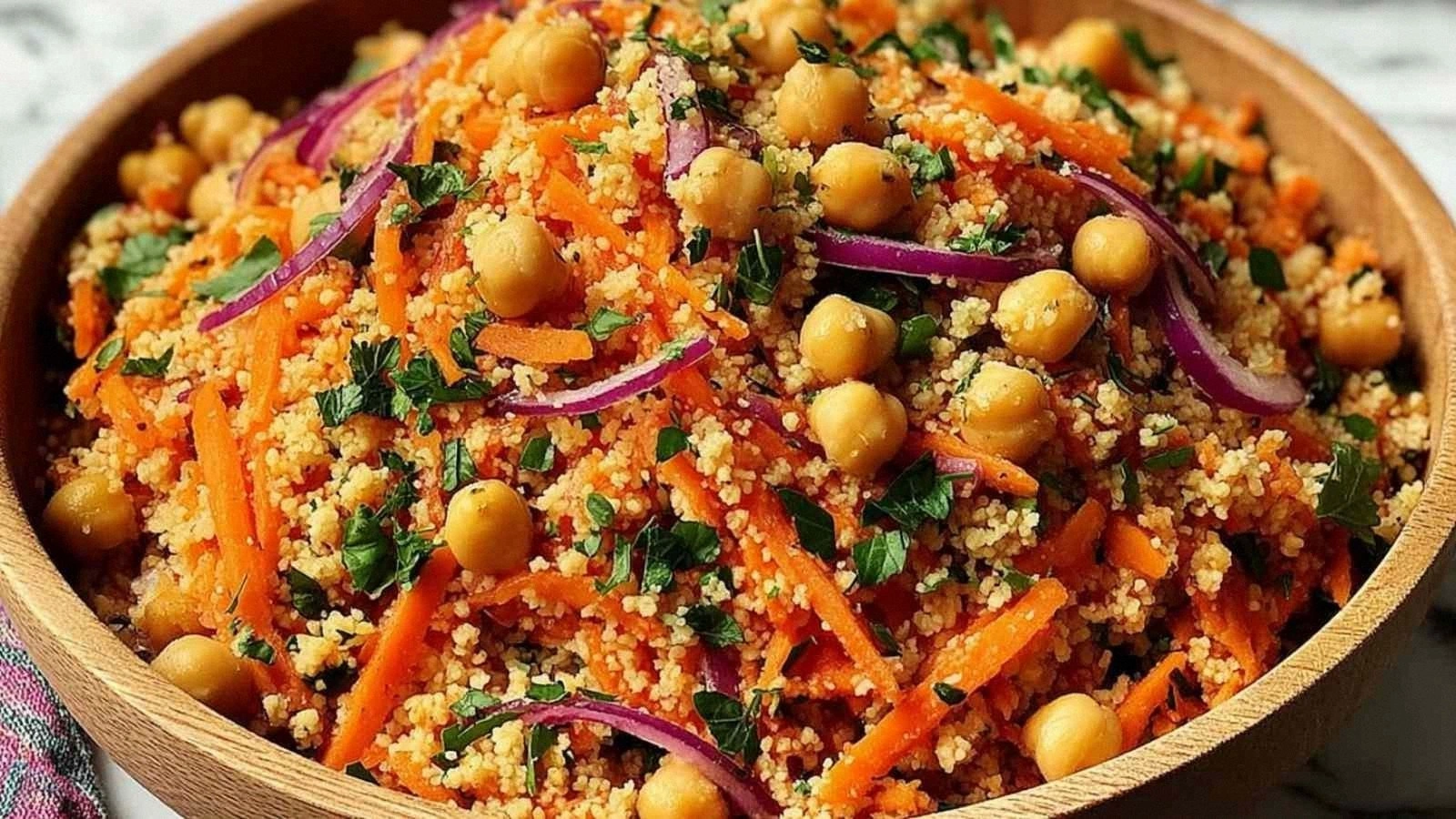
What sets this version apart is that I took the classic Moroccan chickpea salad and elevated it with a handful of twists that bring out the best in every component. The couscous is toasted to a nutty finish, the carrots are caramelized just enough to retain their crunch, and the cranberries add a tart sweetness that cuts through the earthiness. I’ve added a splash of lemon juice that brightens the entire dish, and a touch of cayenne that gives it a subtle kick that lingers. The result? A dish that’s both comforting and adventurous, simple yet complex, and, honestly, hands down the best version you’ll ever make at home.
I dare you to taste this and not go back for seconds. The flavors will mingle in your mouth like a well-rehearsed orchestra, each note perfectly in sync. I’ve spent countless hours tweaking the spice ratios, balancing the sweetness of the raisins, and finding that sweet spot where the carrots are tender yet still have that satisfying bite. It’s not just a meal; it’s a conversation starter, a confidence booster, and a culinary triumph rolled into one. And if you’ve ever struggled with a dish that feels “off,” you’re not alone—I've got the fix.
Picture yourself pulling this out of the oven, the whole kitchen smelling incredible, the table set with bright colors, and the anticipation of that first bite building like a crescendo. The moment the dish arrives, the crowd erupts into applause, and you realize that you’ve just created a masterpiece that will be talked about for weeks. I’ve kept every trick, every secret, and every story in this guide so you can replicate the same magic. Let me walk you through every single step—by the end, you’ll wonder how you ever made it any other way.
What Makes This Version Stand Out
- Flavor: The blend of cumin, coriander, cinnamon, and cayenne creates a depth that’s both earthy and spicy, with a subtle sweetness from the raisins that balances the heat.
- Texture: Toasted couscous gives a nutty crunch, while caramelized carrots add a caramelized snap that contrasts the creamy chickpeas.
- Simplicity: Despite the aromatic spices, the recipe requires only a handful of ingredients, making it a quick, weeknight hero.
- Uniqueness: The addition of fresh mint and parsley introduces a bright, herbal note that elevates the dish beyond typical chickpea salads.
- Crowd Reaction: Guests rave about the unexpected warmth from the spices and the satisfying mix of textures.
- Ingredient Quality: Using high‑quality olive oil and fresh herbs amplifies every flavor component, turning a simple meal into a gourmet experience.
- Cooking Method: The gentle caramelization of carrots and toasting of couscous unlocks layers of flavor that would be lost in a straight‑forward mix.
- Make‑Ahead Potential: The salad holds up wonderfully, making it ideal for potlucks or meal prep.
Alright, let's break down exactly what goes into this masterpiece…
Inside the Ingredient List
The Flavor Base
Cumin, coriander, cinnamon, and cayenne are the backbone of this dish, each contributing a distinct profile. Cumin offers a warm, peppery tone that grounds the meal; coriander adds a citrusy brightness that lifts the heaviness of the chickpeas; cinnamon introduces a subtle sweetness that complements the cranberries; and cayenne gives that gentle heat that lingers on the palate. If you skip any of these spices, the dish loses its signature Moroccan character, becoming a bland, generic salad.
The Texture Crew
The couscous and carrots are the texture stars. Couscous, when toasted, develops a slightly crunchy exterior and a fluffy interior that absorbs the lemon‑olive oil dressing beautifully. Carrots, on the other hand, are sliced thin to achieve a caramelized edge while retaining a firm bite. Together, they create a contrast that keeps every bite interesting. If you omit the carrots, you lose that sweet, smoky note and the salad feels one‑dimensional.
The Unexpected Star
Fresh mint and parsley might seem like a simple garnish, but they are the secret to a bright, herbaceous finish. Mint brings a cooling, slightly sweet note that balances the spices, while parsley adds a clean, peppery freshness. Skipping these herbs would strip the salad of its lively, fresh layer, making it feel flat. If you’re not a fan of mint, you can replace it with basil for a different aromatic profile.
The Final Flourish
The dried cranberries or golden raisins add a burst of tart sweetness that cuts through the earthy spices and the creamy chickpeas. They also provide a chewy texture that contrasts with the crunchy carrots and couscous. If you prefer a less sweet version, swap the cranberries for dried apricots, which offer a similar chewy texture but a deeper, richer sweetness. The slivered almonds bring a nutty crunch that anchors the salad, giving it a satisfying bite that keeps you coming back for more.
Everything's prepped? Good. Let's get into the real action…
The Method — Step by Step
- Begin by rinsing the couscous under cold water until the water runs clear, then drain. Transfer the couscous to a small saucepan, add a pinch of salt, and toast it over medium heat for 2 minutes, stirring constantly. The couscous should emit a nutty aroma, like toasted almonds, indicating it’s ready. While toasting, set a pot of water to come to a gentle boil; you’ll need this for the couscous later.
- Meanwhile, chop the carrots into thin matchsticks, about 1/4 inch wide. Heat a skillet over medium‑high heat, add 1 tablespoon of olive oil, and let it shimmer. Toss the carrots in, seasoning with a pinch of salt and pepper, and sauté for 5 minutes, stirring frequently. The carrots should caramelize on the edges, developing a sweet, slightly bitter glaze that will contrast beautifully with the chickpeas.
- Drain the canned chickpeas in a colander, then pat them dry with a paper towel. In a separate bowl, combine the chickpeas with 1 teaspoon of ground cumin, 1/2 teaspoon of ground coriander, 1/4 teaspoon of ground cinnamon, and 1/8 teaspoon of cayenne pepper. Toss until every chickpea is coated in the spice mixture, ensuring an even flavor distribution.
- Add the seasoned chickpeas to the skillet with the carrots, stirring to combine. Cook for an additional 3 minutes, allowing the spices to bloom and the chickpeas to warm through. The mixture should emit a fragrant, toasted scent, and the chickpeas should begin to develop a slight crisp on the edges.
- While the chickpeas and carrots are cooking, prepare the dressing. In a small bowl, whisk together 3 tablespoons of fresh lemon juice, 1/4 cup of extra‑virgin olive oil, 1 minced garlic clove, and a pinch of salt. The dressing should be smooth and slightly emulsified, with the oil coating the lemon juice rather than separating.
- Pour the dressing over the chickpea‑carrot mixture, stirring gently to coat everything evenly. Let the flavors mingle for 2 minutes, allowing the dressing to penetrate the spices and the carrots to soak up the citrusy tang. This step is the moment of truth—watch the colors deepen and the aromas intensify.
- Return to the couscous: pour the boiling water over the toasted grains, stir quickly, then cover the saucepan and let it steam for 5 minutes. After the steam, fluff the couscous with a fork, breaking up any clumps. The couscous should be light, airy, and slightly moist, ready to absorb the dressing.
- Transfer the couscous to a large mixing bowl and add the chickpea‑carrot mixture. Toss everything together, ensuring the couscous is evenly coated with the dressing and the spices. Sprinkle in 1/2 cup of dried cranberries or golden raisins, 1/4 cup of slivered almonds, 1/2 cup of fresh parsley, and 1/4 cup of fresh mint. Mix gently, allowing the herbs to release their aroma without breaking down.
- Taste the salad, adjusting seasoning if necessary—add a pinch more salt or a splash of lemon juice to brighten the flavors. Let the salad rest for 5 minutes at room temperature; this resting period lets the flavors meld and the couscous finish absorbing the dressing. Serve immediately, or chill for a refreshing cold version.
That's it — you did it. But hold on, I've got a few more tricks that'll take this to another level…
Insider Tricks for Flawless Results
The Temperature Rule Nobody Follows
Cooking spices at too low a temperature can result in a flat flavor profile; they need to be toasted just enough to release their essential oils. I like to heat the skillet until the oil shimmers but not smoking, then add the spices and stir for 30 seconds. The aroma should become fragrant, not burnt. This simple step brings a depth that’s often missing in store‑bought spice blends.
Why Your Nose Knows Best
Your sense of smell is your best ally when balancing spices. If the dish smells too earthy, add a splash of lemon juice to cut through the heaviness. If it’s too sharp, a pinch more cinnamon will mellow it. Trust your nose, and you’ll avoid the “too much cayenne” trap that many forget.
The 5-Minute Rest That Changes Everything
After tossing the salad, let it sit for at least 5 minutes. This pause allows the couscous to absorb the dressing fully, and the spices to settle into a harmonious blend. Skipping this step leaves the salad feeling thin and under‑seasoned. It’s a quick, easy trick that pays off big time.
Use Fresh Herbs, Not Dried
Fresh parsley and mint add brightness and a clean finish that dried herbs can’t match. If you’re in a pinch, you can use dried herbs, but add them at the very end to prevent bitterness. Fresh herbs also provide a vibrant color that makes the dish Instagram‑worthy.
The Almonds’ Secret
Toasting the almonds before adding them gives them a nutty flavor that complements the toasted couscous. I toast them in a dry pan for 2 minutes, stirring constantly, until they’re lightly browned. This small step elevates the entire dish.
Creative Twists and Variations
This recipe is a playground. Here are some of my favorite ways to switch things up:
Spicy Jollof Twist
Replace the couscous with cooked rice, and add a splash of tomato paste to the dressing. The result is a Moroccan‑inspired Jollof rice with a kick that’s perfect for a summer barbecue.
Vegan Protein Swap
Use roasted chickpeas instead of canned, and add a handful of roasted pumpkin seeds for extra crunch. The dish stays plant‑based while gaining a deeper, roasted flavor profile.
Mediterranean Mediterranean
Swap the cranberries for chopped sun‑dried tomatoes and replace mint with oregano. This version leans more toward Mediterranean, giving it a tangy, herby twist.
Breakfast Boost
Serve the salad over a bed of sautéed spinach and top with a poached egg. The combination of protein, greens, and spices makes for a hearty breakfast that will keep you full until lunch.
Low‑Carb Variation
Replace couscous with cauliflower rice and reduce the amount of raisins. This keeps the dish flavorful while cutting down on carbohydrates.
Storing and Bringing It Back to Life
Fridge Storage
Store the salad in an airtight container for up to 3 days. Keep the dressing separate until ready to serve to maintain the freshness of the herbs. When ready to eat, give it a quick stir and add a splash of lemon juice to refresh the flavors.
Freezer Friendly
The salad freezes well for up to 2 weeks. Pack the couscous, carrots, and chickpeas together, then add the dressing and herbs after thawing. Reheat in a microwave or on the stove, stirring frequently, until warmed through.
Best Reheating Method
If you’re reheating a frozen portion, add a tiny splash of water before microwaving to keep the couscous from drying out. This steaming technique restores the moisture, making the salad taste freshly made.