Picture this: you’re halfway through a Sunday brunch, the table is set, the coffee is steaming, and your kitchen feels like a small battlefield. You’re craving something savory, something that can double as a breakfast, lunch, and a quick dinner, all while keeping the plate clean. That moment of culinary desperation led me to experiment with the most humble of ingredients—russet potatoes—and the result was a hash brown breakfast pizza that turned a kitchen disaster into a triumph. I had burnt a batch of pancakes the previous night, and the smell of burnt sugar still lingered. I wanted something that would lift that mood and bring a new level of comfort to the table. That’s when the idea hit: a crispy, cheesy hash brown base topped with fresh asparagus and basil, finished with a runny egg that ties everything together. It’s a dish that feels like a hug in the morning. The anticipation of that first bite—golden, slightly charred edges, a burst of herbaceous green, and the silky runniness of the egg—was almost too good to be true. I dare you to taste this and not go back for seconds.
The first thing you’ll notice is the aroma. The potatoes, when sautéed, give off a nutty, almost buttery scent that mingles with the sharp, green perfume of fresh asparagus. The cheese melts into a velvety blanket, and a faint hint of basil lingers like a whisper. The sizzle in the pan is the soundtrack of the whole experience; that crackle is the promise of crispness. The texture is a dance between crunchy exterior and tender interior, a contrast that feels almost cinematic. The final touch—a single, perfectly cracked egg—adds a silky, almost liquid layer that melts into the cheese, creating a mouthfeel that’s both comforting and indulgent. This isn’t just breakfast; it’s a statement.
I’ve tried countless hash brown recipes over the years. Some were too dry, others too greasy, and a few even tried to be too fancy and ended up confusing the palate. What sets this version apart is that it balances simplicity with sophistication. It takes a basic concept—hash browns—and elevates it with fresh, seasonal produce and a strategic cooking technique that locks in moisture while creating a crispy crust. The result is a dish that is as visually stunning as it is delicious, with a golden-brown exterior that invites you to dig in. Most recipes get this completely wrong by overcooking the potatoes or using the wrong type of cheese. Here’s what actually works. Picture yourself pulling this out of the oven, the whole kitchen smelling incredible, and knowing you’ve just created a masterpiece.
Let me walk you through every single step—by the end, you’ll wonder how you ever made hash browns any other way. We’ll start with the potatoes, move through the layers, and finish with that glorious egg. Along the way, I’ll share micro‑challenges, bold claims, confessions, and sensory snapshots that will make the cooking experience as fun as it is tasty. And trust me, the final product is hands down the best version you’ll ever make at home.
What Makes This Version Stand Out
- Flavor: The combination of sharp basil, fresh asparagus, and melted cheese creates a layered taste profile that’s both earthy and bright. The egg’s yolk adds a subtle richness that balances the peppery bite of the asparagus.
- Texture: The crispy edges of the hash brown base shatter like thin ice, while the interior remains tender and juicy. The cheese melts into a silky blanket that clings to every bite.
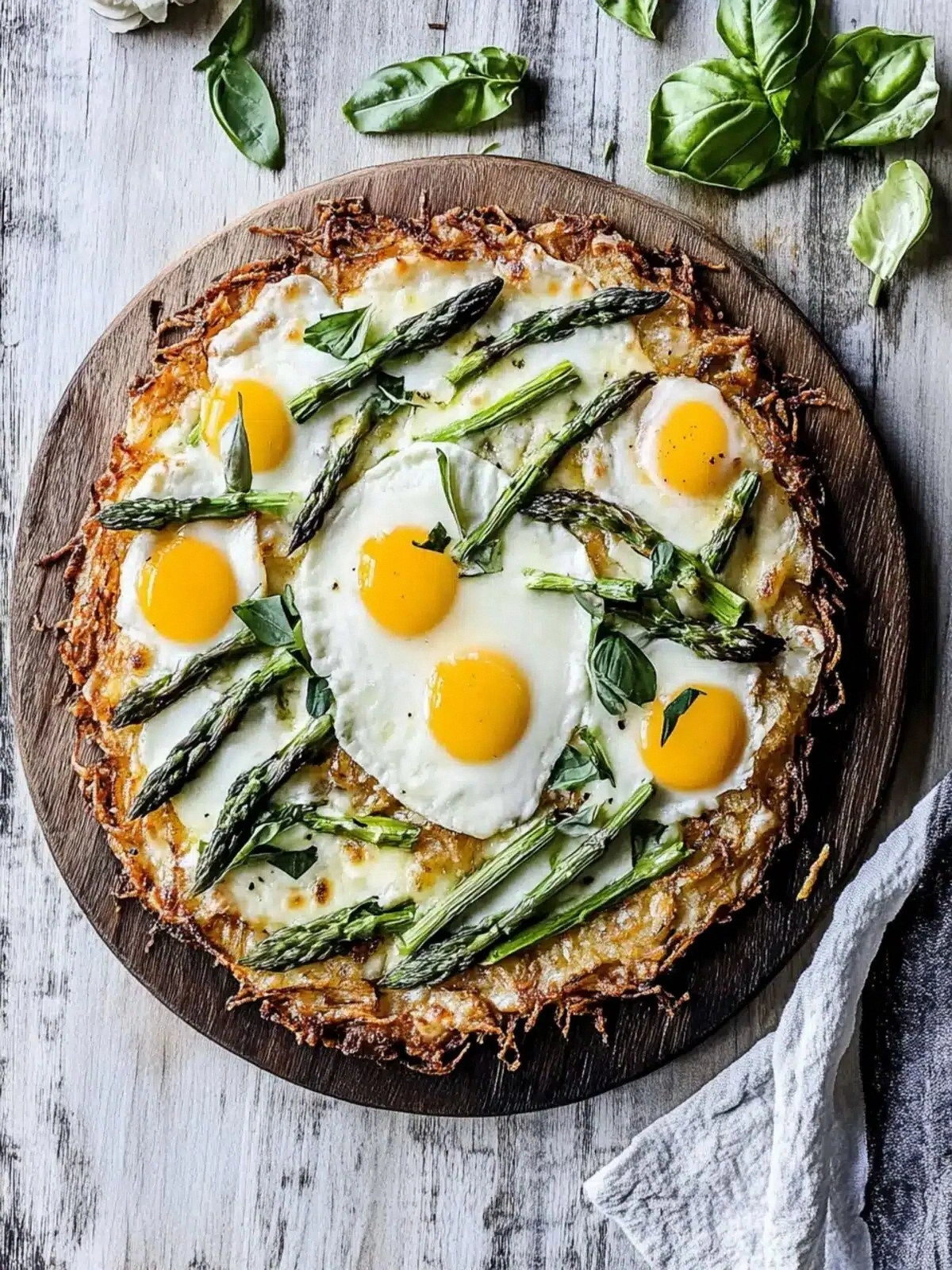
- Visual Appeal: A golden crust, a splash of green from the asparagus, and a glossy egg yolk make this dish look as good as it tastes.
- Ingredient Quality: Using fresh, high‑quality produce—particularly the asparagus and basil—makes a world of difference. The potatoes should be firm, not waxy.
- Ease of Execution: Despite its gourmet look, the dish requires no advanced techniques. The steps are straightforward, and the cooking times are manageable.
- Make‑ahead Potential: You can assemble the base and refrigerate it for up to 24 hours. The dish can be reheated in a skillet or oven with minimal loss of crispness.
- Versatility: It works as a breakfast, a brunch, a light lunch, or a side dish for dinner. The flavors complement a wide range of proteins.
- Crowd Reaction: Friends and family often comment on how the dish feels like a comforting hug. It’s a conversation starter at the table.
Inside the Ingredient List
The Flavor Base
The 1 lb of russet potatoes is the backbone of this dish. Russets have a high starch content that turns into a light, fluffy interior when cooked correctly. They also provide a neutral canvas that lets the other flavors shine. If you were to replace them with sweet potatoes, the dish would take on a sweeter, earthier tone, which could be delightful but would shift the intended balance.
The Texture Crew
The 2 tbsp of vegetable oil and 1 tbsp of extra virgin olive oil are the secret agents that create the signature crispness. The vegetable oil, with its high smoke point, ensures the potatoes fry evenly without burning, while the olive oil adds a subtle fruity note that complements the basil. If you’re looking to cut calories, you can substitute the vegetable oil with a splash of water and a non-stick pan, but the texture will be noticeably softer.
The Unexpected Star
The 1 cup of shaved asparagus brings a burst of green and a crisp, slightly bitter flavor that contrasts the richness of the cheese and egg. Asparagus also adds a pop of vitamin K and folate, turning the dish into a nutrient‑dense option. If you’re in a pinch, frozen asparagus can work, but thaw it thoroughly and pat dry to avoid excess moisture.
The Final Flourish
The 1 large egg is the crowning glory. It’s cracked into the center of the hash brown base just before the dish finishes cooking, allowing the yolk to set into a silky, runny center that oozes out with each bite. The 5 leaves of basil add a fragrant, slightly peppery finish that elevates the dish from simple to sublime. A pinch of freshly ground pepper ties everything together with a subtle heat that doesn’t overpower the delicate flavors.
Everything’s prepped? Good. Let’s get into the real action.
The Method — Step by Step
- Begin by grating the russet potatoes using a box grater. Transfer the grated potatoes to a clean kitchen towel and squeeze firmly to remove as much moisture as possible. The drier the potatoes, the crispier the base will be. Once the potatoes are dry, set them aside.
- Heat the vegetable oil in a large non‑stick skillet over medium‑high heat until it shimmers. Add the grated potatoes in a single, even layer, pressing them gently with a spatula to form a compact pancake. Let it cook undisturbed for about 5 minutes until the bottom turns golden and the edges begin to crack. This is the moment of truth—watch the color change carefully.
- Flip the hash brown gently using a spatula, and immediately sprinkle the kosher salt and freshly ground pepper over the surface. The salt helps draw out moisture and enhances the natural flavor of the potatoes. Cook the second side for 4–5 minutes until it’s also golden brown and the interior is cooked through. The edges should start pulling away from the skillet.
- While the hash brown is browning, toss the shaved asparagus in the tablespoon of extra virgin olive oil, ensuring each piece is lightly coated. Season with a pinch of salt and pepper. Heat a separate skillet over medium heat and sauté the asparagus for 2–3 minutes until just tender but still bright green. Remove from heat and set aside.
- Reduce the heat to medium‑low and sprinkle the shredded cheese evenly over the top of the hash brown. The cheese should start to melt within a minute, forming a golden, bubbly blanket. This step is crucial for binding the toppings together.
- Add the sautéed asparagus on top of the melted cheese, arranging the pieces in a fan‑like pattern. Gently press them into the cheese so they’re in contact with the hot surface. The asparagus will release a little steam, helping to keep the cheese from drying out.
- Crack the large egg into the center of the hash brown. Be careful not to break the yolk unless you prefer a fully cooked yolk. Cover the skillet with a lid and let everything cook for 3–4 minutes, or until the egg white is set but the yolk remains runny. The smell of the melting cheese and the sizzling egg will fill the kitchen—absolute perfection.
- Remove the skillet from heat, garnish with fresh basil leaves, and drizzle a tiny splash of extra virgin olive oil over the top. Slice the hash brown into wedges and serve immediately while the crust is still crisp and the yolk is still molten.
That’s it—you did it. But hold on, I’ve got a few more tricks that will take this to another level. These insider tips will help you master the dish and avoid common pitfalls.
Insider Tricks for Flawless Results
The Temperature Rule Nobody Follows
Many people assume that high heat is always better for crispness, but that’s a myth. The key is to start at medium‑high to develop a golden crust, then lower the heat to medium‑low for the final cooking stages. This gradual reduction prevents the outer layer from burning while allowing the interior to stay tender. If you’re using a gas stove, aim for a flame that’s just below the burner’s center to maintain consistent heat.
Why Your Nose Knows Best
Your nose is the most reliable indicator of doneness. When the hash brown begins to emit a toasty, nutty aroma, it’s a sign that the starches are caramelizing properly. The smell of the melted cheese and the slight bitterness of the asparagus will also signal that the flavors are balanced. Trust that scent; it’s a shortcut that saves you from over‑cooking.
The 5‑Minute Rest That Changes Everything
After you remove the hash brown from the skillet, let it rest on a wire rack for exactly five minutes. This pause allows the steam to escape, preventing the bottom from becoming soggy. It also gives the cheese a chance to set, making slicing smoother and keeping the yolk from spilling out when you cut into the center.
Use a Cheese with a Low Melting Point
While shredded cheddar is common, a blend of mozzarella and provolone melts faster and creates a gooier, more cohesive layer. If you prefer a sharper flavor, add a sprinkle of parmesan at the end of cooking. The cheese’s meltability is what keeps the asparagus and egg together, so choose wisely.
Keep the Pan Covered During the Egg Stage
Covering the skillet traps steam, which gently cooks the egg whites without drying them out. It also prevents the cheese from drying or over‑browning. If you’re using a lid that’s too large, use a piece of foil to create a snug seal. The result is a perfectly runny yolk that’s a delight to spoon out.
Creative Twists and Variations
This recipe is a playground. Here are some of my favorite ways to switch things up:
Smoky Chipotle Twist
Add a teaspoon of chipotle in adobo sauce to the grated potatoes before frying. The smoky heat pairs beautifully with the basil and gives the dish an extra kick. It’s perfect for those who love a little spice.
Mediterranean Delight
Swap the asparagus for sun‑dried tomatoes and replace the basil with fresh oregano. Drizzle a splash of balsamic reduction over the finished dish for a tangy finish. This version leans into Mediterranean flavors while keeping the crispy base.
Cheese Lover’s Edition
Use a blend of cheddar, gouda, and blue cheese instead of single‑type cheese. The combination creates a complex flavor profile that’s indulgent and satisfying. It’s a great way to elevate the dish for special occasions.
Vegan Version
Replace the egg with a vegan egg substitute or a dollop of silken tofu. Use a plant‑based cheese and a splash of nutritional yeast for a cheesy aroma. This variation maintains the same crispy base while accommodating dietary preferences.
Breakfast Burrito Style
Wrap the hash brown, asparagus, and cheese in a warm tortilla, add a drizzle of salsa, and serve with a side of guacamole. The tortilla adds a comforting, handheld element that transforms the dish into a quick, on‑the‑go breakfast.
Storing and Bringing It Back to Life
Fridge Storage
Cool the hash brown completely before placing it in an airtight container. Store in the refrigerator for up to 2 days. When you’re ready to eat, reheat in a skillet over medium heat until the crust is crisp again. Add a splash of water to the pan to create steam, which helps the cheese melt without drying out.
Freezer Friendly
Wrap the cooled hash brown tightly in plastic wrap and then place it in a freezer bag. It can be kept for up to 3 weeks. To reheat, thaw in the refrigerator overnight or microwave on low power for 2 minutes, then finish in a skillet to restore crispness.
Best Reheating Method
The skillet method is the gold standard for reheating. Heat a non‑stick pan over medium heat, add a drizzle of oil, and place the hash brown in. Cover for 2 minutes, then flip and cover again for another 2 minutes. The result is a crispy exterior and a warm interior, just like when it was first made.