Love this? Pin it for later! 📌
Healthy Lemon & Herb Roasted Root Vegetables for Winter Suppers
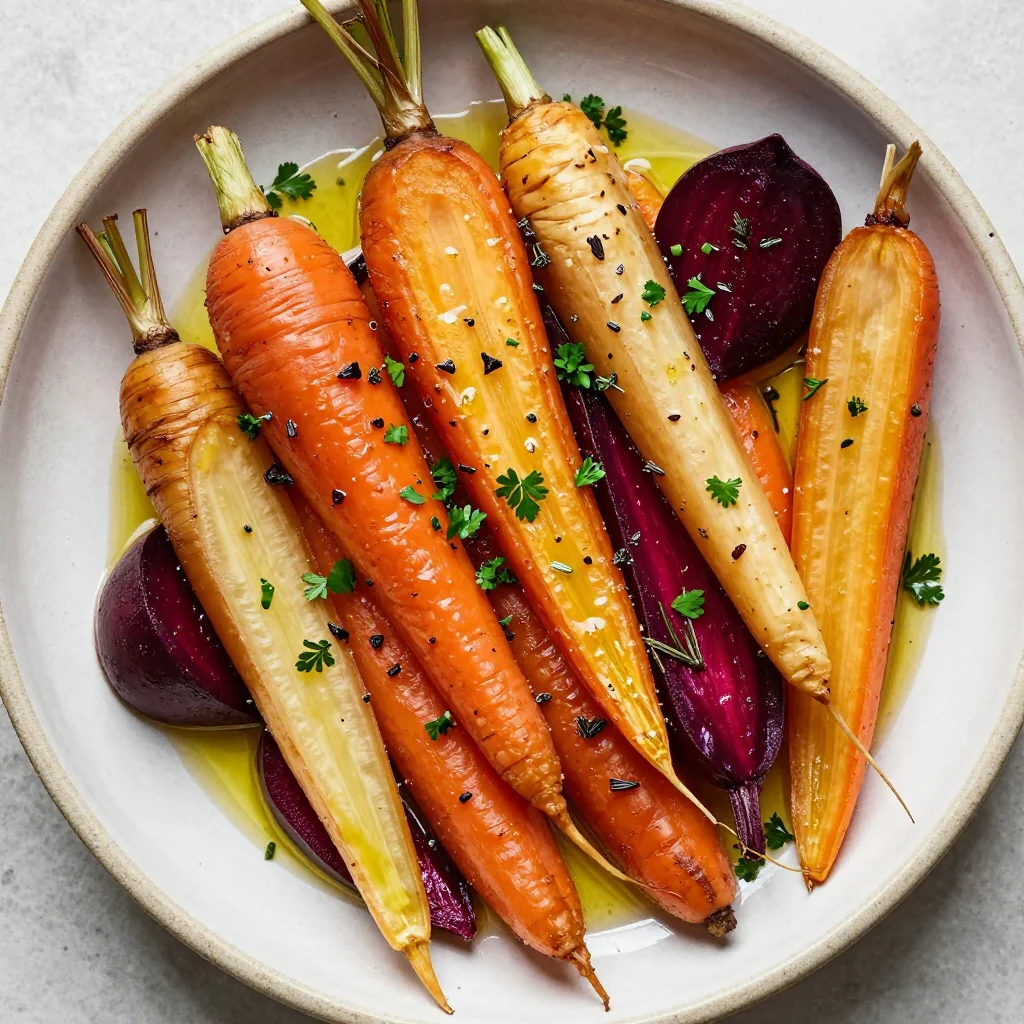
When the mercury drops and wool socks become a daily uniform, my kitchen turns into a sanctuary of warmth and citrus-bright hope. This sheet-pan wonder—tangled with sunset-hued carrots, candy-stripe beets, and parsnips that look like winter's own ivory wands—has been my family's answer to the February blues for almost a decade. I developed the recipe during my first winter in Vermont, when the sun set at 4:11 p.m. and I needed something that tasted like liquid sunshine. The trick is a two-stage roast: we give the dense roots a head start in a blistering oven, then finish them with a lemon-herb shower that caramelizes into a glossy, almost lacquer-like glaze. The result is a main dish so vibrant it feels like someone turned on a lightbox beneath your dinner plate. Pair it with a crusty wedge of warm sourdough and a dollop of garlicky yogurt, and you've got a plant-powered centerpiece worthy of Sunday supper or a quiet Tuesday when you simply want to feel nourished from the inside out.
Why This Recipe Works
- Two-Temperature Roast: A hot 425 °F start tenderizes roots fast, then we drop to 375 °F so herbs and lemon zest don't burn.
- Citrus Layering: Zest before roasting, finish with juice and raw zest for bright, multi-dimensional lemon flavor.
- Herb Stems = Flavor: Don't toss those tender thyme and parsley stems; they roast into crispy, savory bites.
- Maple-Kissed Edges: A whisper of maple syrup encourages caramelization without added refined sugar.
- Make-Ahead Magic: Roast a double batch on Sunday; leftovers reheat beautifully for grain bowls all week.
- Gluten-Free & Vegan: Naturally free of the top eight allergens, so everyone at your table can dig in.
Ingredients You'll Need
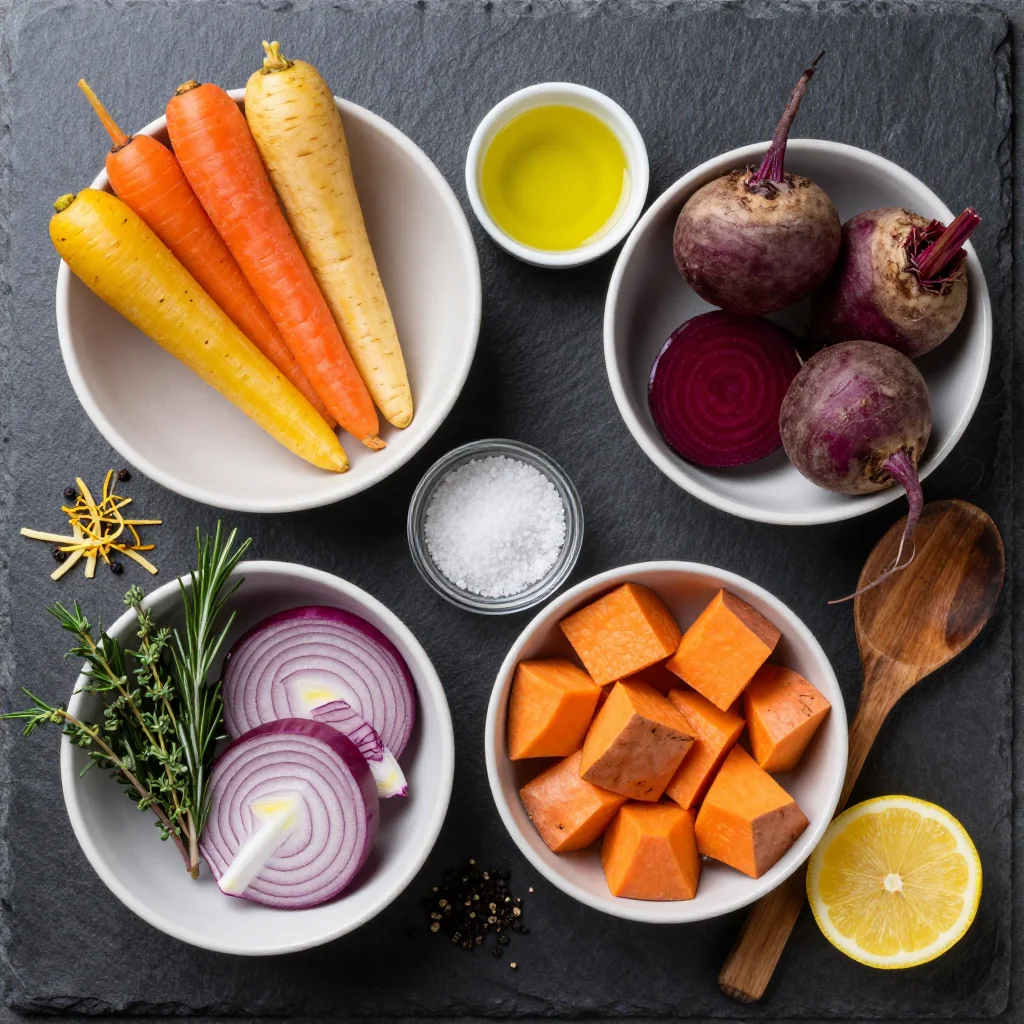
Look for farmers-market roots that still have their greens attached—those tops are the best freshness indicator. If the leaves look perky, the roots were likely harvested within 48 hours. For the carrots, I mix classic orange with purple and yellow heirlooms; the colors stay distinct after roasting and make the platter feel celebratory. Parsnips should be small-to-medium, because the core of an oversized parsnip can be woody. When buying beets, choose bunches with firm, dry skins and no soft spots. Golden or chioggia beets won't stain your cutting board like red ones, but any variety works.
Extra-virgin olive oil is non-negotiable; its fruity pepperiness carries the herbs. I use a Greek or Californian oil with a high polyphenol count because those antioxidants stay stable under heat. For lemons, pick specimens with taut, fragrant skin—organic if possible since we'll be using the zest. The herbs are flexible: thyme and rosemary love long heat, so they go in early; parsley and dill are delicate and finish at the end. If fresh herbs feel scarce in winter, swap in 1 teaspoon dried thyme and ½ teaspoon dried rosemary, but double the fresh parsley finish for brightness.
Maple syrup should be dark Grade A for robust flavor; if you're avoiding all sugars, omit it and toss the veg with ½ cup unsweetened applesauce instead. The result is slightly less crisp but still luscious. Salt matters too—use a flaky sea salt like Maldon or Jacobsen; the crystals melt into tiny pockets of salinity that accent each vegetable's sweetness.
How to Make Healthy Lemon & Herb Roasted Root Vegetables for Winter Suppers
Preheat & Prep Pans
Position racks in upper-middle and lower-middle of oven; place two rimmed sheet pans (13 × 18 in) on each rack and heat to 425 °F. Preheating the pans ensures instant sizzle, preventing soggy bottoms. While they heat, wash and scrub all vegetables; peel only the parsnips if their skins feel especially tough.
Uniform Cuts = Even Roast
Slice carrots on the bias ½-inch thick. Halve larger parsnips lengthwise, remove woody core with a V-cut, then slice into ½-inch half-moons. Beets get cut into ¾-inch wedges so their pigment stays locked inside. Red onion petals should be about 1 inch wide; they practically melt into jammy pockets.
Zesty Oil Base
In a small bowl, whisk ⅓ cup olive oil with the zest of 2 lemons, 2 tablespoons maple syrup, 1½ teaspoons sea salt, ½ teaspoon black pepper, 1 teaspoon dried chili flakes, 2 teaspoons minced fresh thyme, and 1 teaspoon minced fresh rosemary. The salt dissolves faster when whisked into oil rather than tossed dry.
Toss & Tumble
Transfer all vegetables to the largest bowl you own. Pour the lemon-herb oil over top and use your hands to massage every crevice. The beets will tint the mixture fuchsia—that's normal and gorgeous. Work quickly so the hot pans don't cool down too much.
Sizzling Start
Working fast, remove pans, lightly brush with extra oil, and scatter vegetables in a single layer—crowding causes steam, so divide between two pans. Slide back into the oven and roast 15 minutes. The sound should be a gentle sizzle, not a hiss; if the latter, lower heat 10 degrees.
Flip & Rotate
Switch pans top to bottom, bottom to top. Using a thin metal spatula, flip each piece; the underside should be blistered and golden. If any stick, wait 2 more minutes—the sugars need time to release. Roast another 10 minutes.
Herb-Finish & Lower Heat
Reduce oven to 375 °F. Scatter 2 tablespoons chopped parsley stems and 1 teaspoon fresh thyme leaves over vegetables. Return to oven 5–7 minutes; this second temperature prevents herbs from incinerating yet still crisps them.
Final Brightness
Remove pans, immediately squeeze the juice of ½ lemon over each tray, then sprinkle with fresh zest of the remaining lemon and ¼ cup chopped flat-leaf parsley. The residual heat wilts the parsley just enough while keeping color electric.
Serve & Savor
Pile vegetables onto a warmed platter. Drizzle with any pan juices and an extra whisper of olive oil. They pair beautifully with herbed farro, lemony yogurt, or a runny-yolked egg. Leftovers? Lucky you—see storage tips below.
Expert Tips
Dry = Crisp
After washing, roll vegetables in a lint-free kitchen towel and let air-dry 10 minutes. Excess water is the enemy of caramelization.
Save Beet Greens
Sauté the tops with garlic and chili for a quick side; their earthy-sweet flavor mirrors the roasted roots.
Double the Pans
If you're feeding a crowd, use three pans instead of crowding two—airflow is everything.
Metal Spatula Only
Silicone heads trap moisture; a thin metal blade slides under without tearing caramelized edges.
Lemon Varieties
Meyer lemons are milder; if using them, add an extra teaspoon of juice to compensate for lower acidity.
Crank Up Broil
For extra char, broil 90 seconds at the end—but watch like a hawk; herbs ignite fast.
Variations to Try
-
Moroccan Spice: Swap lemon for orange zest, add 1 teaspoon ground cumin, ½ teaspoon cinnamon, and finish with toasted slivered almonds.
-
Smoky Chipotle: Replace chili flakes with ½ teaspoon chipotle powder and stir in 1 teaspoon adobo sauce with the oil.
-
Autumn Squash Swap: Substitute half the carrots with peeled, cubed butternut; reduce initial roast to 12 minutes.
-
Protein-Powered: Add one drained can of chickpeas during the flip stage for a complete vegetarian main.
-
Citrus Medley: Use blood orange and lime zest alongside lemon for a tri-color finish.
-
Low-FODMAP: Replace onion with sliced zucchini and use maple syrup instead of honey if you're avoiding excess fructans.
Storage Tips
Cool vegetables completely before storing—trapped heat creates condensation and sogginess. Spread in a single layer on a plate 10 minutes, then transfer to an airtight glass container. Refrigerated, they'll keep 5 days without losing texture. To reheat, spread on a sheet pan at 400 °F for 8 minutes; a quick spritz of water revives their interior moisture.
For meal-prep, portion 1½ cups into microwave-safe bowls; they'll reheat in 90 seconds on high. Freeze portions in silicone bags up to 3 months. Thaw overnight in the fridge, then reheat as above. The parsley won't stay vivid, but a fresh sprinkle on serving day fixes that.
Transform leftovers into a silky soup: blend 3 cups vegetables with 2 cups vegetable broth, warm, and swirl in coconut milk. Or chop and fold into a frittata with goat cheese—breakfast bliss.
Frequently Asked Questions
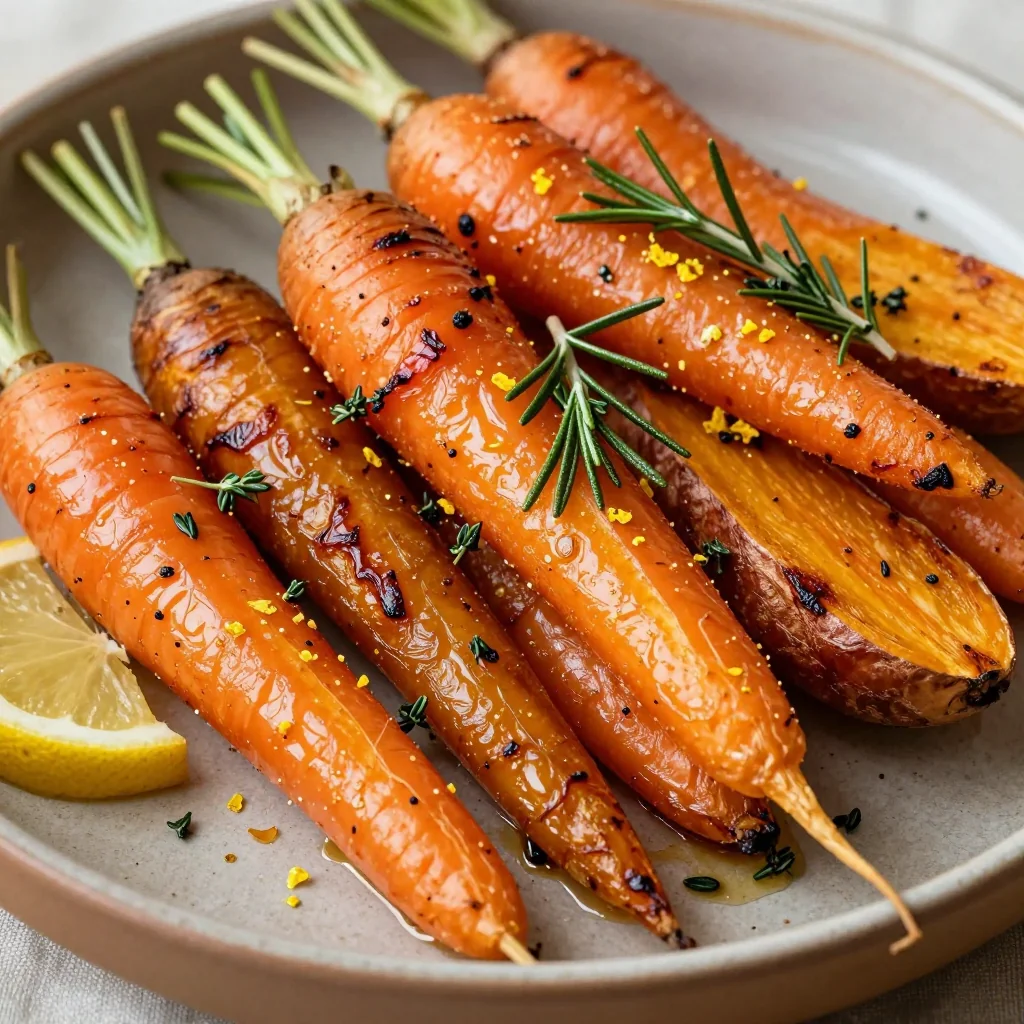
Healthy Lemon & Herb Roasted Root Vegetables for Winter Suppers
Ingredients
Instructions
- Preheat: Place two rimmed sheet pans in oven and preheat to 425 °F.
- Prep vegetables: Wash, peel where noted, and cut into uniform pieces.
- Make oil mixture: Whisk 2 Tbsp olive oil, maple syrup, zest of 2 lemons, salt, pepper, chili, rosemary, and 1 tsp thyme.
- Toss: In a large bowl, coat vegetables with oil mixture.
- Roast: Carefully spread on hot pans; roast 15 min, flip, swap racks, roast 10 min more.
- Finish: Lower heat to 375 °F, sprinkle parsley stems and remaining thyme, roast 5–7 min.
- Brighten: Finish with lemon juice, remaining zest, and fresh parsley. Serve hot or warm.
Recipe Notes
For extra caramelization, broil 90 seconds at the end—but watch closely so herbs don't burn. Leftovers keep 5 days refrigerated or 3 months frozen.