Love this? Pin it for later! 📌
Why This Recipe Works
- One-pan wonder: Everything bakes on a single sheet—minimal dishes, maximum flavor.
- Ready in 25 minutes: From fridge to table faster than you can queue a movie.
- Omega-3 powerhouse: Each serving delivers 2 g heart-healthy EPA & DHA.
- Meal-prep friendly: Flakes beautifully over salads, rice bowls, or whole-grain pasta all week.
- Restaurant crust at home: A quick broil at the end creates that delicate, caramelized top.
- Adaptable: Swap herbs, change citrus, or add spice—formula stays the same.
- Freezer-to-oven: Works with frozen fillets; just add 5 extra minutes.
Ingredients You'll Need
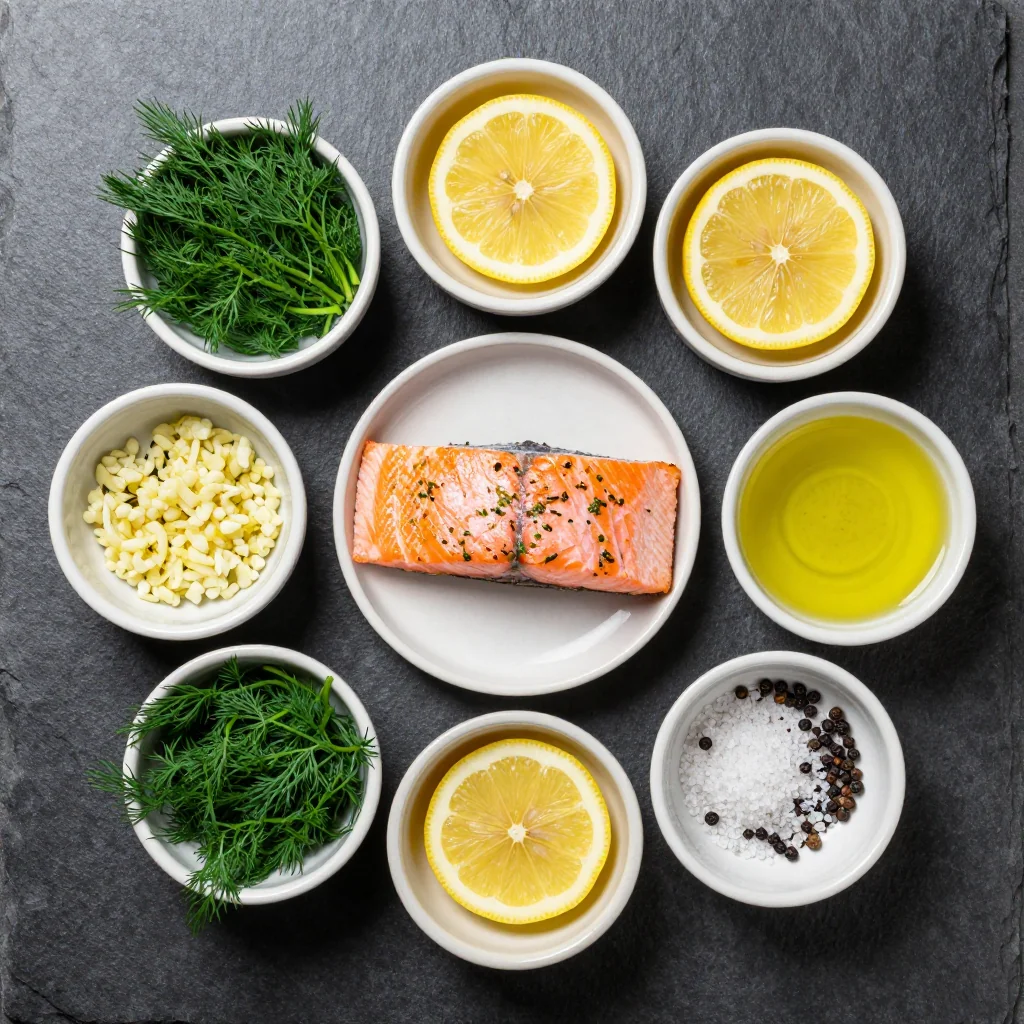
Great salmon starts at the fish counter. Look for fillets that smell like the ocean, not “fishy”; the flesh should spring back when pressed and appear moist, not dull. I prefer center-cut, skin-on portions (6–7 oz each) because the skin insulates delicate meat and crisps beautifully if you give it a quick sear under the broiler. Wild-caught sockeye or coho is my first choice for sustainability and depth of flavor, but responsibly farmed Atlantic works in a pinch. Whatever you choose, pat the fillets very dry so the herb mixture adheres and the edges caramelize.
For the citrus, opt for unwaxed, firm lemons—Meyer if you want a sweeter perfume, Eureka for bright acidity. Zest before you juice; the colorful outer layer holds the aromatic oils that make your kitchen smell like a sun-kissed orchard. Fresh dill is non-negotiable here; dried dill tastes like dusty hay in comparison. Choose fronds that are feathery and perky, not wilted or black-tipped. If your garden is exploding with dill in midsummer, chop and freeze tablespoon-sized portions in ice-cube trays topped with olive oil—you’ll thank yourself in January.
Extra-virgin olive oil should be peppery and green; if it smells rancid or crayon-like, toss it. I keep a “cooking” and a “finishing” bottle in my pantry; the former gets heated, the latter gets drizzled on the plated fish for a final grassy note. Garlic mellows as it bakes, but if you’re sensitive, substitute ½ tsp garlic powder or omit entirely. Honey balances the lemon’s tang and helps everything brown; maple syrup or agave work, too. Finally, a pinch of red-pepper flakes offers subtle warmth that blooms under heat and keeps the dish from tasting one-note.
How to Make Healthy Baked Salmon with Lemon and Dill
Preheat & Prep
Position rack in center of oven; heat to 400 °F (204 °C). Line a rimmed sheet pan with parchment for zero sticking or easy cleanup. If your fillets are tapered tails, tuck the thin ends under to create even thickness so everything cooks at the same rate.
Make the Lemon-Dill Glaze
In a small bowl, whisk 3 Tbsp extra-virgin olive oil, zest of 1 large lemon, 2 Tbsp fresh lemon juice, 2 tsp honey, 2 cloves garlic (minced), ½ tsp kosher salt, ¼ tsp freshly ground black pepper, and a pinch of red-pepper flakes until emulsified. Stir in 2 Tbsp chopped fresh dill.
Season the Salmon
Blot fillets dry again with paper towels—moisture is the enemy of browning. Arrange skin-side down on prepared pan. Brush half the glaze over tops and sides, reserving the rest for finishing. Let stand 10 minutes so acid starts to denature proteins (translation: more tender fish).
Add Quick-Cook Veggies (Optional but Smart)
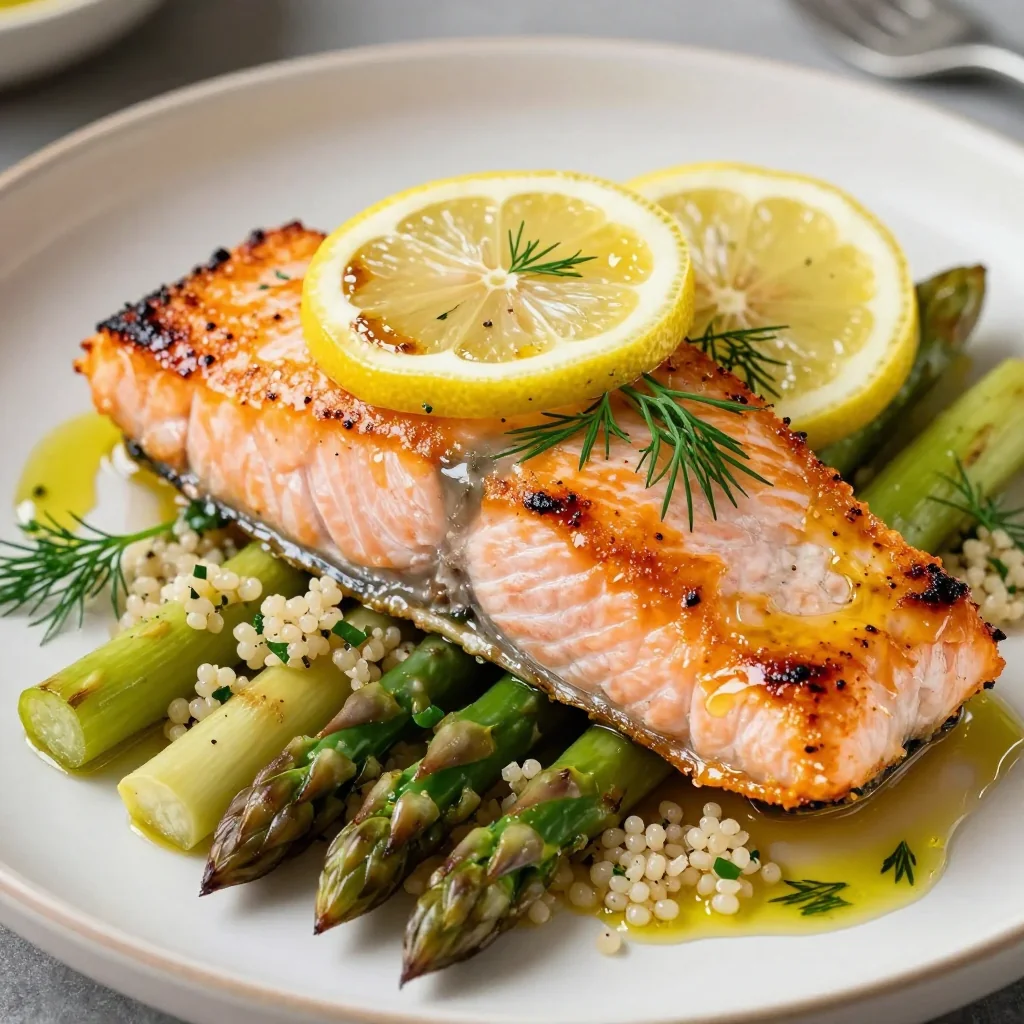
Surround salmon with 1 cup cherry tomatoes and 1 cup asparagus tips. Drizzle them lightly with olive oil, salt, and pepper; they’ll roast while the salmon bakes and soak up glorious juices.
Bake to Perfection
Slide pan into oven and bake 10–12 min for 1-inch fillets (8 min for ¾-inch). Salmon is done when it flakes easily but still looks slightly translucent in the very center—carry-over heat will finish it. An instant-read thermometer should read 125 °F (52 °C) for medium, my sweet spot for moist texture.
Broil for a Caramelized Finish
Switch oven to broil on high. Broil 1–2 min until top is bronzed and tomatoes blister. Stay nearby; broilers are mercurial.
Rest & Re-Glaze
Transfer salmon to a platter and tent loosely with foil; rest 5 min. Brush remaining glaze over fillets for fresh, uncooked shine. Garnish with extra dill fronds and thin lemon slices for wow-factor presentation.
Serve & Savor
Pair with quinoa, wild rice, or crusty sourdough to sop up juices. A crisp Sauvignon Blanc or sparkling water with extra lemon rounds things out. Leftovers? See storage tips below.
Expert Tips
Watch the Temp, Not the Clock
Salmon texture changes in 30-second windows. Remove at 125 °F for medium; 130 °F if you like it more opaque. Carry-over heat nudges it another 3 °F.
Pat, Pat, Pat
Moisture = steam = no browning. Use two rounds of paper towels: one to blot, a second to press gently and extract hidden water.
Even Thickness Hack
Fold thin tail under or slice it off and stack it, creating a makeshift “second layer” so the entire piece is uniform.
Skin-On = Built-In Insulation
Crispy-skin lovers: After broiling, slide a spatula between flesh and skin; most will lift right off while skin stays behind, crunchy and irresistible.
Flash Freeze for Meal Prep
Place raw marinated fillets on a parchment-lined tray; freeze solid, then transfer to zip bags. Bake from frozen at 375 °F for 18 min—same great taste.
Double the Glaze
Make a second batch and warm it gently to drizzle over grains or roasted potatoes—zero waste, maximum flavor continuity.
Variations to Try
- Mediterranean: Swap dill for 1 tsp each dried oregano & thyme, add ½ cup pitted olives and ¼ cup sun-dried tomatoes to pan.
- Asian-Infused: Replace lemon juice with lime; add 1 Tbsp soy sauce, 1 tsp sesame oil, and 1 tsp grated ginger. Garnish with sesame seeds and cilantro.
- Spicy Cajun: Add 1 tsp smoked paprika + ¼ tsp cayenne to glaze. Serve over dirty rice.
- Maple-Mustard: Sub maple for honey and whisk in 1 Tbsp whole-grain mustard. The seeds pop under heat like tiny caviar.
- Herb Garden: Use equal parts dill, parsley, chervil, and tarragon for a French “fines herbes” vibe.
- Parchment Packets: Bake individual portions en papillote with green beans and lemon slices—zero smell escape, zero cleanup, pure aromatics when you slit the paper at the table.
Storage Tips
Refrigerator: Cool salmon completely, transfer to airtight container, and refrigerate up to 3 days. For best texture, reheat gently: place fillet in a skillet with a splash of water, cover, and warm over medium-low 4–5 min until just heated through. Microwave works in 30-second bursts at 50 % power, but the edges can toughen.
Freezer: Wrap each portion tightly in plastic, then foil; freeze up to 2 months. Thaw overnight in fridge and reheat as above. Texture will be softer, so flake into salads or stir into pasta where perfection isn’t paramount.
Make-Ahead Marinade: Whisk glaze (minus fresh dill) and refrigerate up to 5 days. Stir in dill just before using to keep flavors vibrant.
Frequently Asked Questions

Healthy Baked Salmon with Lemon and Dill
Ingredients
Instructions
- Preheat oven: Line a rimmed sheet with parchment. Heat oven to 400 °F.
- Make glaze: Whisk oil, lemon zest & juice, honey, garlic, salt, pepper, and red-pepper flakes. Stir in dill.
- Prep salmon: Pat fillets dry, place skin-side down on pan. Brush with half the glaze; rest 10 min.
- Add veggies: Scatter tomatoes and asparagus around fish; drizzle lightly with oil, salt, and pepper.
- Bake: 10–12 min until center is just translucent or 125 °F.
- Broil: 1–2 min to caramelize top.
- Rest & serve: Brush with remaining glaze, garnish with dill, and enjoy hot.
Recipe Notes
For crispy skin, slide fillets under broiler skin-side up for the final 30 seconds. Watch closely—ovens vary.