
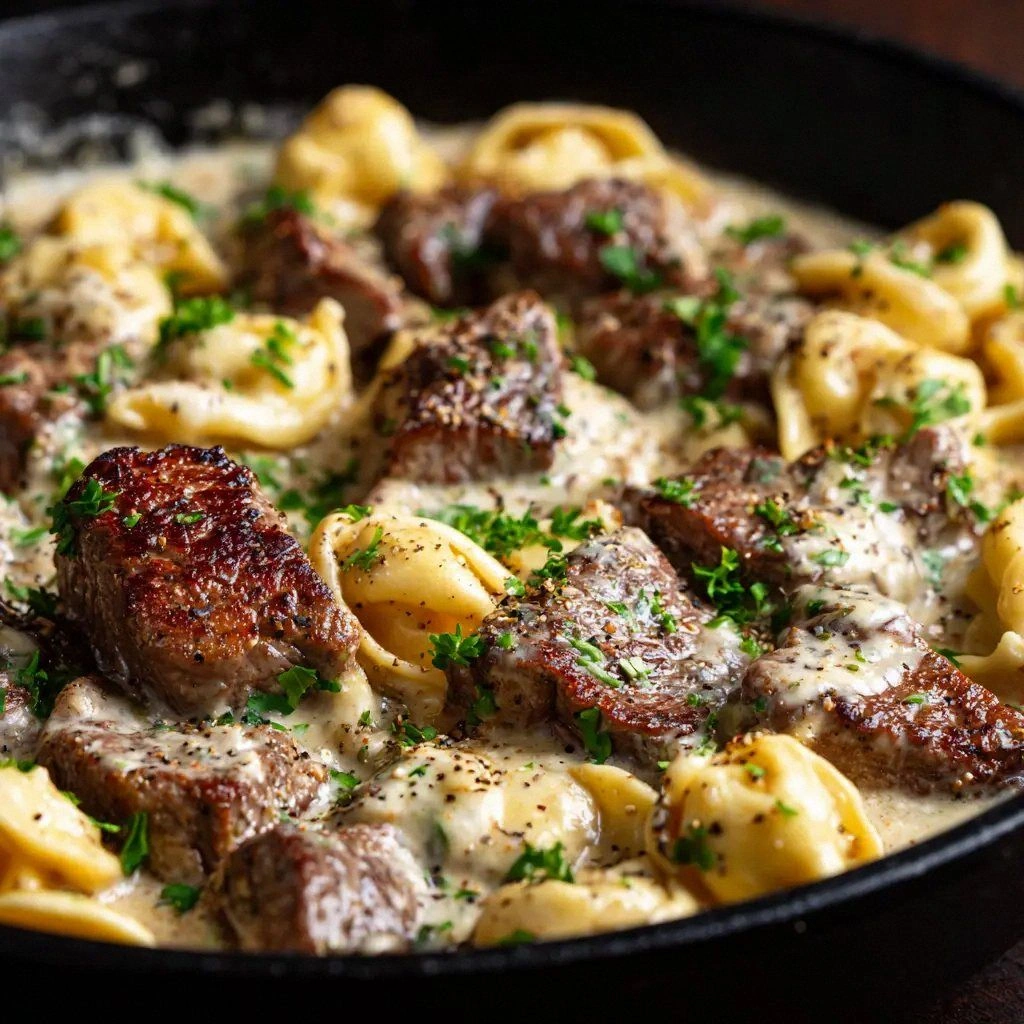
Picture this: a Saturday evening, the kitchen lights dimmed, and a single pan on the stove. I had just finished a disastrous attempt at a classic garlic steak dinner that left a burnt crust and a plate of sad, over‑seasoned meat. I was so frustrated that I almost threw the steak in the trash, but a sudden craving for something rich, comforting, and unmistakably restaurant‑quality hit me like a tidal wave. I decided to rewrite the recipe, to elevate the humble steak and tortellini into a dish that would make my taste buds sing and my friends gasp. That night, I discovered that the secret lies not in fancy ingredients, but in technique, timing, and the right balance of flavors.
The moment the steak hit the hot skillet, a sizzle erupted like fireworks. The air filled with the aroma of seared meat, butter, and garlic, a scent that made my stomach rumble in anticipation. I watched the surface caramelize, turning a deep, glossy brown that promised a juicy interior. The sound of the butter melting into a silky, golden sauce was almost musical, each pop and hiss a cue that the dish was about to transcend the ordinary. I could almost taste the buttery garlic coating the pasta like velvet, the savory depth of beef broth, and the creamy richness of heavy cream, all swirling together in a harmonious symphony.
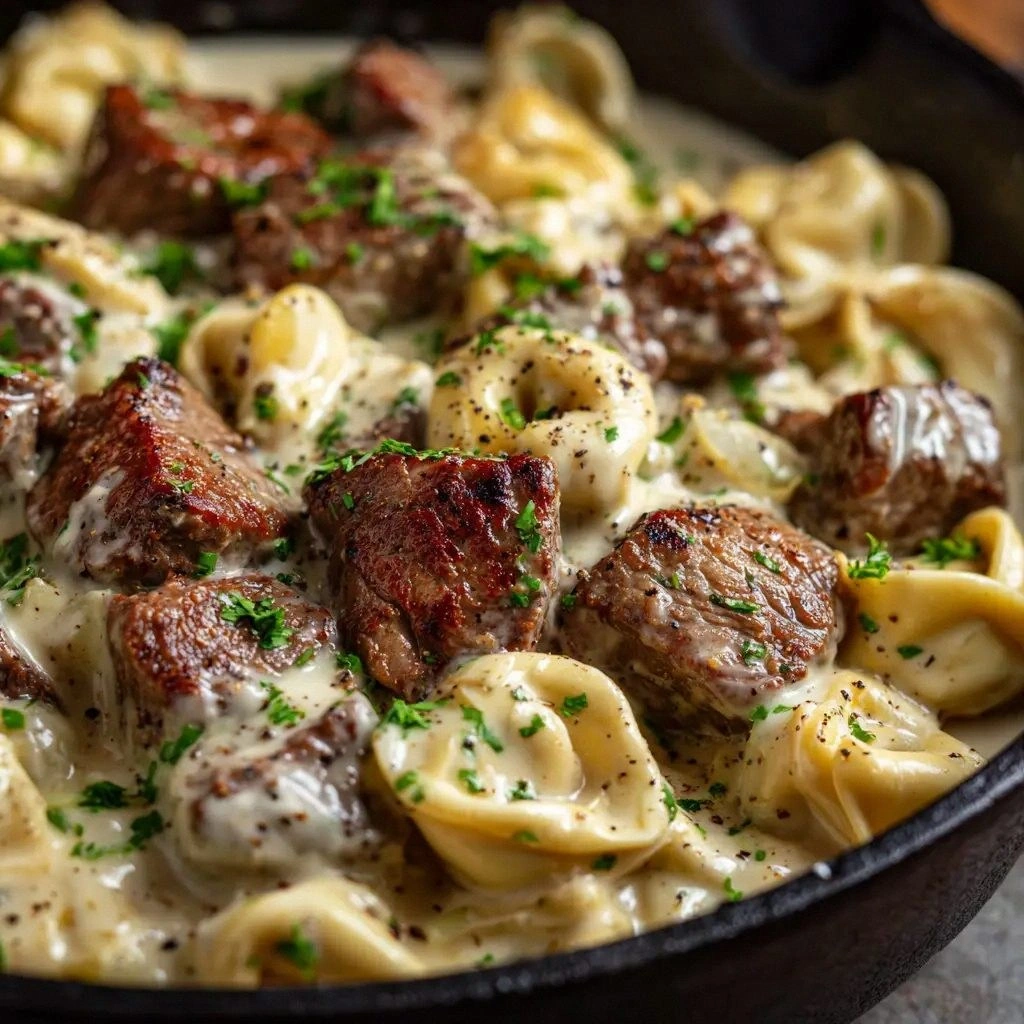
Why is this version so different? Because I abandoned the usual “cook the pasta and toss with sauce” routine and instead cooked the pasta in the sauce itself, letting the tortellini absorb every drop of flavor. I used a high‑quality sirloin steak, sliced thinly, and seared it to perfection, then folded it into a decadent cream‑garlic sauce that clung to the pasta like a second skin. The result is a dish that feels both luxurious and comforting, with a texture that is silky yet with a satisfying bite from the steak and the tender cheese filling of the tortellini. I dare you to taste this and not go back for seconds.
Most recipes get this completely wrong. They either under‑season the steak, over‑cook the pasta, or use a bland sauce that washes out the flavors. I discovered that the key is in the layering: a quick sear, a short resting period, and a sauce that is both creamy and slightly acidic thanks to a splash of beef broth. The final touch is fresh spinach and parsley, which add a pop of color, a hint of earthiness, and a touch of brightness that lifts the entire dish. If you've ever struggled with making steak and pasta work together, you're not alone — and I've got the fix.
Picture yourself pulling this out of the oven, the whole kitchen smelling incredible, the plate steaming, and the first bite delivering a burst of savory, garlicky, buttery goodness that makes you question why you ever settled for anything less. This is hands down the best version you'll ever make at home. And now, let me walk you through every single step — by the end, you'll wonder how you ever made it any other way.
What Makes This Version Stand Out
- Flavor Depth: The combination of seared steak, garlic, butter, and beef broth creates a robust umami profile that lingers on the palate.
- Texture Harmony: The tortellini is cooked in the sauce, giving it a silky coating, while the steak remains tender and juicy.
- Ingredient Simplicity: Only a handful of high‑quality ingredients are required, making this dish both accessible and impressive.
- Crowd‑Pleaser: Its rich, comforting taste makes it ideal for family dinners, date nights, or impressing guests.
- Make‑Ahead Friendly: The sauce can be prepared ahead of time and reheated without losing its silky texture.
- Visual Appeal: The golden butter glaze, fresh spinach, and parsley garnish create a dish that looks as good as it tastes.
Alright, let's break down exactly what goes into this masterpiece. Here’s the game‑changer: the way the steak is seared, the timing of the garlic, and the ratio of cream to broth are all meticulously calibrated to produce the ultimate flavor and texture.
Inside the Ingredient List
The Flavor Base
The foundation of this dish starts with the sirloin steak. Choosing a lean cut with a bit of marbling ensures that the meat stays tender while delivering a rich flavor. If you’re worried about fat content, trim excess fat but leave a thin layer of fat on the steak to keep it moist during searing. Skipping the steak would turn this into a plain pasta dish, losing the heartiness that makes it dinner‑worthy.
Olive oil is the first thing you add to the pan. It helps create a crisp sear and prevents the steak from sticking. Using a high‑quality extra virgin olive oil adds a subtle fruity note that complements the garlic. If you don’t have olive oil on hand, a neutral oil like canola or grapeseed works fine, but the flavor profile will shift slightly.
Salt and pepper are the classic seasoning duo. Salt enhances the natural flavors of the steak and the sauce, while pepper adds a mild heat that balances the richness. If you’re watching sodium, you can reduce the salt by a third, but be prepared to taste and adjust as you go. A pinch of pepper is enough for a subtle kick; too much can overwhelm the delicate creaminess.
The Texture Crew
Butter is the secret weapon that gives this dish its luxurious mouthfeel. Adding four tablespoons of unsalted butter allows the sauce to emulsify smoothly, creating a silky coating on the tortellini. If you’re looking for a lighter version, you can replace half the butter with olive oil, but expect a slightly thinner sauce.
Garlic is the star that brings everything together. Six cloves, finely minced, release a potent aroma that permeates the sauce. If you’re not a garlic fan, reduce to four cloves, but the dish will lose some of its signature punch.
Beef broth is the liquid backbone of the sauce. A half‑cup of high‑quality broth adds depth without overpowering the cream. If you’re on a low‑sodium diet, opt for a low‑sodium broth or make your own from beef bones to control the salt level.
The Unexpected Star
Heavy cream brings a velvety richness that balances the savory elements. One and a half cups of cream is enough to coat the pasta without drowning it. If you’re looking for a dairy‑free alternative, coconut cream or a plant‑based cream can work, but the flavor will shift towards a tropical note.
Parmesan cheese adds a nutty, salty finish that rounds off the sauce. One cup of freshly grated Parmesan is crucial; pre‑grated or low‑quality Parmesan will not melt as smoothly and can leave a gritty texture. For a sharper bite, add a pinch of nutmeg or a splash of white wine to the sauce.
The Final Flourish
The cheese tortellini is the vehicle that carries all the flavors. Twenty ounces of refrigerated cheese tortellini gives enough pasta for four servings. If you prefer a lighter dish, swap the cheese tortellini for spinach or pumpkin ricotta tortellini to add a subtle sweetness.
Fresh spinach provides a burst of color and a gentle earthy flavor. Two cups of spinach wilt quickly in the sauce, adding a nutritional boost and a pop of green that makes the plate visually stunning. If you’re short on time, frozen spinach can be used, but drain it well to avoid excess moisture.
Fresh parsley is the finishing touch. Two tablespoons of chopped parsley add brightness and a hint of herbal freshness that cuts through the richness. If you don’t have parsley, a sprinkle of chives or basil works as a suitable alternative.
Everything's prepped? Good. Let's get into the real action.
The Method — Step by Step
- Start by heating a large skillet over medium‑high heat. Add the tablespoon of olive oil, letting it swirl around the pan. When the oil shimmers, lay the sliced steak strips flat, ensuring they don’t overlap. This step is the moment of truth; the steak should sizzle loudly, indicating the pan is hot enough to create a caramelized crust.
- Season the steak with a teaspoon of salt and half a teaspoon of black pepper. Let the meat cook undisturbed for about 2 minutes on each side, or until a golden crust forms. Flip carefully with tongs; avoid pressing the steak to keep it juicy. The edges will start pulling away when it’s ready to flip.
- Remove the steak from the pan and set it aside on a plate. This pause lets the juices redistribute, preventing the steak from drying out when you add it back later. While the steak rests, you’re ready to build the sauce.
- Add the four tablespoons of unsalted butter to the same skillet. Let it melt until it turns a light golden brown, creating a nutty aroma. This buttery base is where the magic begins; it will coat the pasta and infuse the garlic.
- Introduce the minced garlic to the butter. Sauté for 30 seconds, just until fragrant, being careful not to burn it. Burnt garlic turns bitter, ruining the delicate balance. The garlic should smell toasty, signaling readiness.
- Pour in the half‑cup of beef broth and allow it to reduce slightly, concentrating the flavor. Stir in the one and a half cups of heavy cream, whisking constantly to create a smooth emulsion. This step ensures the sauce remains silky and doesn’t separate.
- Add the grated Parmesan cheese, stirring until it melts into the sauce. The cheese should create a glossy finish that clings to the pasta. If the sauce thickens too much, add a splash of milk or broth to reach the desired consistency.
- Bring the sauce to a gentle simmer, then add the 20 ounces of refrigerated cheese tortellini. Stir gently to coat the pasta, letting it cook in the sauce for about 4–5 minutes, or until al dente. The tortellini will absorb the sauce, becoming a creamy, savory ball of delight.
- Return the seared steak strips to the skillet, tossing them with the pasta to combine flavors. Add the two cups of fresh spinach, letting it wilt into the sauce. Finish with the chopped parsley, giving the dish a bright, herbal finish.
- Serve immediately, plating the pasta with a generous drizzle of the buttery sauce and a sprinkle of extra Parmesan if desired. This dish is best enjoyed hot, where the sauce is silky and the steak is still warm. If you’re plating for guests, a small bowl of extra sauce on the side adds a touch of elegance.
That's it — you did it. But hold on, I've got a few more tricks that'll take this to another level. Each of these insider tips will fine‑tune the flavor, texture, and presentation, ensuring every bite is a masterpiece.
Insider Tricks for Flawless Results
The Temperature Rule Nobody Follows
Many chefs skip the step of letting the steak rest after searing, which can lead to a dry bite. Letting the steak rest for at least five minutes allows the juices to redistribute, keeping the meat tender and juicy. I’ve seen people forget this and end up with a tough steak; trust me, the difference is night and day.
Why Your Nose Knows Best
Before you add the cream, pause and sniff the sauce. A buttery, garlicky aroma indicates the butter has toasted correctly. If the smell leans too much toward burnt, reduce the heat and give it a minute to cool. Your nose is the best judge of flavor balance.
The 5‑Minute Rest That Changes Everything
After the sauce has simmered, let it rest off the heat for 5 minutes before serving. This brief rest allows the flavors to meld and the sauce to thicken slightly, creating a more cohesive taste. Many cooks skip this step, resulting in a watery sauce.
The Freshness Boost
Adding fresh spinach at the very end keeps it bright and vibrant. If you add it too early, it wilts into a grayish mush. The quick wilt preserves the bright green color and subtle earthiness that cuts through the richness.
The Parmesan Trick
Grating Parmesan just before use ensures it melts smoothly into the sauce. Pre‑grated cheese can clump and create a gritty texture. If you’re in a hurry, use a microplane for a fine grate.
Creative Twists and Variations
This recipe is a playground. Here are some of my favorite ways to switch things up:
Smoky Chipotle Tortellini
Replace the plain cheese tortellini with chipotle‑infused tortellini or add a tablespoon of chipotle paste to the sauce. The smoky heat pairs beautifully with the creamy base, creating a bold, adventurous flavor profile.
Mushroom Medley
Sauté sliced mushrooms with the garlic before adding the broth. The earthy mushrooms deepen the sauce’s complexity, and their umami complements the steak perfectly.
Pesto‑Infused Version
Stir in a few spoonfuls of basil pesto after the Parmesan melts. The herbal brightness cuts through the richness and adds a vibrant green hue to the dish.
Lemon‑Zest Finish
Finish the sauce with a tablespoon of fresh lemon zest and a squeeze of lemon juice. The citrus adds a bright, tangy lift that balances the heavy cream and butter.
Vegan Version
Swap the steak for marinated tempeh, use coconut cream instead of heavy cream, and replace Parmesan with nutritional yeast. The result is a plant‑based dish that still delivers on flavor and comfort.
Storing and Bringing It Back to Life
Fridge Storage
Store leftovers in an airtight container for up to 3 days. The sauce may thicken slightly, so reheat gently over low heat, stirring until it reaches the desired consistency. A splash of milk or broth can help re‑emulsify the sauce.
Freezer Friendly
For longer storage, freeze the dish in a freezer‑safe container for up to 2 months. Thaw overnight in the refrigerator, then reheat on the stove, adding a bit of water to loosen the sauce. The flavors remain robust, and the pasta retains its texture.
Best Reheating Method
Reheat in a skillet over medium heat, stirring constantly. If the sauce appears too thick, add a tiny splash of water or broth to steam it back to perfection. Avoid microwaving; the heat can cause the sauce to separate.