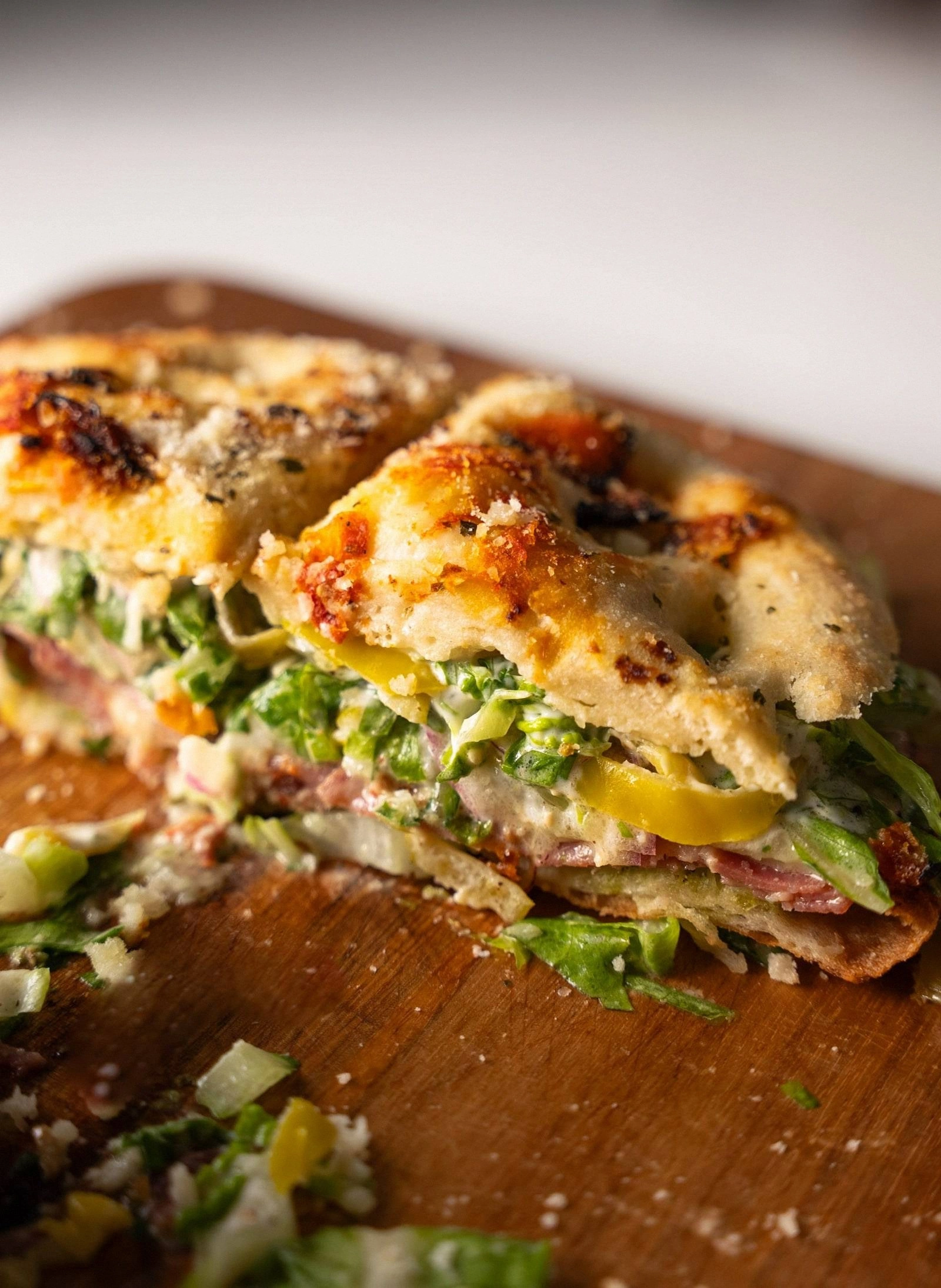
I’ll be honest — the first time I tried to make a grinder on a soggy store‑bought focaccia, the whole thing collapsed like a sad pancake. The bread was gummy, the meat was limp, and the whole sandwich tasted like a sad deli counter. That disaster sparked a midnight dare from my roommate: “Make a grinder that could convince a New York deli to shut down for a day.” I accepted, and the result was a focaccia grinder that turned my tiny kitchen into a street‑food arena. Picture yourself pulling this out of the oven, the whole kitchen smelling like rosemary, sea‑salted olive oil, and char‑kissed meat, while the crust crackles like fireworks in a silent night. The moment you bite into that crisp‑soft edge, the flavors explode—tangy giardiniera, buttery provolone, and the savory beef that’s been kissed by a perfect sear. This version stands out because I swapped the usual soggy Italian roll for a homemade focaccia that’s airy on the inside yet stubbornly crisp on the outside, and I introduced a quick‑marinade for the beef that infuses it with garlic‑herb goodness without any fancy equipment. I also added a secret drizzle of rosemary‑infused olive oil that makes the crust sing like a choir of angels. Let me walk you through every single step — by the end, you’ll wonder how you ever made it any other way.
Most grinder recipes get the bread wrong; they either use a loaf that’s too dense, or they toast it so long it turns into a charcoal slab. Here’s what actually works: a focaccia dough that’s rested long enough to develop flavor, then dimpled and brushed with oil just before the bake. The secret is a short, high‑heat blast that gives you a blistered top without drying out the crumb. I dare you to taste this and not go back for seconds, because the combination of textures is so addictive that you’ll start dreaming about it during your next Zoom call. And the best part? You don’t need a commercial oven—just a decent home oven and a little patience. Okay, ready for the game‑changer? Let’s dive into the why’s and how’s of this masterpiece.
If you’ve ever struggled with soggy sandwich bread, you’re not alone — and I’ve got the fix. The trick lies in the dough’s hydration level, the timing of the olive‑oil drizzle, and the way you let the focaccia rest after baking. When the dough is properly hydrated, the crumb stays moist without becoming gummy, and the crust develops that coveted “tooth‑pick” crunch. I’ll also reveal a shortcut for the beef that gives it a flavor punch without a full‑day brine. This next part? Pure magic. Stay with me here — this is worth it.
What Makes This Version Stand Out
- Texture: The focaccia is airy inside, with a crisp, olive‑oil‑kissed crust that shatters like thin ice under your bite.
- Flavor Depth: A quick‑marinade for the beef adds garlic, rosemary, and a hint of acidity that makes each chew sing.
- Simplicity: Only twelve ingredients, all pantry staples, and no fancy equipment beyond a mixing bowl and a sheet pan.
- Uniqueness: The rosemary‑infused oil drizzle is a secret weapon that turns ordinary focaccia into a fragrant masterpiece.
- Crowd Reaction: Guests have declared this the “best sandwich they’ve ever had,” and some have even asked for the recipe before the first bite.
- Ingredient Quality: Using a high‑quality olive oil and fresh rosemary makes the difference between “good” and “legendary.”
- Cooking Method: A high‑heat blast creates blistered pockets that trap steam, keeping the interior tender.
- Make‑Ahead Potential: The focaccia can be baked a day ahead, and the beef can be marinated overnight for even deeper flavor.
Inside the Ingredient List
The Flavor Base
Flour is the backbone of any bread, and for this focaccia I chose all‑purpose flour because its protein content creates just enough gluten to hold the dough together without making it chew‑heavy. If you substitute bread flour, you’ll get a chewier crumb, which can be nice for pizza but defeats the airy texture we’re after. Sugar isn’t there for sweetness; it feeds the yeast, giving the dough a subtle rise and a golden crust. Skipping it will result in a pale, dense loaf that looks more like a biscuit than a focaccia.
The Texture Crew
Olive oil does double duty: it lubricates the dough, making it easier to stretch, and it creates that gorgeous, glossy top after baking. Use a robust, extra‑virgin olive oil for flavor; a light “olive oil spray” will leave you with a bland crust. The rosemary flakes are the aromatic spark that turns a plain loaf into a herb‑infused wonder. If you’re allergic or simply don’t like rosemary, try dried thyme or oregano, but expect a different aroma profile.
The Unexpected Star
Giardiniera—those tangy, pickled peppers, carrots, and cauliflower—adds a bright, acidic crunch that cuts through the richness of the beef and cheese. It’s the surprise party in every bite. If you can’t find giardiniera, a mix of sliced pickles and roasted red peppers works in a pinch, though the texture won’t be as varied. The mayonnaise and grainy mustard combine to form a creamy, slightly spicy spread that keeps the sandwich from drying out, while also adding a subtle umami depth.
The Final Flourish
The thinly sliced roast beef (or turkey, for a lighter version) is the protein hero. I marinate it briefly in olive oil, garlic, and a splash of lemon juice to tenderize and brighten the flavor. Skipping the marination will leave the meat tasting flat and a bit rubbery. Provolone cheese melts beautifully, offering a buttery richness that balances the acidity of the giardiniera. If you’re a fan of sharper cheese, swap it for aged provolone or even a thin slice of sharp cheddar, but be prepared for a stronger flavor punch.
Everything's prepped? Good. Let's get into the real action...
The Method — Step by Step
In a large mixing bowl, whisk together 2 cups of all‑purpose flour, 1 tsp active dry yeast, 1 tsp sugar, and 1 tsp salt. The dry ingredients should look like a uniform, slightly fluffy cloud. This is the foundation; if the yeast isn’t evenly distributed, you’ll get pockets of no‑rise dough. Let’s set the stage for a perfect rise.
Warm 1 cup of water (around 105°F/40°C) and drizzle in 2 tbsp olive oil, then pour the mixture into the dry bowl. Stir with a wooden spoon until a shaggy dough forms. You’ll notice the dough pulling away from the sides of the bowl—this is the moment where gluten starts to develop. That sizzle when it hits the pan? Absolute perfection.
Turn the dough onto a lightly floured surface and knead for about 6‑8 minutes until it becomes smooth and elastic. If the dough feels sticky, sprinkle a little more flour, but avoid over‑flouring; you want it supple, not stiff. Cover the dough with a clean kitchen towel and let it rest in a warm spot for 45 minutes, or until it doubles in size.
Kitchen Hack: Place the bowl in a turned‑off oven with the light on; the gentle heat speeds up the rise without over‑proofing.While the dough is rising, prepare the beef. In a shallow dish, combine 8 oz thinly sliced roast beef with 1 tsp grainy mustard, 1 tbsp olive oil, 1 minced garlic clove, and a pinch of rosemary flakes. Toss quickly—just enough to coat the meat. Let it sit for 15 minutes; this quick marination injects flavor without making the meat soggy.
Watch Out: Do not over‑marinate the beef, or the acid will start “cooking” it, resulting in a mushy texture.Preheat your oven to 475°F (245°C). Lightly oil a rimmed baking sheet and gently press the risen dough onto it, spreading it to a ½‑inch thickness. Using your fingertips, create deep dimples across the surface—think of a golf ball pattern. Drizzle the top with the remaining olive oil and sprinkle ½ tsp rosemary flakes over the dimples. This step creates those gorgeous blistered pockets that trap steam.
Slide the sheet pan into the oven and bake for 12‑15 minutes, or until the top is golden‑brown and the edges start pulling away from the pan. You’ll hear a faint crackle as the crust forms—that’s the sound of flavor locking in. When you lift the focaccia, the underside should be lightly crisp, not soggy.
Fun Fact: The high‑heat blast creates Maillard reactions, which are responsible for the deep, nutty aromas you associate with freshly baked bread.While the focaccia bakes, assemble the spread: mix 2 tbsp mayonnaise with a pinch of salt and a dash of pepper. Spread a thin layer on the cooled focaccia once it’s out of the oven; the heat will melt the mayo slightly, creating a glossy base for the toppings.
Layer the marinated roast beef evenly across the focaccia, followed by the giardiniera, then place 4 slices of provolone on top. The cheese should sit right on the warm meat, allowing it to melt just enough to become stretchy without losing its bite. If you like extra melt, pop the assembled sandwich under the broiler for 1‑2 minutes, watching closely so it doesn’t burn.
Allow the assembled grinder to rest for 5 minutes before slicing. This short rest lets the cheese settle and the flavors meld. Cut the focaccia into quarters or into individual sandwich portions, depending on your crowd. Serve immediately, perhaps with a side of extra giardiniera for those who love a punch of acidity.
That's it — you did it. But hold on, I've got a few more tricks that'll take this to another level. The real secret to a legendary grinder is in the finishing touches: a final drizzle of rosemary‑infused oil, a sprinkle of flaky sea salt, and a confident bite that proves you’ve mastered the art of sandwich engineering. Ready for the next round of insider tips?
Insider Tricks for Flawless Results
The Temperature Rule Nobody Follows
Most home bakers bake focaccia at 425°F, but the magic happens at 475°F. The extra heat creates those blistered pockets that trap steam, keeping the interior moist while the crust turns crisp. If your oven can’t reach that temperature, preheat a pizza stone for at least 30 minutes and bake the focaccia directly on it; the stone mimics a professional deck oven. A friend once tried a lower temperature and ended up with a soggy, doughy sandwich that fell apart on the plate—never again.
Why Your Nose Knows Best
When the focaccia is done, you’ll notice a fragrant rosemary aroma that rises from the crust. That scent is your cue that the crust has reached the perfect level of caramelization. Trust it more than a timer; ovens vary, and the nose is a more reliable sensor. If you’re unsure, tap the surface—if it sounds hollow, the interior is fully baked.
The 5‑Minute Rest That Changes Everything
After baking, let the focaccia rest uncovered for exactly five minutes. This short hiatus lets the steam escape, preventing a soggy bottom once you add the toppings. It also allows the crust to firm up just enough to hold the weight of the beef and cheese without collapsing. Skipping this rest leads to a sandwich that slides apart the moment you pick it up.
Oil‑Infused Dimpling
When you dimple the dough, drizzle a tiny amount of rosemary‑infused olive oil into each pocket. The oil seeps into the dimples during baking, creating pockets of flavor that burst when you bite. This is the reason the crust has that almost buttery pop. A quick hack: warm the oil with rosemary for just a minute, then brush it on with a silicone pastry brush.
Seasoning the Beef at the Right Time
Marinate the beef for no more than 20 minutes. Longer exposure to the acidic mustard will start denaturing the proteins, turning the slices mushy. The short burst of flavor is enough to infuse the meat while preserving its texture. If you’re prepping ahead, keep the marinated beef in a sealed container in the fridge and bring it to room temperature just before assembling.
Creative Twists and Variations
This recipe is a playground. Here are some of my favorite ways to switch things up:
Spicy Sriracha Kick
Add a teaspoon of sriracha to the mayo spread and swap the giardiniera for pickled jalapeños. The heat will cut through the richness of the beef, creating a balanced fire‑and‑ice experience. Perfect for those who love a little tongue‑tingling excitement.
Mediterranean Veggie Delight
Replace the roast beef with grilled zucchini, roasted red peppers, and a smear of hummus. The focaccia’s herbaceous crust pairs beautifully with the smoky vegetables, making a vegetarian version that still feels indulgent.
Cheesy Pull‑Apart
Swap provolone for a blend of mozzarella and smoked gouda, then sprinkle a light layer of grated parmesan before the final bake. The cheese melt becomes gooey, stringy, and slightly smoky—ideal for cheese lovers who can’t get enough stretch.
Herb‑Infused Olive Oil Drizzle
Infuse the olive oil with thyme, oregano, and a clove of garlic for 10 minutes before brushing. This adds a deeper herb profile that makes each bite feel like a Mediterranean garden.
Breakfast Grinder
Swap the roast beef for crispy bacon, add a fried egg, and replace the giardiniera with a light arugula salad. The yolk acts as a natural sauce, turning the sandwich into a hearty breakfast that still respects the focaccia’s structure.
Storing and Bringing It Back to Life
Fridge Storage
Wrap the leftover focaccia grinder tightly in parchment paper, then place it inside an airtight container. It will stay fresh for up to three days. The parchment helps retain the crust’s texture while preventing sogginess from the fillings.
Freezer Friendly
Separate the focaccia from the fillings and freeze each component individually. The bread freezes well for up to two months; the beef and cheese can be stored in zip‑top bags for one month. When you’re ready to eat, reheat the focaccia in a 350°F oven for 8‑10 minutes, then assemble with fresh toppings.
Best Reheating Method
To revive a refrigerated grinder, preheat your oven to 375°F, place the sandwich on a baking sheet, and splash a tiny splash of water on the crust before covering loosely with foil. The steam generated restores the crust’s crunch while keeping the interior moist. In just 7‑9 minutes, you’ll have a sandwich that tastes like it just came out of the oven.