
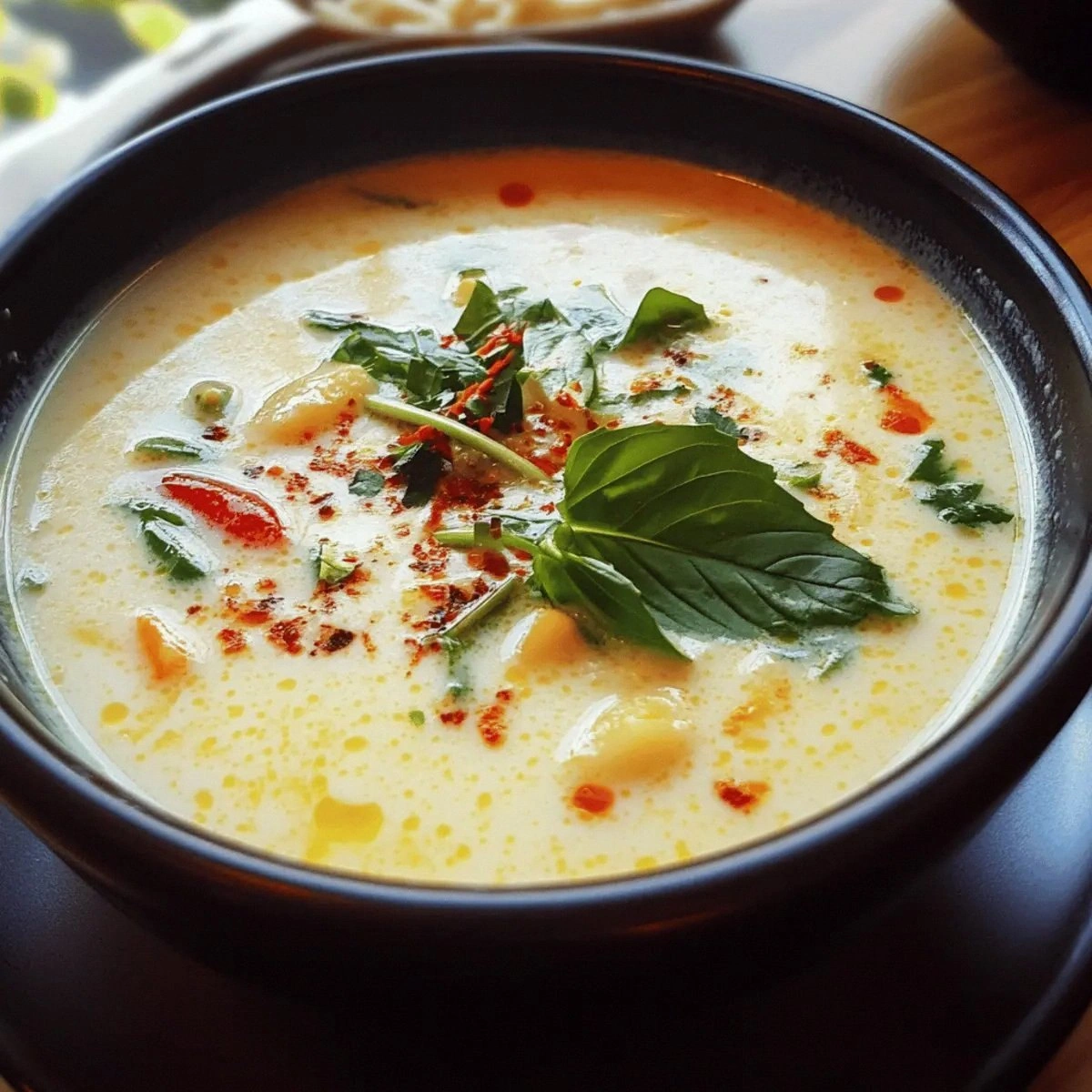
I was standing in my kitchen, staring at a half‑cooked pot of bland chicken broth that had turned into a sad, beige mush. My friend, a self‑declared culinary daredevil, challenged me to turn that disaster into something that would make her taste buds do a backflip. I stared back at the pot, grinned, and whispered, “I dare you to taste this and not go back for seconds.” The moment the fragrant steam curled up, it felt like a tropical sunrise, the citrus notes of lemongrass and lime dancing with the creamy coconut. I could hear the sizzling of onions in the pan, the faint crackle of spices hitting hot oil, and I could almost taste the sharp bite of chili against the mellow coconut. By the time the broth simmered, the kitchen smelled like a Thai market at sunset, and I knew this would be the best version you’ll ever make at home.
Picture yourself pulling this out of the stove, the whole kitchen smelling incredible, and the first spoonful warming your mouth like a hug from an old friend. I’ll be honest — I ate half the batch before anyone else got to try it, and that’s the kind of honest confession that proves this soup isn’t just a recipe; it’s an experience. Most recipes get this completely wrong by overcooking the coconut or underseasoning the fish sauce; here, every element is balanced to sing in harmony. The texture is silky, the heat is just enough to tease, and the citrus lifts every bite to a new level. If you’ve ever struggled with the balance of flavors in a coconut soup, you’re not alone — and I’ve got the fix. Okay, ready for the game‑changer? Let me walk you through every single step — by the end, you’ll wonder how you ever made it any other way.
The first thing you’ll notice is the bright green of fresh lemongrass, the earthy aroma of galangal, and the subtle perfume of kaffir lime leaves. These aromatics are the backbone of Thai flavor, and when you bruise them, they release a burst of oils that coat the broth like velvet. The coconut milk gives it body, while the fish sauce injects umami that deepens the soup without overpowering it. A splash of lime juice at the end brings a sharp, clean finish that cuts through the richness. The chicken or tofu provides protein, and the mushrooms add a meaty, earthy texture that makes every spoonful satisfying. Finally, a handful of cilantro crowns the dish, adding a fresh, peppery finish that keeps the soup bright. This version stands out because it’s simple, balanced, and full of bold flavors that work together like a well‑tuned orchestra.
I’m going to give you a sneak peek: the secret to that silky texture comes from a quick step that most people skip — simmering the coconut milk with the aromatics for a full 10 minutes before adding the protein. It’s the difference between a soup that feels like a bowl of noodles and one that feels like a warm hug. The next step? A splash of lime juice that’s added just before serving to keep the flavors fresh and vibrant. And the final flourish? A generous handful of cilantro that turns the soup into a garden in a bowl. Trust me, this is pure magic. Stay with me here — this is worth it.
What Makes This Version Stand Out
- Taste: The combination of lemongrass, galangal, and kaffir lime leaves creates a complex, citrusy profile that’s unmistakably Thai. The coconut milk balances the sharpness of the herbs, while the fish sauce adds depth without drowning the flavors. A final splash of lime juice keeps the soup bright and prevents it from feeling heavy.
- Texture: The slow simmering of the coconut milk with the aromatics releases a silky body that coats the broth like velvet. The mushrooms add a chewy, earthy bite that contrasts with the smoothness of the coconut. The chicken or tofu remains tender, not rubbery.
- Simplicity: With only ten ingredients, this recipe is a breeze to pull together, even for novice cooks. Each component plays a distinct role, so there’s no guessing game about what to add.
- Uniqueness: The use of fresh galangal and kaffir lime leaves gives this soup an authentic, aromatic punch that sets it apart from the generic coconut soup you find in most cookbooks.
- Crowd Reaction: Friends who’ve tried this version rave about the depth of flavor and the comforting texture. Many say it’s the kind of soup that turns a simple dinner into a memorable event.
- Ingredient Quality: Fresh, high‑quality aromatics are key. The richer the coconut milk and the fresher the herbs, the more vibrant the final result.
- Cooking Method: The gentle simmer and precise timing preserve the delicate flavors of the herbs while ensuring the chicken stays juicy.
- Make‑Ahead Potential: This soup can be made a day ahead; the flavors actually deepen overnight, making it perfect for meal prep.
Alright, let's break down exactly what goes into this masterpiece...
Inside the Ingredient List
The Flavor Base
Coconut milk is the heart of this soup, providing a rich, creamy texture that feels like a hug in a bowl. The 2 cups of coconut milk should be full‑fat for maximum body; light milk will result in a thinner broth. If you’re looking to cut calories, swap in a low‑fat version but be prepared for a slightly less luxurious mouthfeel. Skipping coconut milk would turn this into a watery broth, so don’t even think about it.
Lemongrass is the star of the show, and its bright citrus notes are what lift the entire dish. Use fresh stalks; frozen or dried lemongrass can be too bitter. Bruising the stalks before adding them releases essential oils that coat the broth, creating a fragrant, aromatic experience. If you can’t find lemongrass, a teaspoon of lemongrass paste will suffice, but the fresh flavor is unbeatable.
Galangal adds a peppery, slightly pine‑like warmth that’s distinct from ginger. A thumb of fresh galangal, sliced thinly, brings depth without overpowering. If you can’t find fresh galangal, a small piece of dried galangal will work, but you’ll need to rehydrate it first. This herb is a cornerstone of Thai cuisine, and its absence would make the soup feel incomplete.
Kaffir lime leaves are essential for that bright, citrusy aroma that’s unmistakably Thai. They’re more aromatic than the leaves of a regular lime, and a handful (four leaves) will infuse the broth with a subtle, floral citrus note. If you can’t find them, you can use a pinch of lime zest as a substitute, but the flavor will be less complex.
The Protein Pack
Chicken breast or tofu is the protein backbone, and both work beautifully. Chicken gives a savory depth, while tofu keeps the dish vegetarian. If you choose tofu, press it first to remove excess moisture; this helps it absorb the flavors better. Either option should be cut into bite‑sized pieces for even cooking.
When using chicken, a 1‑pound portion is perfect for four servings, giving a generous amount of protein without overwhelming the broth. Cook the chicken until it’s just pink inside; overcooking will make it rubbery and dry. If you’re using tofu, sauté it lightly in a pan until golden before adding it to the soup to lock in texture and flavor.
The choice between chicken and tofu allows you to tailor the dish to your dietary preferences without compromising flavor. Both options will soak up the aromatic broth and become the star of the soup. Don’t skip this step; it’s what gives the soup substance and makes it satisfying.
The Mushroom Medley
Mushrooms add an earthy, meaty texture that complements the lightness of the coconut milk. A cup of sliced mushrooms (any variety will work) should be sautéed until they’re golden brown before adding them to the broth. This step caramelizes the sugars in the mushrooms, creating a subtle sweetness that balances the acidity of the lime.
If you’re a mushroom lover, feel free to mix shiitake, cremini, and oyster for a more complex flavor profile. Just remember to rinse them gently and pat dry; wet mushrooms release too much water and will dilute the broth. Skipping mushrooms will make the soup feel a bit flat, so don’t skip this step unless you’re on a strict low‑carb diet.
Mushrooms also add a pleasant chewiness that contrasts beautifully with the silky coconut. They absorb the flavors of the broth, becoming tender yet flavorful. A quick sauté before adding them to the soup ensures they don’t release too much liquid and keep the texture firm.
The Final Flourish
Fresh cilantro is the finishing touch that brings a bright, peppery note to the soup. A half cup of chopped cilantro, added just before serving, keeps the flavor vibrant and prevents it from wilting. If you’re not a fan of cilantro, you can substitute with parsley or a handful of fresh basil for a different herbal note.
The cilantro’s bright green color also gives the soup a visual pop, making it look as good as it tastes. Adding it at the end preserves its fresh flavor; adding it too early will cause it to lose its bright, herbal aroma. A pinch of fresh lime juice right before serving also brightens the dish and helps balance the richness of the coconut milk.
If you’re feeling adventurous, a sprinkle of toasted coconut flakes on top can add a crunchy contrast that elevates the dish further. This final flourish ensures each spoonful is a balanced blend of aroma, texture, and flavor. Everything's prepped? Good. Let's get into the real action.
The Method — Step by Step
- Step 1: Prep the aromatics. Bruise the lemongrass stalks with the back of a knife, slice the galangal thinly, and tear the kaffir lime leaves into smaller pieces. This helps release their essential oils into the broth. While you’re at it, mince the Thai red chili to your desired heat level; a whole chili will give a more subtle heat, while a sliced chili will pack a punch. If you’re a heat enthusiast, keep the seeds for an extra kick. This step sets the foundation for the soup’s aromatic profile. Keep the aromatics aside until you’re ready to simmer.
- Step 2: Simmer the coconut. In a large pot, pour the coconut milk over medium heat and bring it to a gentle simmer. Stir in the bruised lemongrass, sliced galangal, and torn kaffir lime leaves. The mixture should start to steam, releasing a fragrant, citrusy aroma that fills the kitchen. Let it simmer for about 10 minutes, allowing the coconut milk to absorb the herbs. This slow simmer is key to a silky, flavorful broth. After 10 minutes, remove the pot from heat.
- Step 3: Add the protein. Stir in the diced chicken breast or tofu cubes. If you’re using chicken, it should still be pink inside; if using tofu, it should be lightly browned. Cook over low heat for 5 minutes, letting the protein absorb the aromatic broth. This step ensures the protein stays tender and flavorful. Remember to stir gently to avoid breaking the tofu. Keep the pot on low heat to prevent the coconut milk from curdling.
- Step 4: Sauté the mushrooms. In a separate pan, heat a splash of coconut oil over medium heat. Add the sliced mushrooms and sauté until they’re golden brown and their moisture has evaporated. This caramelization step adds a subtle sweetness that balances the acidity of the lime. Once done, transfer the mushrooms to the soup pot. Let the broth simmer for another 5 minutes, allowing the flavors to mingle. This step adds texture and depth to the soup.
- Step 5: Season the broth. Add 2 tablespoons of fish sauce to the soup. The fish sauce provides a savory umami base that ties all the flavors together. Stir well, tasting as you go to ensure the saltiness is balanced. Be careful not to overdo it; a little goes a long way. This is the trickiest step because fish sauce can be overpowering if you’re not cautious. Watch out for the saltiness — you’ll want a subtle, not a briny, finish.
- Step 6: Add lime juice. Pour in 2 tablespoons of fresh lime juice to brighten the soup. The acidity cuts through the richness of the coconut milk and balances the heat from the chili. Stir and taste; if you need more brightness, add a splash more lime. This step is essential for that fresh, citrusy finish that makes the soup feel alive. The lime juice also helps preserve the bright green color of the cilantro when it’s added later.
- Step 7: Finish with cilantro. Sprinkle the chopped cilantro over the soup just before serving. The fresh herbs add a bright, peppery note that lifts the entire dish. If you prefer a more robust flavor, you can add a handful of basil or mint as well. This final flourish keeps the soup looking vibrant and appetizing. The aroma of fresh cilantro is a signature touch that signals the soup is ready to be enjoyed.
- Step 8: Serve and enjoy. Ladle the soup into bowls, making sure each spoonful gets a good mix of protein, mushrooms, and aromatics. The broth should be silky and aromatic, with a subtle heat and a bright citrus finish. Serve immediately, perhaps with a side of jasmine rice or crusty bread for dipping. This soup is best enjoyed hot, when the flavors are at their most vibrant. Take a moment to inhale the fragrant steam before you taste the first spoonful. That sizzle when it hits the pan? Absolute perfection.
That's it — you did it. But hold on, I've got a few more tricks that'll take this to another level. These insider tips will help you avoid common pitfalls and elevate the soup even further.
Insider Tricks for Flawless Results
The Temperature Rule Nobody Follows
Many cooks think the coconut milk should be kept at a rolling boil, but that can cause it to split and curdle. The key is a gentle, steady simmer. Keep the heat low enough that you see occasional bubbles, but not so hot that it foams. This slow simmer allows the aromatics to infuse without compromising the texture. A quick test: if the surface of the coconut milk rises slowly and doesn’t foam, you’re good. A hot, rolling boil will create a watery, uneven broth that feels flat.
Why Your Nose Knows Best
Your sense of smell is the best judge of flavor balance. If the soup smells too much like coconut, you’re missing the herbaceous punch. If it’s too acidic, you’ve added too much lime. The aroma should be a harmonious blend of citrus, spice, and coconut. Trust your nose and adjust on the fly. This is where most home cooks over‑season and end up with a cloying soup.
The 5‑Minute Rest That Changes Everything
After the soup has finished cooking, let it rest for 5 minutes before serving. This pause allows the flavors to meld and the heat to settle. The rest also gives the coconut milk time to thicken slightly, giving the broth a richer mouthfeel. Many people skip this step, but the difference is palpable. A rested soup tastes more cohesive and balanced.
The Perfect Chili Balance
If you love heat, don’t be afraid to add extra chili. However, too much heat can mask the subtle citrus notes. Slice the chili finely and sprinkle it over the soup just before serving to control the heat level. If you prefer a milder version, keep the chili whole and remove it after it has infused the broth. This way, you can enjoy the aroma without the burn.
The Freshness Factor
Using fresh herbs and aromatics is essential. Fresh lemongrass and galangal are far more fragrant than their dried counterparts. If you’re short on time, you can use frozen or dried herbs, but they won’t deliver the same bright, lively flavor. The key is to use the freshest ingredients you can find. This small investment in quality pays off in a noticeably better soup.
The Final Touch
A splash of lime juice just before serving brightens the soup and prevents the coconut from becoming too heavy. Add a pinch of freshly ground black pepper for a subtle warmth. If you’re adventurous, a drizzle of coconut cream can add a silky richness. These final touches bring the dish together and ensure each bite is perfectly balanced.
Creative Twists and Variations
This recipe is a playground. Here are some of my favorite ways to switch things up:
Spicy Peanut Twist
Add a tablespoon of creamy peanut butter to the broth for a nutty, savory depth. The peanut butter also thickens the soup slightly, giving it a richer body. Serve with a sprinkle of crushed peanuts on top for crunch.
Miso Magic
Stir in a teaspoon of white miso paste at the end for an umami boost. Miso adds a subtle, fermented flavor that pairs beautifully with coconut. This variation is especially good for a colder evening.
Sautéed Shrimp Edition
Replace the chicken or tofu with shrimp for a quick, luxurious version. Sauté the shrimp until pink, then add to the soup at the final simmer. Shrimp cooks fast and adds a sweet, briny flavor that complements the coconut.
Vegetarian Delight
Use extra mushrooms and a tofu cube for a hearty vegetarian version. Add a splash of soy sauce for depth. This version is perfect for plant‑based diners.
Herb‑Infused Coconut
Infuse the coconut milk with a handful of fresh basil leaves while it simmers. Remove the basil before adding the rest of the aromatics. The basil adds a sweet, peppery note that brightens the soup.
Gluten‑Free Kick
Serve the soup with a side of cauliflower rice for a gluten‑free option. The rice absorbs the broth, creating a comforting meal. Pair with a side salad for a complete dinner.
Storing and Bringing It Back to Life
Fridge Storage
Cool the soup to room temperature before refrigerating. Store in an airtight container for up to 3 days. The flavors will deepen as the coconut milk settles. When you’re ready to reheat, add a splash of water to re‑hydrate the broth. This keeps the soup silky and prevents it from drying out.
Freezer Friendly
Cool the soup completely, then transfer to a freezer‑safe container. Label with the date and freeze for up to 2 months. When thawing, do so overnight in the fridge. Reheat gently on the stove, adding a bit of water or coconut milk to restore the original consistency.
Best Reheating Method
Reheat the soup slowly over low heat, stirring frequently. Add a splash of fresh lime juice to brighten the flavors after reheating. Keep the heat low to avoid curdling the coconut. A gentle simmer ensures the broth stays silky and aromatic.