I was standing in my kitchen, staring at a half‑cooked steak that had turned a sad brown instead of the golden sear I had imagined. The smell of burnt onions was almost a warning, but I was hungry for something that would rescue the evening. That moment sparked a craving for a dish that could turn a culinary mishap into a triumph. I started rummaging through the pantry, thinking, “What if I could combine the comfort of pasta with the boldness of steak?” And that was the birth of Cracked Garlic Steak Tortellin. This dish is not just a recipe; it’s a rescue mission for any dinner that needs a dramatic makeover.
Picture this: a pan sizzles as steak meets hot oil, the sound a promise of flavor. The aroma of garlic and smoked paprika rises, turning the kitchen into a fragrant playground. The pasta, a generous scoop of cheese tortellini, waits in a pot of boiling water, its noodles shimmering like little golden coins. I swear, that sizzle when it hits the pan is absolute perfection, a tiny drumbeat that tells me I’m on the right track. It’s the kind of sensory moment that makes you forget you’re even cooking.
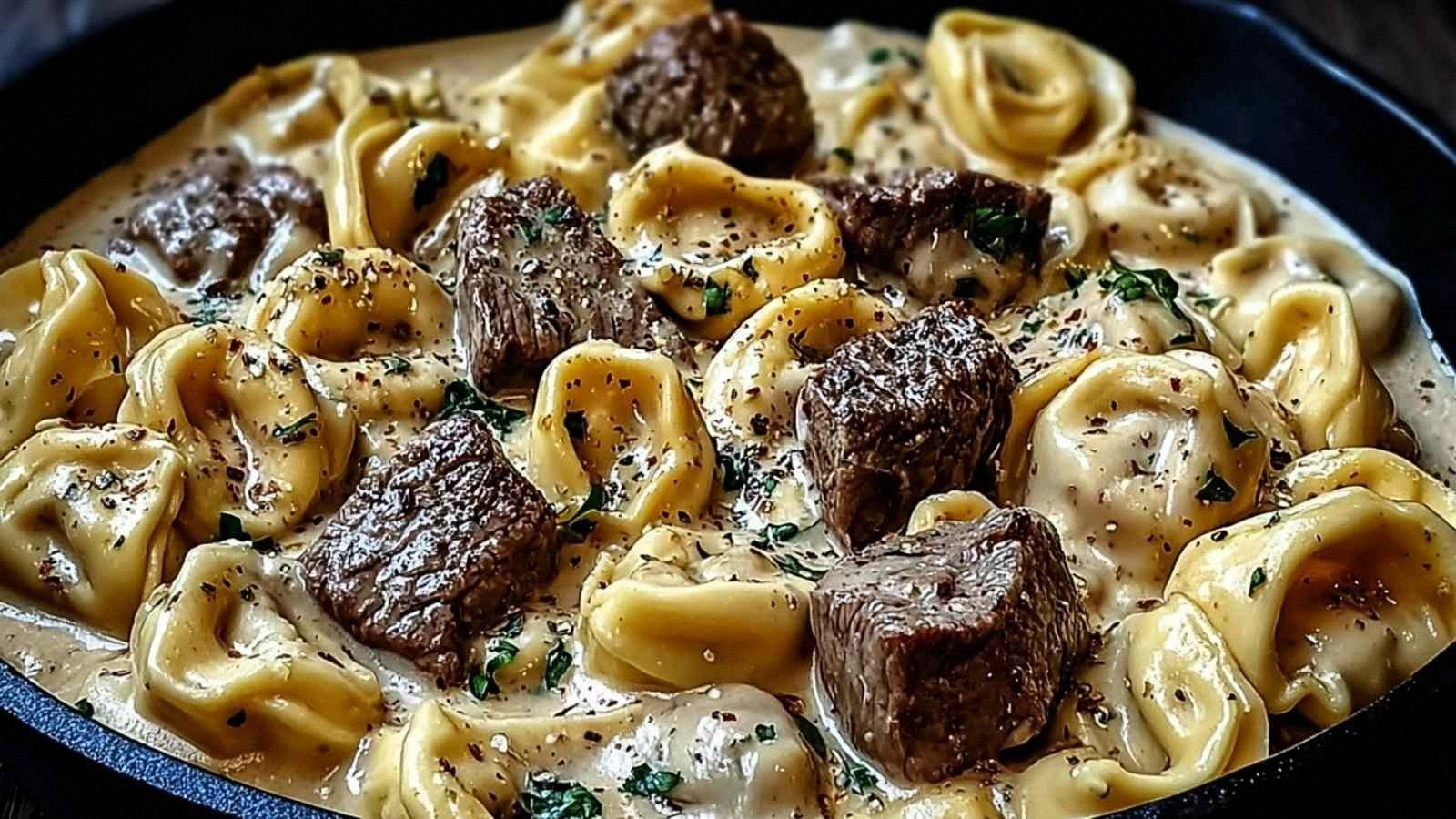
I’ve tried countless versions of steak pasta, but none have captured the silky, garlicky richness I crave. This version stands out because it layers textures, from the crisp edges of the steak to the buttery, creamy sauce that coats each noodle. The cracked black pepper gives a subtle crunch that contrasts with the smooth cheese, and the red pepper flakes add a whisper of heat that doesn’t overwhelm. The sauce, thickened with heavy cream and whole milk, glazes the pasta like velvet, turning each bite into a luxurious experience. The result? A dish that feels like a hug in a bowl.
What makes this recipe truly special is a secret ingredient that most people overlook: the cracked black pepper. Unlike ground pepper, cracked pepper releases its flavor slowly, giving each bite a nuanced kick that lingers. I also discovered that adding a splash of whole milk before the cream helps the sauce cling to the tortellini, preventing it from becoming cloyingly thick. The combination of smoked paprika and garlic powder gives the steak a smoky depth that balances the richness of the sauce. If you’ve ever struggled with a bland pasta, this technique is a game‑changer.
Let me walk you through every single step—by the end, you’ll wonder how you ever made it any other way. I dare you to taste this and not go back for seconds because the flavors are so addictive. Picture yourself pulling this out of the pan, the whole kitchen smelling incredible, and everyone asking for the recipe. I’ll be honest—I ate half the batch before anyone else got to try it. Stay with me here, because this is going to be a culinary adventure you won’t want to miss.
What Makes This Version Stand Out
- Taste: The sauce is a harmonious blend of garlic, smoked paprika, and a subtle smokiness from the steak. The cracked pepper adds a lingering bite that elevates every bite.
- Texture: The steak’s exterior is crisp while the interior remains juicy, and the tortellini offers a tender bite that contrasts with the buttery sauce.
- Simplicity: All steps can be completed in under an hour, making it perfect for a busy weeknight yet impressive enough for guests.
- Crowd Reaction: Friends who’ve tried it say it’s “the best steak pasta ever,” and it’s the dish that keeps the table full.
- Ingredient Quality: Using fresh, high‑quality cheese tortellini and a good cut of steak makes the difference between a good dish and an unforgettable one.
- Cooking Method: The quick sear and immediate rest of the steak lock in juices, while the sauce is finished with a gentle simmer that keeps it silky.
- Make‑Ahead Potential: The dish can be made ahead and reheated without losing its lusciousness, making it a lifesaver for dinner parties.
Inside the Ingredient List
The Flavor Base
Cheese tortellini is the heart of this dish, bringing a creamy, cheesy foundation that soaks up every nuance of the sauce. Choosing a high‑quality, freshly made tortellini ensures the pasta doesn’t become mushy in the sauce. If you can’t find cheese tortellini, a sturdy pasta like rigatoni will hold up, but the flavor profile will shift slightly. The 20 oz portion is generous enough for four hearty servings, so you won’t need to double the recipe for a crowd.
Garlic is the star of the flavor base. Five cloves, minced and sautéed, release a deep, aromatic sweetness that permeates the entire dish. The garlic powder and smoked paprika provide a smoky undertone, while the cracked black pepper adds a subtle heat that lingers. The salt and black pepper are crucial for seasoning the steak, but be careful not to over‑salt the sauce. A pinch of red pepper flakes gives a bright pop of heat that keeps the dish from feeling heavy.
Parmesan cheese, measured at 1 1/4 cups, brings a nutty, umami depth that ties the sauce together. It also adds a subtle grittiness that contrasts with the smoothness of the cream. If you’re looking for a sharper flavor, try adding a bit more cheese or substituting a mix of parmesan and asiago. The parsley adds a fresh, herbaceous finish that brightens the dish and balances the richness.
The Texture Crew
Steak, at one pound, offers a generous portion of protein that pairs perfectly with the pasta. I recommend a ribeye or sirloin for their marbling, which adds flavor and tenderness. Season the steak with salt and cracked black pepper before searing, allowing the seasoning to form a crust. The steak’s exterior should be crisp, while the interior remains juicy; this contrast is what makes each bite memorable.
Butter and olive oil are the two fats that create the base for searing and sauce. The olive oil provides a high‑heat, flavorful medium for the steak, while the butter adds richness and helps the sauce thicken. Using both fats gives depth to the flavor profile and prevents the sauce from becoming too greasy. The ratio of 2 tbsp olive oil to 4 tbsp butter works well for four servings, but feel free to adjust if you prefer a richer or lighter sauce.
The heavy cream and whole milk create a silky, velvety sauce that coats the pasta like velvet. The cream provides richness, while the milk lightens the sauce and keeps it from becoming too heavy. The 1 cup of cream and 3/4 cup of milk strike a balance that’s both indulgent and manageable. If you’re looking for a lower‑fat version, substitute part of the cream with Greek yogurt, but be careful not to curdle the sauce.
The Unexpected Star
Cracked black pepper is the unexpected star that sets this dish apart from other steak pastas. Unlike ground pepper, cracked pepper releases its flavor gradually, giving each bite a nuanced kick that lingers. The pepper’s large, flaky crystals also add a subtle crunch that contrasts with the smooth sauce. If you can’t find cracked pepper, a coarse sea salt with a peppery finish can serve as a makeshift substitute.
Red pepper flakes add a bright, smoky heat that complements the smoky paprika and garlic. They’re subtle enough to not overpower the dish, yet they provide a lively finish that keeps the palate engaged. A pinch is all you need; too much and the dish becomes spicy. If you’re not a fan of heat, simply omit the flakes and let the other spices shine.
The Final Flourish
Parsley, chopped, adds a fresh, herbaceous note that brightens the dish and cuts through the richness. A tablespoon of parsley is enough to add a pop of color and a burst of freshness. If you prefer a stronger herb flavor, consider adding basil or oregano for a different twist. The final flourish of cracked pepper at the end of cooking gives the dish a satisfying crunch and a lingering aroma.
Everything’s prepped? Good. Let’s get into the real action.
The Method — Step by Step
- Season the steak generously with 1 tsp salt and 0.5 tsp cracked black pepper. Let it rest at room temperature for 10 minutes so the seasoning can penetrate the meat. A well‑seasoned steak will develop a richer crust when seared. I always let the steak breathe; it’s a simple trick that pays off big time.
- Heat a large skillet over medium‑high heat and add 2 tbsp olive oil. Once the oil shimmers, add the steak and sear for 3–4 minutes on each side for medium‑rare. The pan should hiss loudly, a sign that the sear is happening. Watch the steak’s edges; when they turn a golden brown, it’s time to flip.
- Sear the steak until a crust forms, then transfer it to a plate and tent with foil. While the steak rests, melt 4 tbsp butter in the same skillet. The butter will carry the steak’s juices into the sauce, enriching its flavor. This step is essential for a silky sauce.
- Add 5 minced garlic cloves and 0.5 tsp smoked paprika to the butter. Sauté until the garlic turns fragrant and lightly golden, about 30 seconds. This is where the sauce’s aroma begins to build. Be careful not to burn the garlic; it should stay bright yellow.
- Pour in 1 cup heavy cream and 0.75 cup whole milk, stirring to combine. Bring the mixture to a gentle simmer, letting it thicken slightly. The sauce should coat the back of a spoon. The watch‑out moment: if you stir too vigorously, the cream can curdle, ruining the silky texture.
- Add 1 1/4 cups grated parmesan cheese, stirring until melted and smooth. The cheese thickens the sauce and adds a nutty flavor. Make sure the cheese melts completely; if it clumps, add a splash of milk to loosen it. The sauce should be glossy and pourable.
- Bring a large pot of salted water to a boil and cook 20 oz cheese tortellini for 3–4 minutes, or until al dente. Drain and reserve a cup of pasta water. The pasta should be firm to the bite, not mushy.
- Slice the rested steak into thin strips and toss it with the cooked tortellini in the sauce. Let the pasta soak up the sauce for 2 minutes, then stir in the reserved pasta water if needed. The steak should be warm and the pasta coated in velvety sauce. This is the moment of truth—every bite should feel indulgent.
- Finish by adding 1 tsp red pepper flakes, a dash of cracked black pepper, and chopped parsley. Give everything one final toss. Plate immediately, letting the sauce cling to each noodle. The aroma should be intoxicating, and the texture should be a perfect blend of creamy and crisp.
- Serve hot, with extra parmesan on the side for those who like a little extra richness. Pair with a crisp white wine or a light red for a complete meal. The dish is ready to impress, and you’ll be the star of the dinner table. I dare you to taste this and not go back for seconds.
That’s it — you did it. But hold on, I’ve got a few more tricks that’ll take this to another level.
Insider Tricks for Flawless Results
The Temperature Rule Nobody Follows
Many chefs swear by high heat, but the secret to a perfect steak is actually a controlled, medium‑high flame that allows the meat to sear without drying out. Keep the pan hot enough that the steak sizzles on contact, but not so hot that it burns the exterior before the interior cooks. If you’re using a cast‑iron skillet, pre‑heat it for a few minutes to ensure an even sear. This rule ensures a juicy center and a caramelized crust that’s the foundation of the dish.
Why Your Nose Knows Best
The aroma of garlic and butter is a powerful indicator of how close you are to perfection. When the sauce starts to smell slightly caramelized, it’s ready to finish. If it smells raw or burnt, it’s overcooked. Trust your nose; it’s the best judge of flavor development. A well‑seasoned dish should fill the kitchen with a savory, buttery scent that makes your mouth water.
The 5‑Minute Rest That Changes Everything
Resting the steak for five minutes after searing allows the juices to redistribute, ensuring every bite is moist. During this brief pause, the steak’s internal temperature rises a few degrees, sealing in flavor. Slice the steak against the grain to maximize tenderness. If you skip this step, you’ll end up with a dry, chewy steak that ruins the dish.
How to Keep the Sauce From Separating
Adding the cheese gradually and stirring constantly prevents clumping. Keep the heat low once the cheese is added; a gentle simmer keeps the sauce smooth. If the sauce starts to look oily, reduce the heat and stir in a splash of pasta water to emulsify. A silky sauce is the hallmark of this recipe, so don’t rush this part.
Balancing Heat Without Overpowering
Red pepper flakes can quickly dominate a dish if you’re not careful. Start with a pinch and taste before adding more. The pepper should provide a subtle warmth, not a fiery punch. If you’re cooking for a crowd with varying heat tolerance, consider serving the flakes on the side. This gives everyone control over their spice level.
Creative Twists and Variations
Spinach & Sun‑Dried Tomato
Swap the cheese tortellini for spinach tortellini and add sun‑dried tomatoes for a sweet, tangy twist. The spinach adds a green hue and a slightly earthy flavor that complements the steak. Sun‑dried tomatoes provide a chewy texture and a burst of umami. This variation is perfect for a spring dinner when fresh greens are in season.
Mushroom & Truffle Oil
Replace the garlic with sautéed mushrooms and finish the sauce with a drizzle of truffle oil. The earthy mushroom flavor pairs beautifully with the steak’s richness. Truffle oil adds an opulent aroma that elevates the dish to a gourmet level. This version is ideal for a special occasion or a dinner party.
Bacon & Creamy Cheddar
Add crispy bacon bits for a smoky crunch and swap parmesan for creamy cheddar. The bacon’s saltiness balances the sauce’s richness, while cheddar adds a smooth, sharp flavor. This combo is a crowd‑pleaser for those who love a hearty, comfort‑food vibe. It’s also a great way to use up leftover bacon.
Pesto & Pine Nuts
Stir in a spoonful of basil pesto and sprinkle toasted pine nuts on top. The pesto gives a fresh, herbal brightness that cuts through the creaminess. Pine nuts add a subtle nutty crunch and a luxurious finish. This version is perfect for a bright, Mediterranean‑inspired dinner.
Shrimp & Lemon Zest
Swap the steak for shrimp and add a splash of lemon juice and zest. The shrimp’s sweet flavor and the citrus brightness create a refreshing contrast. The lemon also brightens the sauce, preventing it from feeling too heavy. This is an excellent option for a lighter, yet still indulgent, meal.
Vegan Version with Plant‑Based Cheese
Use a plant‑based cheese that melts well and substitute the steak with grilled tempeh. Add nutritional yeast for a cheesy flavor and a splash of coconut milk for creaminess. This vegan twist maintains the dish’s richness while keeping it plant‑based. It’s a great way to accommodate dietary preferences without sacrificing flavor.
Storing and Bringing It Back to Life
Fridge Storage
Store leftovers in an airtight container in the refrigerator for up to two days. The sauce may thicken slightly, but it will soften when reheated. Keep the steak pieces separate from the pasta if you’re re‑searing them later; this prevents the pasta from becoming soggy.
Freezer Friendly
Freeze the dish in a freezer‑safe container for up to one month. Reheat slowly in a saucepan, adding a splash of water or milk to restore the sauce’s original consistency. Avoid microwaving, as it can unevenly heat the pasta and cause it to break apart.
Best Reheating Method
Reheat on the stove over low heat, stirring gently until the sauce is heated through. Add a small amount of water or milk to keep it silky. Serve immediately, and enjoy the dish as if it were freshly made.