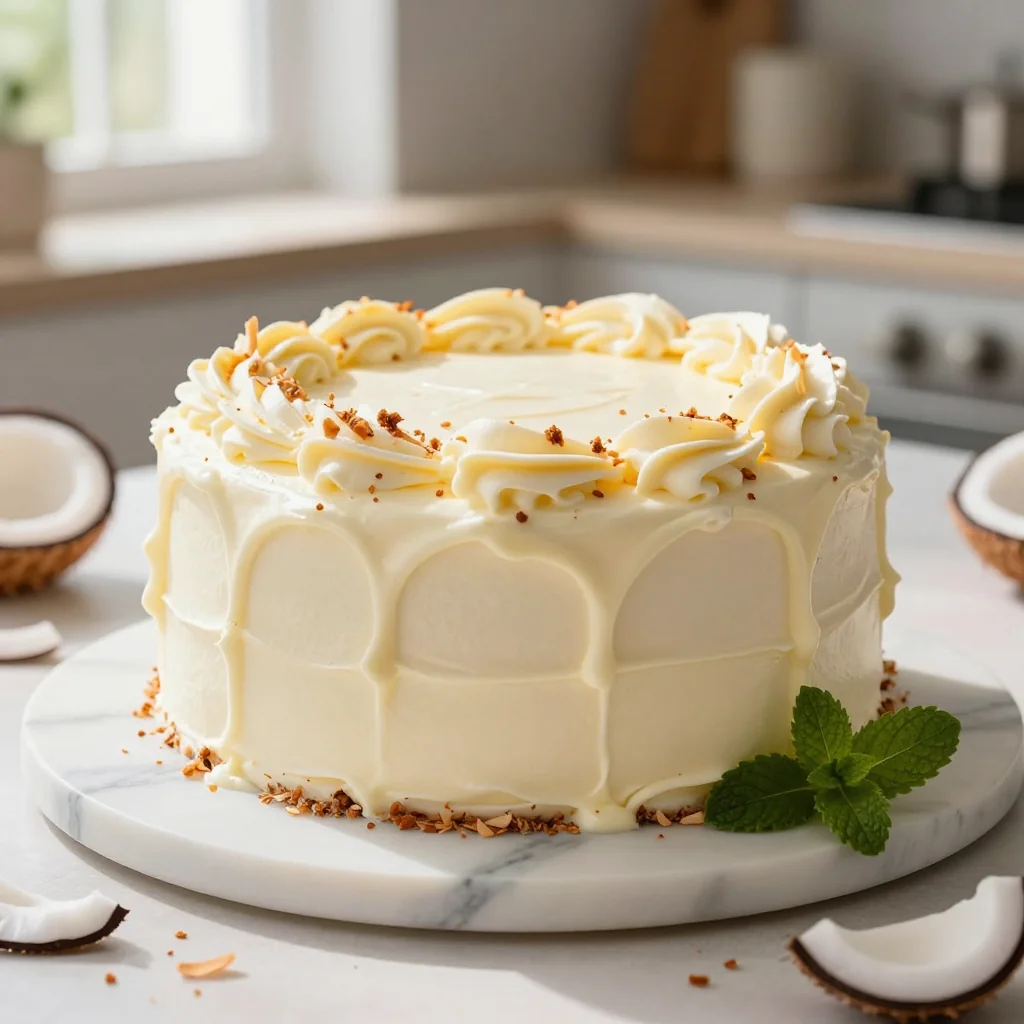
A tropical delight that blends fluffy coconut cake with silky cream cheese frosting for a celebration in every bite.

When I was a child, the scent of toasted coconut drifting from my grandmother’s kitchen was a promise of something magical. She would whisk together simple pantry staples, and the result was a cake that felt like a warm hug on a tropical beach. I still remember the first time I tried her coconut cake: the crumb was feather‑light, the flavor unmistakably coconut, and the frosting—a velvety cream cheese cloud—tied everything together in pure bliss.
This recipe is rooted in that cherished memory, but it’s been refined for the modern home baker. While the classic version relies on coconut milk and shredded coconut, I’ve added a touch of vanilla and a precise balance of leavening agents to ensure the cake rises evenly and stays moist for days. Whether you’re planning a birthday, a baby shower, or simply craving a slice of sunshine, this coconut cake will transport you to an island paradise.
In the following sections, you’ll discover step‑by‑step instructions, expert tips that prevent common pitfalls, and creative variations that let you tailor the cake to dietary needs or flavor cravings. By the end, you’ll have a foolproof method to bake a cake that looks as stunning as it tastes, and a frosting that spreads like a dream.
Let’s get our mixing bowls ready, preheat the oven, and embark on this delicious journey together!
🌟 Why This Recipe Will Captivate You
From the first bite to the lingering aftertaste, this coconut cake offers a harmonious blend of texture, flavor, and visual appeal that makes every celebration unforgettable.
- ✨ Moisture That Lasts All Day: The combination of coconut milk and oil creates a batter that retains moisture long after baking, meaning each slice stays tender even when stored for a few days.
- ✨ Balanced Sweetness: The frosting’s powdered sugar is tempered by the tang of cream cheese, preventing the cake from becoming cloyingly sweet while still delivering a luscious mouthfeel.
- ✨ Tropical Aroma: Toasted shredded coconut adds a nutty perfume that fills the kitchen, evoking beachside picnics and making the cake a sensory experience beyond taste.
- ✨ Easy to Scale: Thanks to the portion‑adjuster script, you can effortlessly double or halve the recipe without recalculating each ingredient manually.
- ✨ Versatile Presentation: The cake’s neutral ivory crumb pairs beautifully with fresh fruit, chocolate shavings, or a simple dusting of powdered sugar, allowing you to customize the final look.
- ✨ Crowd‑Pleasing Appeal: Its combination of familiar flavors (vanilla, butter, cream cheese) with an exotic twist (coconut) makes it a hit with both kids and adults, ensuring no one leaves the table unsatisfied.
🥗 The Ingredients
📝 Complete Ingredient List
For the Cake Batter:
- 240 g all‑purpose flour (sifted)
- 200 g granulated sugar
- 240 ml coconut milk (full‑fat)
- 120 ml coconut oil (melted)
- 50 g shredded coconut (toasted)
- 1 tsp baking powder
- 0.5 tsp baking soda
- 0.25 tsp salt
- 4 large eggs
- 1 tsp vanilla extract
For the Cream Cheese Frosting:
- 225 g cream cheese (softened)
- 115 g unsalted butter (softened)
- 250 g powdered sugar (sifted)
- 60 ml coconut milk
- 1 tsp coconut extract
For Garnish (Optional):
- 50 g toasted shredded coconut
- 2–3 slices fresh pineapple (optional)
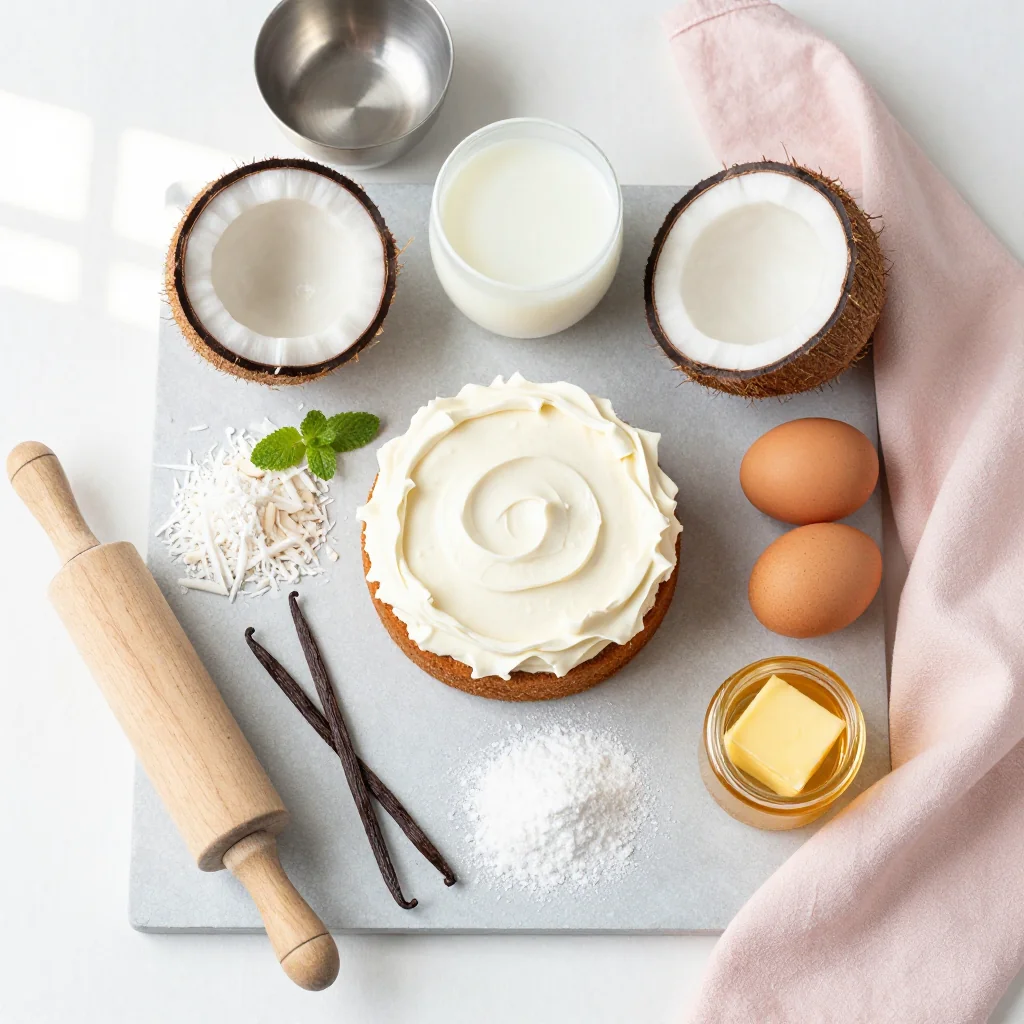
🔍 Focus on Key Ingredients
Coconut Milk
Coconut milk is the heart of this cake’s tropical flavor profile. Its high fat content contributes to a tender crumb and adds a subtle sweetness that pairs perfectly with the tang of cream cheese. When selecting coconut milk, opt for the canned “full‑fat” version or the refrigerated cartons labeled “no added sugar.” Give the can a good shake before measuring to ensure the creamy layer is evenly mixed with the watery layer.
Cream Cheese
Using full‑fat cream cheese is essential for a frosting that holds its shape yet melts in your mouth. Softening the cheese at room temperature prevents lumps and makes it easier to blend with butter. If you prefer a slightly lighter frosting, you can substitute half of the cream cheese with Greek yogurt, but keep in mind that the texture will become a bit tangier.
Shredded Coconut
Toasted shredded coconut adds both flavor and texture. Toasting brings out a nutty aroma and prevents the coconut from feeling raw. Spread the coconut in a single layer on a baking sheet and toast over medium heat for 5‑7 minutes, stirring frequently. This step is quick but makes a world of difference in the final taste.
🔄 Quick Substitutions
| If you don’t have... | Use instead... |
|---|---|
| Coconut milk | Whole milk mixed with 2 Tbsp coconut oil |
| Cream cheese | Mascarpone cheese (same amount) |
| Shredded coconut | Unsweetened coconut flakes (lightly toasted) |
👨🍳 Step‑by‑Step Instructions
Follow these detailed steps to create a perfectly moist coconut cake and a silky frosting that will impress every guest.
📋 Phase 1: Preparation & Mise en Place
Gather all tools, preheat the oven, and prepare the dry ingredients.
Preheat and Prepare Pans
Set your oven to 350°F (175°C). Grease two 8‑inch round cake pans with a thin layer of coconut oil, then line the bottoms with parchment paper. This double‑layered preparation ensures the cakes release cleanly without sticking.
Toast Shredded Coconut
Spread 50 g of shredded coconut on a baking sheet. Toast over medium heat, stirring constantly, until golden brown and fragrant—about 5 minutes. Transfer to a bowl and set aside to cool.
Combine Dry Ingredients
In a medium bowl, whisk together the sifted flour, baking powder, baking soda, and salt. This ensures even distribution of leavening agents, preventing pockets of uneven rise.
🔥 Phase 2: Mixing & Baking
Create a smooth batter, bake, and prepare the frosting while the cake cools.
Mix Wet Ingredients
In a large bowl, beat the eggs, sugar, melted coconut oil, and vanilla extract until the mixture is pale and slightly thickened, about 2 minutes. Gradually whisk in the coconut milk, ensuring a glossy, homogenous liquid.
Incorporate Dry Ingredients
Gently fold the dry flour mixture into the wet batter using a spatula. Add the toasted shredded coconut and continue folding until just combined. The batter should be smooth with small specks of coconut visible.
Bake the Cakes
Divide the batter evenly between the prepared pans. Bake for 25‑30 minutes, or until a toothpick inserted into the center comes out clean. Rotate the pans halfway through baking for even color.
✨ Phase 3: Frosting, Assembly & Serving
While the cakes cool, whip up the frosting, then assemble and garnish.
Cool Cakes Completely
Allow the cakes to cool in their pans for 10 minutes, then turn them out onto a wire rack to cool completely. This prevents the frosting from melting when applied.
Prepare Cream Cheese Frosting
In a large bowl, beat the softened cream cheese and butter together until light and fluffy, about 2 minutes. Gradually add the powdered sugar, beating on low speed to avoid a sugar cloud. Once smooth, blend in coconut milk and coconut extract until the frosting reaches a spreadable consistency.
Assemble the Cake
Place one cake layer on a serving plate. Spread a generous layer of frosting over the top, then place the second layer on top. Using an offset spatula, apply a thin “crumb coat” around the sides and on the top, then chill for 15 minutes to set.
Final Frosting and Garnish
Apply the remaining frosting smoothly over the crumb coat. Sprinkle toasted shredded coconut evenly across the top, and optionally arrange fresh pineapple slices for a bright, tropical finish.
💡 Expert Tips & Tricks
🛒 Choosing the Best Ingredients
When selecting coconut milk, read the label for “full‑fat” and avoid varieties with added stabilizers or sweeteners. Freshly grated coconut provides a richer flavor than pre‑shredded, but if you’re short on time, look for unsweetened, dry‑toasted shredded coconut. For cream cheese, choose a brand that lists “real cream cheese” as the first ingredient; low‑fat versions will change the texture of the frosting.
🔪 Preparation Techniques
Room‑temperature eggs and dairy blend more easily, creating a smoother batter. Whisk the dry ingredients separately to break up any clumps of flour. When folding the dry mix into the wet, use a gentle “cut‑and‑turn” motion with a rubber spatula to preserve air bubbles, which contributes to a light crumb.
🌡️ Mastering the Bake
Every oven behaves slightly differently. Insert an oven thermometer to verify the true temperature. If you notice the cake edges browning before the center is set, lower the heat to 325°F (160°C) and extend the baking time by a few minutes. The cake is done when the internal temperature reaches 200°F (93°C) and the toothpick test is clean.
🍽️ Presentation & Service
For a polished look, use a turntable while frosting to achieve a smooth finish. A light dusting of powdered sugar adds an elegant sparkle. Serve the cake slightly chilled; this makes slicing cleaner and the frosting firmer. Pair with a chilled glass of Riesling or a tropical mocktail for a complete experience.
🏆 Pro Tips
Elevate your baking game with these insider secrets that separate a good cake from a masterpiece.
- 🎯 Precision Weighing: Weighing flour eliminates the variability caused by spoon‑packing. Use a kitchen scale for every dry ingredient to achieve consistent results every time.
- 🎯 Room‑Temperature Ingredients: Allow butter, cream cheese, and eggs to sit out for 30 minutes before mixing. This ensures they emulsify properly, creating a smooth batter and frosting without lumps.
- 🎯 Creaming Method: When beating cream cheese and butter, start on low speed to combine, then increase to medium‑high. Over‑creaming can incorporate too much air, leading to a frosting that collapses under the cake’s weight.
- 🎯 Layer Alignment: Use a serrated knife to level the tops of each baked layer before stacking. Even layers prevent the cake from leaning and give a professional appearance.
- 🎯 Flavor Boost: Add a tablespoon of toasted coconut oil to the frosting for an extra depth of coconut flavor that doesn’t overpower the cream cheese’s tang.
- 🎯 Storage Strategy: Store the cake in an airtight container at room temperature for up to 2 days; for longer storage, refrigerate and bring to room temperature before serving to restore softness.
“The secret to a perfect cake is love and precision.” — Thomas Keller
🔄 Variations & Adaptations
This coconut cake is a versatile canvas. Below are ideas to tailor it to dietary preferences, flavor cravings, or special occasions.
🥬 Vegetarian / Vegan Version
Swap the eggs for a flax‑egg mixture (2 Tbsp ground flaxseed + 6 Tbsp water per egg) and replace butter and cream cheese with vegan alternatives such as coconut oil and a vegan cream cheese blend. Use plant‑based powdered sugar and ensure the shredded coconut is dairy‑free. The texture remains moist, and the coconut flavor shines even brighter.
- Flax‑egg substitution maintains binding without compromising crumb.
- Vegan cream cheese provides the tang while keeping the frosting silky.
🌶️ Flavor Variations
Explore different taste profiles by adjusting the extract or adding complementary spices.
Spicy Version:
Incorporate ½ tsp ground ginger and a pinch of cayenne into the batter. Finish the frosting with a drizzle of chili‑infused honey for a sweet‑heat contrast.
Mediterranean Version:
Add ¼ cup finely chopped toasted almonds to the batter and garnish with a light drizzle of orange‑blossom honey. The nutty crunch pairs beautifully with the coconut.
Asian Inspired Version:
Replace vanilla extract with 1 tsp yuzu juice, and fold in 2 Tbsp toasted sesame seeds into the frosting. Top with thin slices of fresh mango for a tropical‑Asian fusion.
⚠️ Dietary Adaptations
Gluten‑Free:
Swap all‑purpose flour for a 1:1 gluten‑free flour blend that includes rice flour, potato starch, and xanthan gum. No other changes needed.
Lactose‑Free:
Use lactose‑free butter and a dairy‑free cream cheese alternative. Coconut milk remains the same, preserving the cake’s moisture.
Low‑Calorie:
Reduce granulated sugar by ¼ cup and replace half of the coconut oil with unsweetened applesauce. The frosting can be lightened by using reduced‑fat cream cheese and decreasing powdered sugar, adding a splash of almond milk to maintain spreadability.
👶 Family / Kids Version
Kids love a sweeter profile. Increase the granulated sugar by ¼ cup and add a handful of mini chocolate chips to the batter. Serve with a drizzle of chocolate ganache instead of pineapple for a kid‑friendly twist.
📦 Storage & Reheating
🧊 Conservation
Refrigerator:
- Duration: 5 days
- Recommended container: airtight cake dome
- Tip: Place a piece of parchment between the frosting and the lid to prevent condensation.
Freezer:
- Duration: 2 months
- Method: Wrap the cooled cake tightly in plastic wrap, then foil.
- Defrosting: Transfer to the refrigerator overnight, then let sit at room temperature for 30 minutes before serving.
💡 For best texture, freeze the cake without frosting, then frost after thawing.
♨️ Reheating
🔥 Oven (Recommended):
- Preheat to 150°C (300°F).
- Cover the cake loosely with aluminum foil.
- Heat for 10 minutes.
- Remove foil and heat an additional 5 minutes to refresh the crust.
⚡ Microwave (Quick):
- Place a slice on a microwave‑safe plate.
- Cover with a microwave‑safe lid.
- Heat on medium power for 30 seconds, then check; repeat in 15‑second bursts if needed.
🍳 Stovetop:
For individual slices, warm in a non‑stick skillet over low heat for 1‑2 minutes, covering the pan to trap steam.
🍷 Perfect Pairings
🥗 Side Dishes
- Fresh Mango Salsa: The bright acidity balances the cake’s richness.
- Light Citrus Salad: Mixed greens with orange segments and a honey‑lime dressing add a refreshing contrast.
- Grilled Pineapple Rings: Charred pineapple echoes the coconut theme while adding caramel notes.
🍷 Wine & Drink Pairings
- Riesling (Off‑Dry): Its subtle sweetness mirrors the cake’s sugar while its acidity cuts through the frosting.
- Prosecco: Bubbles cleanse the palate between bites.
- Non‑Alcoholic: Coconut‑infused sparkling water with a splash of lime.
🍰 To Complete the Meal
Begin with a light citrus soup or a chilled cucumber gazpacho, follow with the coconut cake as the main dessert, and finish with a small serving of passion‑fruit sorbet to refresh the palate.
❓ Frequently Asked Questions
Q: Can I use coconut cream instead of coconut milk?
Yes, coconut cream can replace coconut milk for an even richer crumb. Because coconut cream is thicker, you may need to thin it with a tablespoon of water per cup to achieve the same consistency. The resulting cake will be denser but have an intensified coconut flavor.
Q: How do I prevent the frosting from cracking?
Make sure the cakes are completely cooled before frosting; any residual heat creates steam that can cause cracks. Additionally, avoid over‑beating the frosting once all sugar is added, as this incorporates excess air. If cracks appear, gently warm the frosting for a few seconds in the microwave and smooth it out with a warm spatula.
Q: What if I don’t have toasted coconut?
You can toast regular shredded coconut quickly in a dry skillet over medium heat, stirring constantly for 5‑7 minutes until golden. If you prefer a softer texture, use untoasted shredded coconut; the flavor will be milder but still pleasant.
Q: My cake turned out dense—what went wrong?
Common causes of density include over‑mixing after adding flour, which develops gluten, and using cold butter or cream cheese, which can create lumps. Ensure all dairy is at room temperature, mix just until combined, and sift the flour to avoid clumps.
Q: Can I make this cake gluten‑free?
Absolutely. Replace the all‑purpose flour with a 1:1 gluten‑free flour blend that contains starches and xanthan gum. The texture will be similar, and the cake will rise properly as long as the leavening agents are unchanged.
Q: Is it possible to prepare the frosting ahead of time?
Yes, you can make the frosting up to 24 hours in advance. Store it in an airtight container in the refrigerator. Before using, let it sit at room temperature for 20‑30 minutes and give it a quick whisk to restore its spreadable consistency.
🎉 To Your Oven!
This Coconut Cake with Cream Cheese Frosting brings together the best of tropical flavors and classic comfort. The moist, fragrant crumb paired with the tangy, silky frosting creates a dessert that feels both indulgent and approachable. Whether you’re serving it at a festive gathering or enjoying a quiet slice with a cup of tea, the cake’s versatility and delightful texture will make it a repeat favorite in your recipe arsenal.
Don’t forget to experiment with the variations, share your results, and let the community know how you made it your own. Your feedback helps us improve and inspires other bakers to try new twists.
Have you tried this recipe?
Leave a comment and rating below! Share your photos on Instagram with #CoconutCakeDelight for a chance to be featured.
Coconut Cake with Cream Cheese Frosting
A fluffy coconut‑infused cake topped with silky cream cheese frosting—perfect for any celebration.
📝 Ingredients
Cake Batter
Cream Cheese Frosting
Garnish (Optional)
👨🍳 Instructions
- 1
Preheat the oven to 350°F (175°C). Grease two 8‑inch round pans with coconut oil and line with parchment.
- 2
Toast shredded coconut in a dry skillet until golden, then set aside to cool.
- 3
Whisk together flour, baking powder, baking soda, and salt in a bowl.
- 4
Beat eggs, sugar, melted coconut oil, and vanilla until pale. Gradually whisk in coconut milk.
- 5
Fold dry ingredients into wet mixture, then stir in toasted coconut.
- 6
Divide batter between pans and bake 25‑30 minutes. Cool 10 minutes, then turn out onto a rack.
- 7
Beat cream cheese and butter until fluffy. Add powdered sugar, then coconut milk and extract. Mix until smooth.
- 8
Apply a thin crumb coat, chill 15 minutes, then frost the cake. Garnish with toasted coconut and pineapple if desired.
- 9
Slice, serve, and enjoy! Store leftovers per the storage guide.
- 10
Share your creation on social media with #CoconutCakeDelight.