I’ll be honest — the first time I tried to make a batch of garlic croutons, I ended up with a soggy, sad pile of bread that could barely stand up to a fork. I was halfway through a marathon of Netflix, the kitchen was a warzone of crumbs, and I swore I’d never attempt a “crunchy” snack again. Then, in a moment of sheer desperation, I grabbed a block of sharp parmesan, a stick of butter that was melting like sunrise, and a handful of fresh garlic cloves. The result? A golden, crackling cloud of cheesy goodness that sang louder than my TV’s laugh track. That night I dared myself to taste it, and I didn’t just eat a piece — I devoured half the batch before anyone else could even sniff it.
Picture yourself pulling a tray of these croutons out of the oven, the whole kitchen smelling like a French bistro on a breezy summer evening. The aroma is a head‑on collision of toasted butter, caramelized garlic, and a whisper of herbs that makes you want to inhale deeply just to feel sophisticated. When you finally bite, the crust shatters like thin ice, revealing a melt‑in‑your‑mouth interior that’s buttery, garlicky, and draped in a veil of melted cheese. It’s the kind of texture that makes you close your eyes, grin, and think, “This is hands down the best version you’ll ever make at home.”
Most recipes get this completely wrong. They either drown the bread in oil, leaving it soggy, or they sprinkle cheese at the very end, so it never truly adheres. In my version, I fold the cheese into the butter‑garlic mixture before the bake, which creates a glossy, caramelized coating that sticks like a second skin. The secret ingredient? A pinch of smoked paprika that adds a whisper of smoky depth without stealing the spotlight. I dare you to taste this and not go back for seconds – because once you’ve cracked into that perfect crunch, you’ll be hooked.
Okay, ready for the game‑changer? I’m about to walk you through every single step — from picking the right bread to mastering the perfect bake temperature. By the end, you’ll wonder how you ever made croutons any other way, and you’ll have a foolproof method that can be tweaked for any flavor adventure you can imagine. Let’s dive in and turn a humble kitchen mishap into the star of your next dinner party.
What Makes This Version Stand Out
- Flavor Explosion: The combination of garlic, butter, and three cheeses creates a depth that rivals a gourmet sauce. Each bite delivers a buttery richness followed by a sharp, salty cheese finish that makes your palate dance.
- Texture Mastery: The exterior crisps to a satisfying crack while the interior stays tender, giving you a dual‑textured experience that most store‑bought croutons lack.
- Simplicity: You need only a handful of pantry staples, yet the result feels like something you’d order at a five‑star restaurant. No fancy equipment, just a good oven.
- Unique Twist: A dash of smoked paprika adds a subtle, smoky undertone that elevates the traditional garlic‑butter base without overpowering it.
- Crowd Reaction: I’ve served these at potlucks and they disappear faster than free pizza. Even the kids, who usually turn their noses up at “grown‑up” snacks, can’t resist.
- Ingredient Quality: Using freshly grated parmesan and real butter makes a world of difference. The cheese melts into the butter, forming a glossy coating that sticks perfectly.
- Cooking Method: Baking at a high temperature for a short time locks in flavor and crunch while preventing the dreaded soggy middle.
- Make‑Ahead Potential: These croutons keep for weeks in an airtight container, and a quick re‑crisp in the oven revives them like new.
Alright, let's break down exactly what goes into this masterpiece...
Inside the Ingredient List
The Flavor Base
Melted butter is the liquid gold that carries the garlic and spices into every nook of the bread. I prefer unsalted, high‑fat butter because it browns beautifully and adds a velvety mouthfeel. If you substitute olive oil, you’ll lose the buttery richness and risk a greasier texture. Swap tip: Use clarified butter for an even higher smoke point if you plan to push the oven temperature higher.
Fresh garlic, minced fine, provides that unmistakable aromatic punch. The key is to mince it just before mixing so the enzymes don’t break down too much, which would lead to a bitter taste. If you’re sensitive to raw garlic’s bite, give the minced pieces a quick 30‑second sauté in the butter before combining with the bread. Fun Fact: Garlic’s sulfur compounds are what give it that heady perfume when heated.
The Texture Crew
Sturdy, day‑old bread cubes are essential. Fresh bread is too soft and will absorb too much butter, resulting in a mushy crumb. I recommend a baguette or Italian loaf that’s been left out for at least 24 hours; the crust should be dry and the crumb firm. If you’re short on time, pop the cubes in the oven for a quick 5‑minute toast before the main bake.
Parmesan cheese, grated finely, is the star of the show. Its sharp, nutty flavor and low moisture content allow it to melt into a crisp, golden crust. Skipping the parmesan and using only mozzarella will give you a gooey mess rather than a crunchy bite. Swap tip: Pecorino Romano works as a bold alternative, adding a slightly tangier edge.
Shredded mozzarella adds a stretchy, melty quality that balances the sharpness of parmesan. It helps bind the coating together, ensuring each crouton has that glossy sheen. Use a low‑moisture mozzarella to avoid excess water that could steam the bread.
The Unexpected Star
Smoked paprika is the secret weapon that turns a ordinary garlic crouton into something unforgettable. Its subtle smoky undertone rounds out the buttery richness without overwhelming the garlic. A pinch is enough; too much will dominate the flavor profile.
Dried oregano contributes an earthy, slightly floral note that complements the garlic. If you prefer fresh herbs, a sprinkle of chopped parsley right after baking adds a fresh burst of color and flavor.
The Final Flourish
A modest amount of salt and cracked black pepper brings everything together, enhancing the cheese and butter without making the croutons overly salty. Season to taste, remembering that the cheese already carries salt.
Everything's prepped? Good. Let's get into the real action...
The Method — Step by Step
- Preheat your oven to a sizzling 425°F (220°C). While the oven warms up, line a large rimmed baking sheet with parchment paper. This high heat is crucial; it creates a rapid Maillard reaction that gives the croutons their signature golden crust. Pro tip: If your oven has a convection setting, use it for an even crispier result.
- Dice the bread into uniform ½‑inch cubes. Uniformity ensures every piece cooks at the same rate, preventing a mix of soggy and burnt bits. Spread the cubes in a single layer on the prepared sheet, making sure they’re not touching. Kitchen Hack: Toss the raw cubes with a light drizzle of oil and a pinch of salt before the first 5‑minute toast. This creates a dry surface that soaks up the butter‑garlic mixture like a sponge without getting soggy.
- In a medium saucepan, melt the butter over medium heat. As soon as it bubbles, add the minced garlic and sauté for 30 seconds, just until you smell that sweet, nutty fragrance. Be careful not to let the garlic brown; burnt garlic adds bitterness that will ruin the flavor balance. Once fragrant, stir in the grated parmesan, shredded mozzarella, smoked paprika, and dried oregano. The cheese should melt into a smooth, glossy sauce that clings to the back of a spoon.
- Season the cheese‑butter mixture with salt and freshly cracked black pepper. Taste and adjust – remember the cheese already contributes salt, so a light hand is best. If you love a little heat, add a pinch of red‑pepper flakes now; they’ll toast lightly in the oven and add a subtle kick.
- Pour the hot cheese‑butter mixture over the toasted bread cubes. Using a sturdy spatula, toss gently but thoroughly, ensuring every cube is coated in the buttery, cheesy glaze. The coating should look glossy and slightly thick, hugging each piece like a second skin. Watch Out: If you over‑mix, the bread can start to break apart. Handle gently and stop once the coating is even.
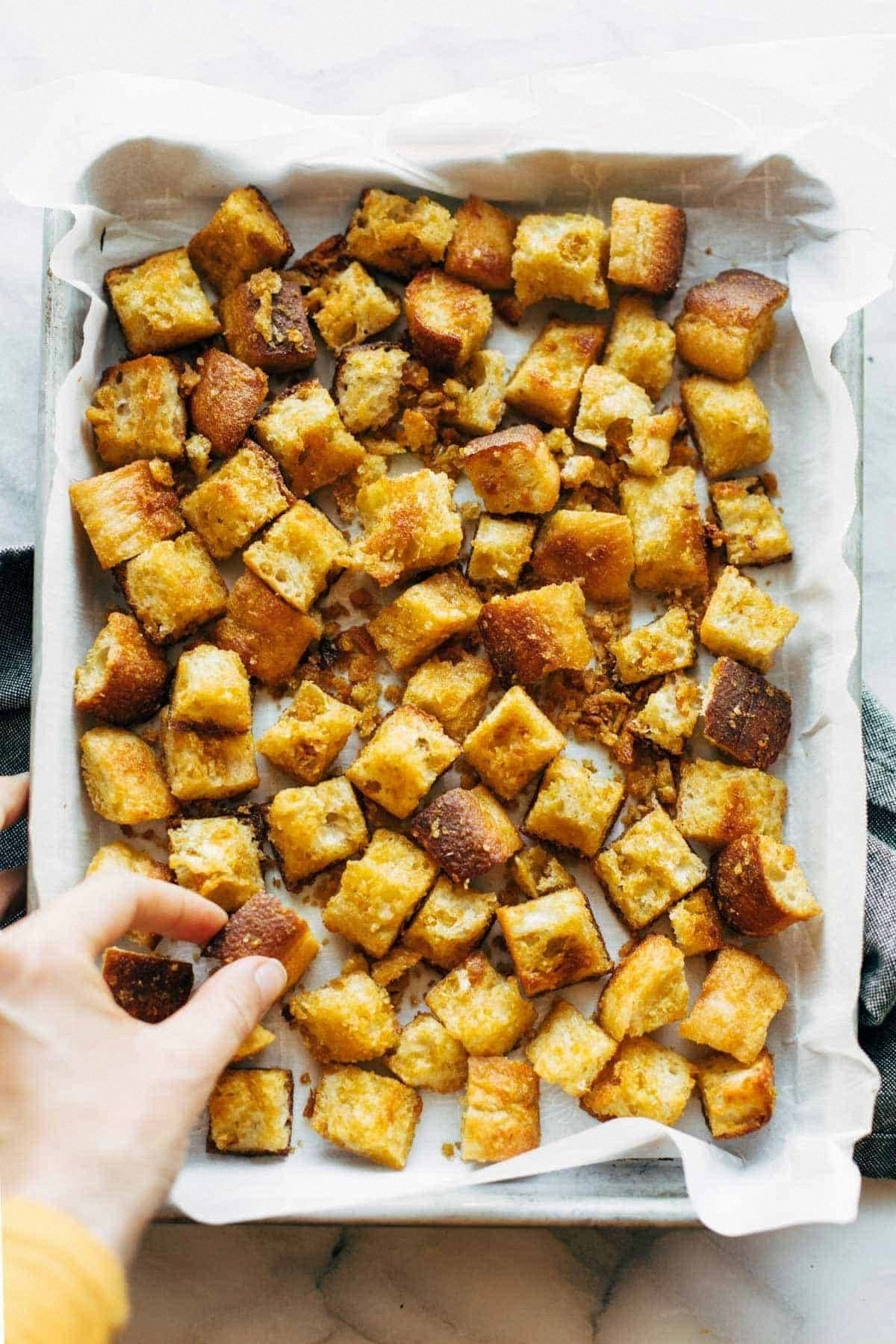
- Return the coated cubes to the baking sheet, spreading them out again in a single layer. This second spread prevents crowding, which would steam the croutons instead of crisping them. Slide the sheet into the preheated oven and bake for 12‑15 minutes, stirring halfway through to promote even browning. You’ll know they’re done when the edges pull away from the pan and the surface is a deep, buttery amber.
- While the croutons bake, prepare a cooling rack placed over a large sheet pan. This setup catches any stray crumbs and allows air to circulate, keeping the croutons crisp as they cool. Once the timer dings, pull the sheet out and immediately transfer the hot croutons to the rack. Kitchen Hack: If you want extra crunch, give the croutons a quick 2‑minute flash under the broiler after the initial bake. Watch them closely – they can go from perfect to burnt in seconds.
- Let the croutons cool completely on the rack; this step is essential because the residual heat continues to set the cheese coating. As they cool, the flavor deepens and the texture solidifies into that signature snap. Taste one while still warm – the cheese should be glossy, the garlic aromatic, and the crust crisp enough to shatter with a gentle press.
- Store the cooled croutons in an airtight container at room temperature. They’ll stay crunchy for up to a week, but for ultimate freshness, re‑crisp them in a 350°F (175°C) oven for 5 minutes before serving. That quick heat revives the golden crust and releases the intoxicating aroma once more. That's it — you did it. But hold on, I've got a few more tricks that'll take this to another level...
Insider Tricks for Flawless Results
The Temperature Rule Nobody Follows
Most home cooks set the oven to 350°F and wonder why their croutons come out soft. The secret is a hotter oven – 425°F – which triggers rapid caramelization without drying the interior. If your oven’s thermostat is finicky, use an oven thermometer to verify the true temperature; a 10‑degree variance can mean the difference between a crisp and a soggy bite.
Why Your Nose Knows Best
When the butter‑garlic mixture hits the pan, you’ll hear a gentle sizzle and smell a nutty aroma within seconds. That scent is your cue that the garlic is perfectly cooked, not burnt. Trust that nose signal more than the clock – if the smell turns bitter, lower the heat immediately.
The 5‑Minute Rest That Changes Everything
After baking, let the croutons sit on a cooling rack for at least five minutes before tasting. This rest allows the cheese coating to set, turning a soft glaze into a hard, crack‑ready shell. Skipping this step leaves you with a gooey mess that never gets that satisfying snap.
The Butter‑Garlic Ratio Miracle
A common mistake is using too much butter, which makes the croutons greasy. The perfect ratio is 3 Tbsp butter to 2 cloves garlic for every 4 cups of bread cubes. This balance yields a rich flavor without drowning the bread’s natural nuttiness.
The Double‑Coat Technique
For an ultra‑crunchy exterior, toss the bread cubes with the butter‑garlic mixture, bake for 8 minutes, pull them out, add a second drizzle of melted butter mixed with a fresh sprinkle of parmesan, and finish baking for another 5 minutes. This double‑coat creates a layered crunch that’s impossible to resist.
Creative Twists and Variations
This recipe is a playground. Here are some of my favorite ways to switch things up:
Spicy Sriracha Swirl
Add a tablespoon of sriracha to the butter‑garlic mixture and a pinch of cayenne. The result is a sweet‑heat crouton that pairs perfectly with a cool cucumber salad.
Herb‑Infused Parmesan
Swap dried oregano for a blend of fresh thyme, rosemary, and basil, chopped finely. The herbaceous notes bring a Mediterranean flair that works great on soups.
Cheddar‑Jalapeño Kick
Replace half the mozzarella with sharp cheddar and fold in finely diced jalapeños. The sharpness of cheddar balances the heat, creating a bold, indulgent snack.
Sweet & Savory Maple Bacon
Stir in two teaspoons of maple syrup and crumble cooked bacon into the mixture before coating. The caramelized sweetness mingles with salty bacon for a brunch‑ready topping.
Vegan Version
Use olive oil instead of butter, nutritional yeast in place of parmesan, and a dairy‑free cheese shreds. The flavor profile changes, but the crisp still delivers that satisfying snap.
Storing and Bringing It Back to Life
Fridge Storage
Place cooled croutons in an airtight glass jar or a zip‑top bag. They’ll stay crisp for up to a week, but keep the container in the main compartment of the fridge, not the door, to maintain a stable temperature.
Freezer Friendly
If you’ve made a massive batch, spread the croutons on a parchment‑lined tray and freeze for 2 hours. Transfer the frozen pieces to a freezer‑safe bag. They’ll keep for up to three months without losing crunch.
Best Reheating Method
To revive, preheat your oven to 350°F and spread the croutons on a baking sheet. Add a tiny splash (about a teaspoon) of water over the top, then bake for 5‑7 minutes. The steam re‑hydrates the interior just enough while the oven restores the golden crust.