Love this? Pin it for later! 📌
Batch-Cooking Slow-Cooker Beef & Vegetable Stew: Your Cozy Winter Lifesaver
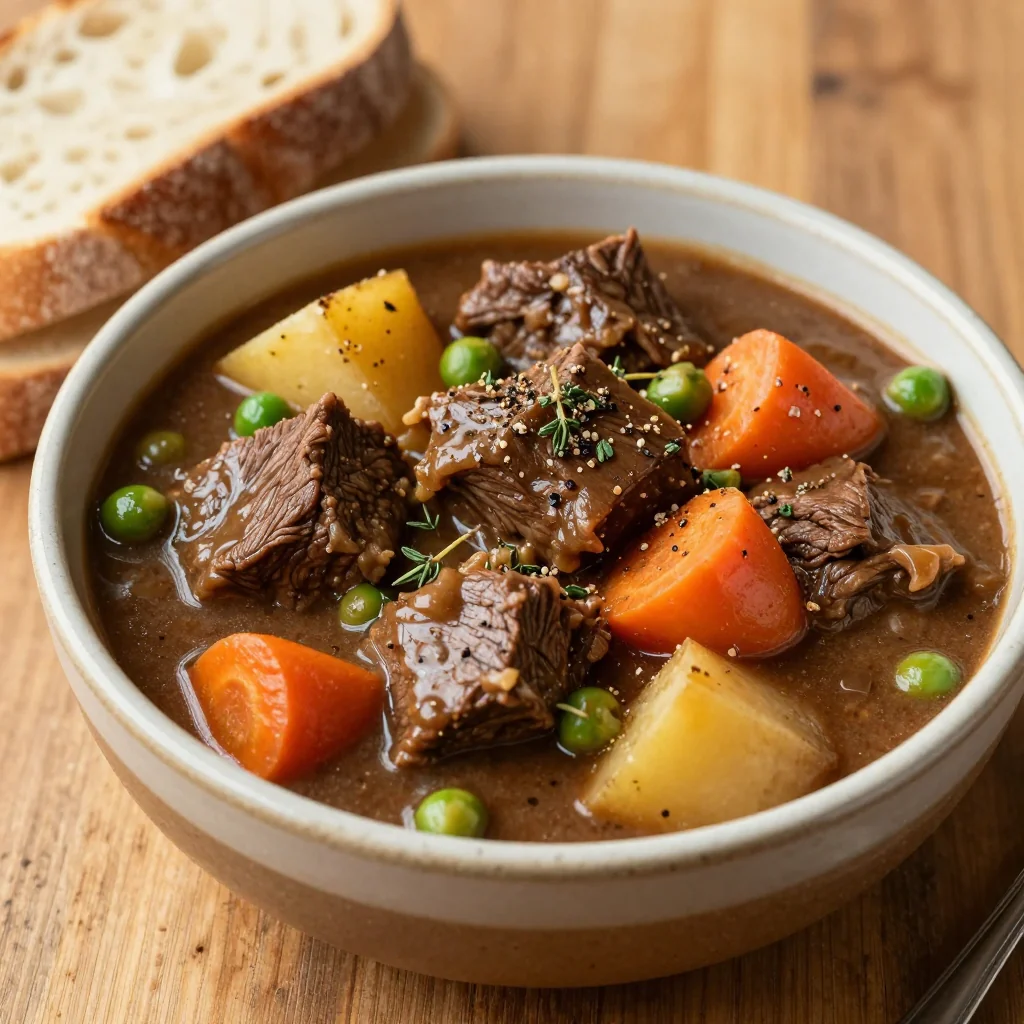
The first time I made this stew, a blizzard had just rolled through our neighborhood, blanketing everything in knee-deep snow. My little porch looked like a scene from Narnia, school had already texted “closed,” and the only thing on my mind was creating something that would warm us from the inside out. I tossed beef, root vegetables, and a handful of pantry staples into my slow cooker, set it on low, and let the magic happen while we built a lopsided snowman outside. By the time we trudged back inside—noses red, mittens soaked—the house smelled like a five-star alpine chalet. One spoonful and my usually picky eight-year-old declared it “better than pizza night.” That’s the power of this batch-cooking beef and vegetable stew: it transforms the coldest, longest winter days into memories scented with thyme, garlic, and tender chunks of slow-cooked beef that practically melt on your fork.
Over the years, I’ve refined the recipe for maximum flavor and minimum fuss. I sear the beef first for a deeper, caramelized note, layer the vegetables so they hold their shape, and finish with a splash of balsamic for subtle brightness. The result is a thick, glossy stew that tastes as if it’s been simmering on a wood stove all afternoon. Because it’s designed for batch cooking, you can feed a crowd, freeze half for a future hectic week, or portion it into single-serve containers for grab-and-go lunches that beat any take-out option. If you crave comfort food that practically cooks itself while you get on with life, this is your recipe.
Why This Recipe Works
- Hands-off convenience: Dump, set, forget—dinner is ready when you are.
- Freezer-friendly: Doubles (or triples) beautifully for future stress-free meals.
- Budget-savvy: Uses economical stewing beef and humble winter veg.
- Deep flavor: Browning the meat and deglazing with tomato paste equals restaurant richness.
- Vegetable versatility: Swap in whatever’s lurking in your crisper drawer.
- One-pot wonder: Minimal dishes, maximum satisfaction—perfect for busy weeknights.
Ingredients You'll Need
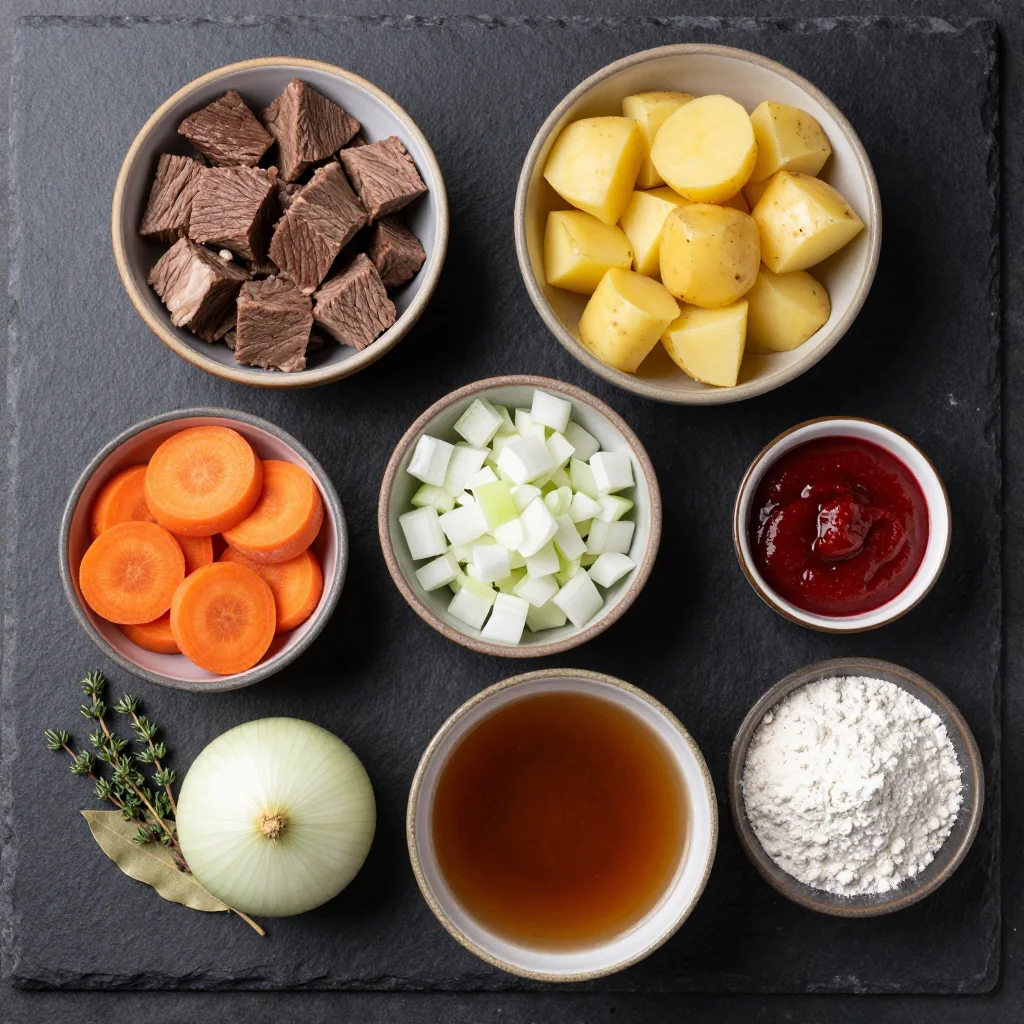
Great stew starts with great building blocks. Here’s what you need—and why each ingredient matters.
- Beef chuck roast: Well-marbled and rich in collagen, chuck becomes fork-tender after hours of gentle simmering. Look for bright red pieces with visible flecks of fat; avoid anything pale or already trimmed of all fat (that fat equals flavor). If chuck is pricey, round or even short ribs work, though they may need an extra 30 minutes.
- Sea salt & freshly cracked black pepper: Pre-seasoning the beef draws out surface moisture, helping you achieve that golden crust when searing.
- Olive oil & a pat of butter: A mix raises the smoke point and adds buttery nuttiness. Use refined olive oil, not extra-virgin, which can burn.
- Onion, celery, and carrots: The classic mirepoix trio builds a sweet, aromatic base. Dice small so they melt into the gravy.
- Garlic: Four cloves may seem bold, but slow cooking mellows them into gentle sweetness. Smash, don’t mince, to prevent bitter edges.
- Tomato paste: Adds umami and helps thicken the stew. Caramelize it for 60 seconds to remove any metallic taste.
- Beef stock: Choose low-sodium so you control the salt level. Warm it first to keep the cooking temperature steady.
- Red wine: A modest splash (½ cup) deglazes the pan and contributes tannic depth. Use something you’d happily drink; cooking wine tastes harsh. For a non-alcoholic version, sub with additional stock plus 1 tsp balsamic.
- Worcestershire sauce & soy sauce: Both are flavor bombs—fermented, salty, and layered with complexity. Tamari keeps it gluten-free.
- Fresh thyme & a bay leaf: Earthy and floral, they perfume the stew. Strip thyme leaves from woody stems; discard stems.
- Potatoes: Waxy varieties like Yukon Gold hold their shape better than russets, which can go mushy. No need to peel—nutrients and rustic charm live in the skin.
- Parsnips & sweet potato: Optional but lovely for winter sweetness. They balance the savory broth and add golden color.
- Frozen peas: Stirred in at the end, they provide a pop of color and gentle sweetness that brightens the rich gravy.
- Slurry of cornstarch & water: Only if you like your stew extra-thick. Otherwise, simply simmer uncovered for the last 30 minutes.
How to Make Batch-Cooking Slow-Cooker Beef & Vegetable Stew
Pat, trim, and season the beef
Cut 3½–4 lb (1.6–1.8 kg) chuck roast into 1½-inch cubes, discarding any large hunks of sinew. Blot dry with paper towels; moisture is the enemy of browning. Season generously with 1½ tsp kosher salt and 1 tsp pepper.
Sear for flavor foundations
Heat 1 Tbsp olive oil and 1 Tbsp butter in a heavy skillet over medium-high until shimmering. Working in batches to avoid crowding, brown beef on two sides, 2–3 min per side. Transfer to slow cooker. Deglaze pan with ½ cup red wine, scraping browned bits; pour into cooker.
Build the aromatic base
In the same skillet, reduce heat to medium. Add diced onion, carrots, and celery; sauté 4 min until edges soften. Stir in 3 Tbsp tomato paste and 4 smashed garlic cloves; cook 1 min. Spoon mixture over beef.
Add liquids & herbs
Pour in 3 cups warm low-sodium beef stock, 1 Tbsp Worcestershire, 1 Tbsp soy sauce, leaves from 4 thyme sprigs, and 1 bay leaf. Stir gently; vegetables should be just submerged.
Layer the potatoes & root veg
Chop 1½ lb potatoes, 2 medium parsnips, and 1 small sweet potato into 1-inch chunks. Nestle on top—do not stir. Keeping them above the meat prevents them from disintegrating into the gravy.
Slow cook to tenderness
Cover and cook on LOW 8–9 hours or HIGH 5 hours. Resist peeking; each lid lift releases steam and can extend cooking time by 15 min.
Finish with brightness
Taste and adjust salt. Stir in 1 cup frozen peas; cover 5 min until heated. For thicker gravy, whisk 2 tsp cornstarch with 2 Tbsp cold water and stir into hot stew; cook 10 min more on HIGH.
Serve or store
Ladle into deep bowls over buttery egg noodles or crusty bread. Cool leftovers quickly; portion into airtight containers for freezing.
Expert Tips
Brown = flavor
Don’t rush the sear. Deep caramelization equals rich, complex broth.
Warm your stock
Cold liquid lowers the crock’s temperature and can cause uneven cooking.
Keep potatoes intact
Add them on top and don’t stir until serving; they’ll stay chunky, not mushy.
Skim late, not early
Fat rises near the end; skim then for silkier gravy without removing flavor too soon.
Variations to Try
- Irish twist: Swap half the potatoes for diced rutabaga and add a 12-oz bottle of stout beer instead of wine.
- Mushroom lover: Stir in 8 oz cremini mushrooms during the last 2 hours for earthy depth.
- Low-carb: Replace potatoes with cauliflower florets; cook on HIGH 3 hours to prevent over-softening.
- Spicy kick: Add ½ tsp smoked paprika and a pinch of chipotle powder with the herbs.
- Gluten-free thickener: Use 2 tsp arrowroot instead of cornstarch for a glossy finish.
Storage Tips
Refrigerate: Cool completely, transfer to sealed containers, and refrigerate up to 4 days.
Freeze: Portion into freezer-safe bags, press out excess air, label, and freeze flat up to 3 months. Thaw overnight in the fridge.
Reheat: Warm gently on the stovetop over medium-low, adding a splash of broth to loosen. Microwave works too—cover and stir every 60 seconds.
Frequently Asked Questions

Batch-Cooking Slow-Cooker Beef & Vegetable Stew
Ingredients
Instructions
- Prep the beef: Season cubes with salt and pepper.
- Sear: Heat oil and butter in skillet; brown beef in batches. Transfer to slow cooker; deglaze skillet with wine; pour juices into cooker.
- Sauté aromatics: In the same skillet cook onion, carrots, celery 4 min. Stir in tomato paste and garlic 1 min; add to cooker.
- Add liquids & herbs: Pour warm stock, Worcestershire, soy sauce, thyme, and bay leaf into cooker; stir lightly.
- Top with potatoes & roots: Layer potatoes, parsnips, and sweet potato on top—do not stir.
- Slow cook: Cover; cook LOW 8–9 hr or HIGH 5 hr until beef shreds easily.
- Finish: Stir in peas; cover 5 min. Thicken with cornstarch slurry if desired; cook 10 min more on HIGH.
- Serve: Discard bay leaf; ladle into bowls with crusty bread.
Recipe Notes
For deeper flavor, make a day ahead; stew tastes even better overnight. Freeze portions up to 3 months.